

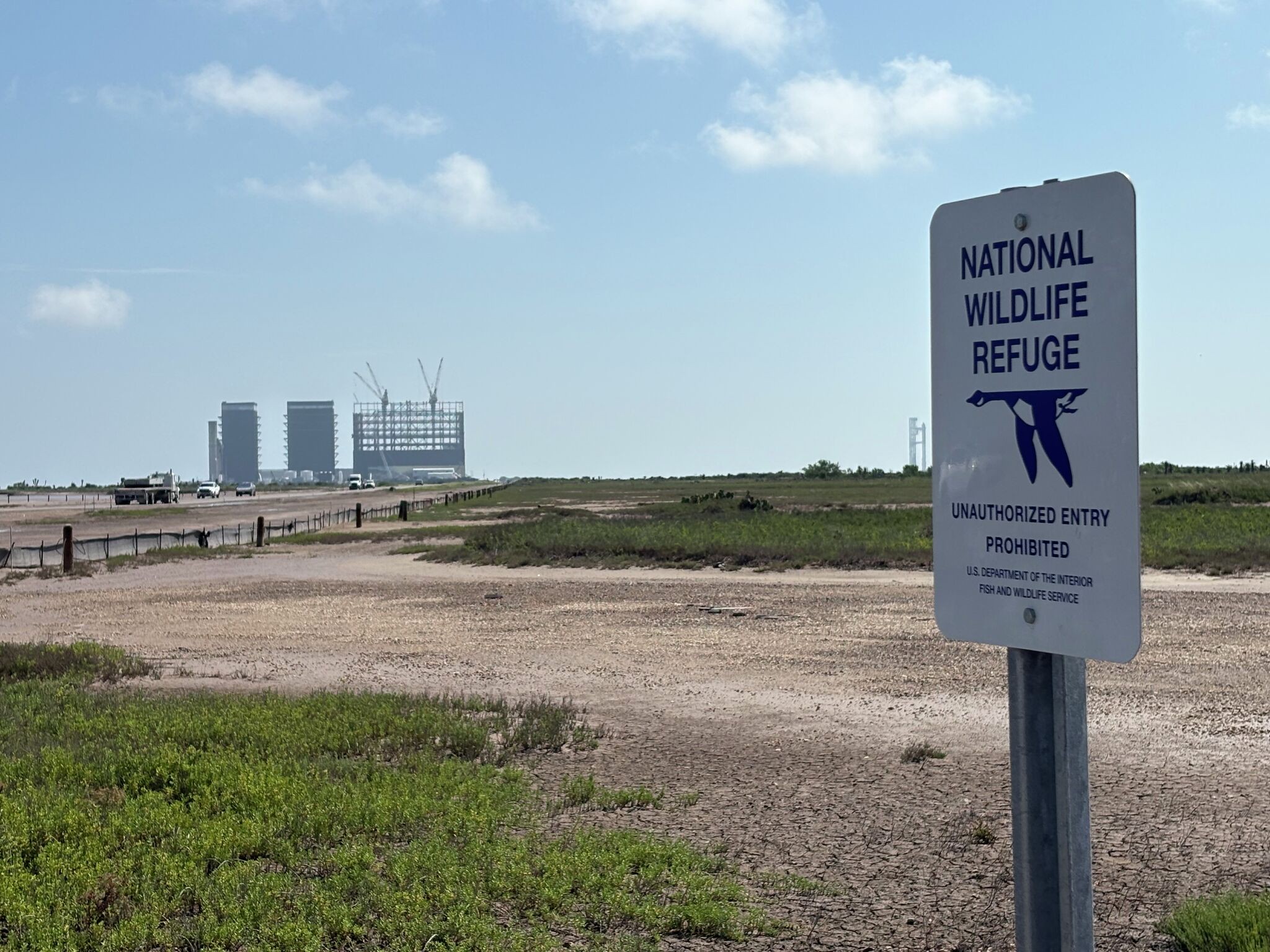
Despite public criticism, Elon Musk’s SpaceX is one step closer to taking over more than 700 acres of national wildlife refuge near the South Texas city of Starbase. The U.S. Fish and Wildlife Service said this week that the proposed land swap between it and the space firm would have “no significant impact” on the refuge and surrounding land.
The deal would give the company control over 715 acres of refuge land along the Rio Grande River near Starbase in exchange for 683 acres across separate parcels that are located about 10 miles away along the river, on Boca Chica Beach and near Laguna Heights.
SpaceX, a private firm that’s set to go public later this month, already owns property within the refuge and along its boundary. The wildlife service said the land swap was a way to divest “lands likely to be impacted by SpaceX activities, and SpaceX would exchange land that includes desirable habitat for conservation.”
The plan would consolidate refuge land in Cameron County, reduce land use conflicts and “provide a net conservation benefit,” the service said, by replacing “fragmented, low- to medium-quality parcels with large, contiguous, high-quality habitat blocks more resilient to drought, flooding, storm events, and climate-driven shifts.”
It also would reduce the number of private holdings within the Lower Rio Grande Valley National Wildlife Refuge, which encompasses 103,000 acres across four counties.
Environmentalists and some area residents don’t buy it, submitting nearly 3,400 letters of opposition to the service. It hasn’t publicly responded to those concerns.
Some had requested more thorough environmental reviews, but the latest decision clears the way for the land swap.
The service hasn't said when the exchange would happen.
SpaceX hasn’t disclosed its plans for the land, but current zoning shows it could be used for open space, residential, commercial, infrastructure and heavy industrial projects. The wildlife agency said it’s “reasonably foreseeable” that such development could occur “in the near term.”
One “adverse effect” identified during the environmental review is that parts of the Palmito Ranch Battlefield National Historic Landmark will be transferred to SpaceX.
SpaceX will have to enter an agreement with the service, Texas Historical Commission and National Park Service about how best to “preserve, interpret, and manage (the) historic properties in perpetuity.”
As part of the agreement, SpaceX would have establish a “preservation area” around a parcel known as White’s Ranch, provide archeological monitoring, construct a viewing platform and signage for the Palmito Ranch Battlefield and properly maintain the area.
The service wrote that the exchange would benefit endangered and threatened species over the long term. It also found the swap wouldn’t affect mineral resources, water quality, public use or socioeconomic conditions.
The contested territory includes land surrounding the Massey test site outside Brownsville where a Starship rocket exploded in June, lobbing debris into refuge land, the river and even into Mexico.
Records show law enforcement investigators from the wildlife service, Environmental Protection Agency and Texas Commission on Environmental Quality have been involved in probes into the blast. None of the agencies would comment about the status of any potential criminal investigations.
The wildlife agency withheld records, including damage assessments of the refuge after the explosion, because they are “law enforcement records for a pending or prospective investigation” and their release could interfere with “enforcement proceedings.”
Those enforcement proceedings are apparently ongoing as the service looks to turn the area in question over to SpaceX.