

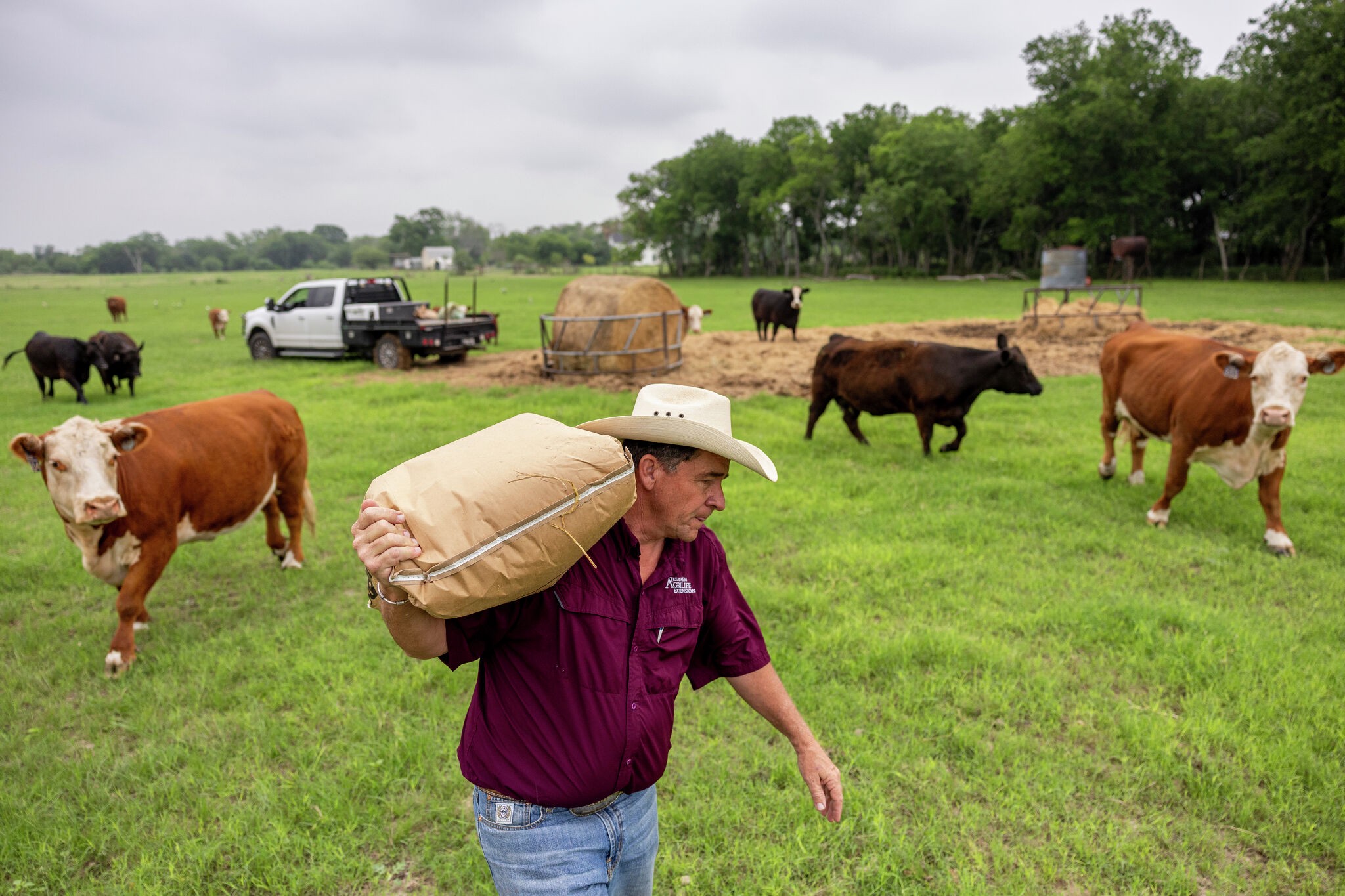
For the past five years, Texas ranchers have been struggling against drought. Despite dried-up pastures and shrunken-down herds, ranchers like Lew Thompson, who runs nearly 3,000 head near Pearsall, are reaping what he called “prolific sales.” The situation is unusual because ranchers are cashing in cattle for all-time high prices as inventory in the United States has plummeted to 75-year lows. The result is retail prices that have surged more than 18% from a year ago, pushing the average price of a pound of ground beef in American cities to $6.90 in April, the highest on record. Prices are projected to keep rising, with the U.S. Department of Agriculture forecasting another 10.1% increase by the end of the year. However, ranchers aren’t reaping all the price increases in profit because their margins are being squeezed by difficulties spurred by the lingering drought and record-high costs for feed, fuel, fertilizer, equipment and supplies.
As of early January, there were about 86 million cattle and calves in the United States, and Texas, had about 12 million. Both figures represent historic lows: The latest U.S. herd size is the smallest since the early 1950s, and the Texas herd is among its smallest in decades. “It really comes down to the U.S. cattle herd shrinking,” said Emily Kerr, a senior business economist at the Dallas Fed. “When you have fewer cattle, fewer cattle going into slaughter, I mean that just really squeezes the supply side of beef production.”
Most of the beef the U.S. consumes comes off feedlots with cattle from producers large and small. The loss of those smaller producers is adding up, said Brad Reiley, manager of Seguin-based Producers Co-op. And when enough of the smaller producers disappear, it strains supply.
Cattle ranchers have faced drought and higher costs. Climate change results in a typical day now warmer than the hottest years of the drought during the 1950s or during the 1930s Dust Bowl. That results in soil moisture burning off faster than it did back then, leaving less water rolling off the landscape into rivers and reservoirs.
Despite the high prices for cattle, ranchers are not experiencing increased profits due to the increased cost of maintaining their herds in the face of ongoing drought.