

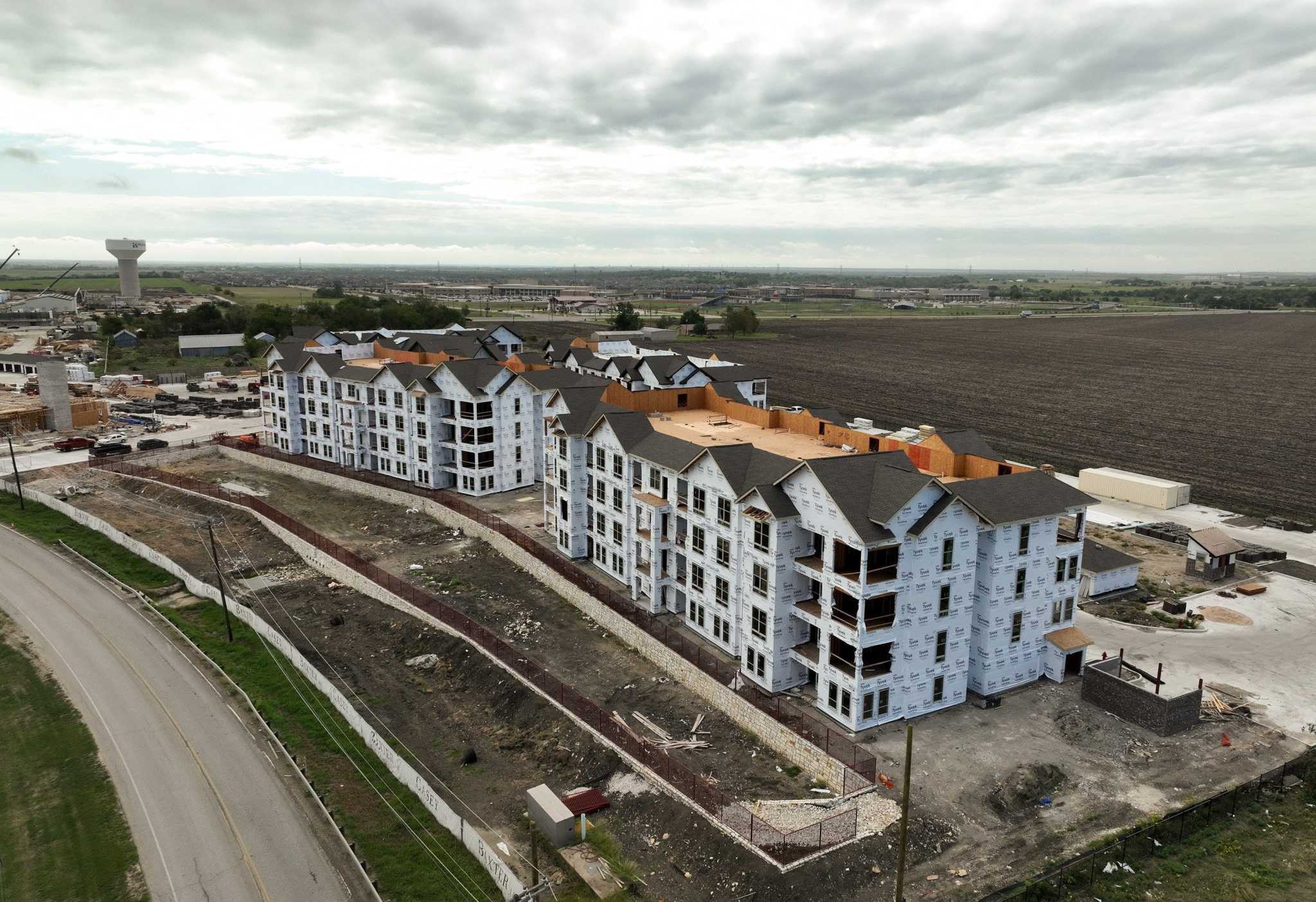
Austin posted the highest rental turnover rate in the country between 2023 and 2024, a new study found. Researchers say a glut of new apartments is driving down rents and pushing landlords to offer renters incentives to move more frequently. New complexes like the Tacara at Weiss Ranch apartments near Lake Pflugerville, is among the new complexes pushing the trend.
Nearly half of renter households in the Austin metro area moved within the past year, the highest turnover rate of any major metro in the United States, according to a new study.
At 49.1%, nearly one of every two renter-occupied housing units in the Austin-Round Rock-San Marcos metropolitan area saw a move between 2023 and 2024, according to
new research from modular furniture company Rove Lab.
The high turnover comes after years of rapid construction in Austin added thousands of new units and increased competition among landlords, forcing the rental market to adjust as tenants are offered deals by new complexes.
“Austin is especially a renter’s market,” said Julie Bussing, lead researcher on the study. “They have more options because of the oversupply.”
Rove Lab analyzed the 55 largest metropolitan areas in the country on factors including rental housing supply, population density, transportation conditions and weather to determine how difficult it is for renters to move into and out of an area.
While Austin ranked 26th overall on the study’s moving difficulty index, its renter turnover rate was the highest in the nation. The metro also ranked sixth nationally for renter share, with 43.1% of occupied housing units occupied by renters.
Bussing noted the turnover figure was based on U.S. Census Bureau data measuring renter-occupied housing units whose occupants moved during the study period — or, “the number of housing units that picked up and moved to a whole other rental unit,” she said.
The census data does not indicate whether renters moved to another apartment within the same complex or relocated to a different property altogether.
Austin’s high mobility rate coincides with a period of falling rents and generous leasing incentives. Following a construction boom that delivered tens of thousands of apartments, landlords have resorted to offering concessions such as free rent, waived fees and gift cards to attract tenants and fill units.
Bussing said those incentives likely contribute to renters’ willingness to move when leases expire.
“Landlords giving three to eight weeks of free rent or up to three months of free rent?” she said. “That could definitely appeal to people moving within the city.”
Austin wasn’t the only Texas metro area with a high renter turnover rate. The San Antonio-New Braunfels metro came close behind with a rate of 48.2%, while the Dallas-Fort Worth-Arlington metro was at 43.4%.
Researchers wrote that the elevated turnover rates in Texas metros may reflect the state’s rapid growth and increased development across the Sun Belt more broadly.
Houston ranked among the 15 most difficult metros overall for renters, driven by factors including traffic congestion, humidity and the size of its renter population. Its turnover rate was also high, at 41.7%.
New York, Los Angeles and Washington, D.C., ranked as the most difficult metropolitan areas for renters to move into and out of, the study showed.