

news
Flag Day: History, Etiquette, and How to Display the American Flag
A flag resolution was adopted 248 years ago, on June 14, 1777.
Published June 14, 2025 at 12:01pm by Brandi D. Addison
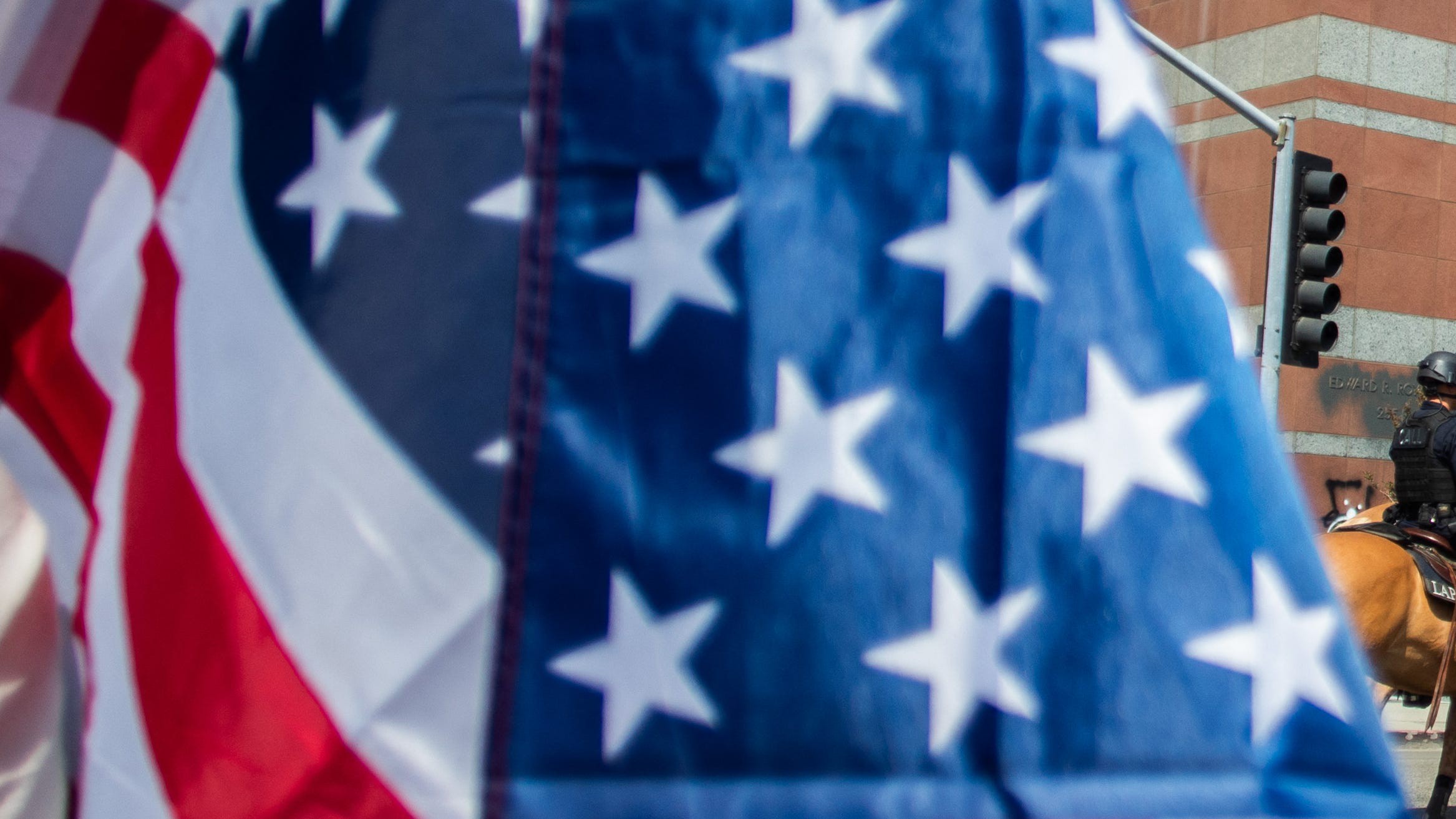
It’s Flag Day, a day that honors the adoption of the United States flag on June 14, 1777. The original resolution declared the flag would have 13 alternating red and white stripes and a blue field with 13 white stars, representing a new constellation — a powerful symbol of unity and independence that continues to fly proudly today.
The flag’s stripes represent the original 13 colonies, while the stars symbolize the unity of those states forming a new nation. Over nearly 250 years, the flag has come to embody American ideals such as freedom, resilience and patriotism.
This year, Flag Day coincides with the U.S. Army’s 250th anniversary, marked by a large military parade in Washington, D.C., led by President Donald Trump, whose birthday is also on June 14.
At the same time, thousands across the country are participating in “No Kings” demonstrations, a grassroots movement that reclaims the flag as a symbol of resistance against authoritarianism. Event organizers say these protests emphasize the flag’s meaning as a banner for freedom and democracy, rather than power and control.
Regardless of how you choose to celebrate Flag Day, it’s important to honor the flag with proper etiquette.
When did Flag Day originate?
More than 100 years after the Continental Congress approved the flag, Flag Day was first observed in 1877.
President Woodrow Wilson declared June 14 Flag Day in May 1916, while President Harry Truman established Flag Day as a national holiday in 1949.
How to properly display the American flag
Since Wilson declared the day, Americans have honored the stars and stripes in a number of ways, including carrying the flag in parades, displaying it outside homes and holding other patriotic events.
The American flag should always be treated with respect — never allowed to touch the ground, flown only from sunrise to sunset (unless properly illuminated at night), and never used as clothing or decoration in a way that might damage or disrespect it. Proper folding, displaying and handling reflect the deep reverence many hold for this enduring symbol of the nation.
Except in situations when there is imminent danger to life or property, the American flag should not be flown with the union down, according to the U.S. Department of Defense.
These are the primary rules:
- A flag should never touch the ground.
- No other flag may be flown above or to the right of the U.S. flag, except at United Nations headquarters.
- Citizens may fly the flag at any time, but preferably from sunrise to sunset − except for special occasions or when well lit at night.
- When a flag becomes unfit to fly, it should be destroyed with dignity.
How to properly fold the American flag
A traditional triangular method is used to fold the American flag. According to the American Legion, the origins of the triangular fold are unknown, but some sources attribute it to the Gold Star Mothers of America, or a chaplain stationed at the U.S. Air Force Academy.
Here’s how its done:
Is it illegal to burn the American flag?
The Supreme Court ruled in Texas v. Johnson (1989) and later United States v. Eichman (1990) that flag burning, as a form of political protest, is a constitutionally protected act.
While it is not illegal to burn the flag in protest, it is deeply offensive to many and can upset others.
What does it mean when the American flag is flying upside down?
When the American flag is flown upside down — that is, with the union (the blue field with stars) at the bottom instead of the top — it is traditionally recognized as a signal of distress.
According to U.S. flag code and longstanding custom, flying the flag upside down indicates that the person, group or location displaying it is in serious trouble, or facing an emergency and in need of immediate help.
However, some people also use the upside-down flag as a form of protest to express distress or dissatisfaction with the government or current events.
Is it legal to fly the Mexican flag or other foreign flags in the US?
It is legal to fly the Mexican flag or other foreign flags on private property in the United States. However, the U.S. flag should always be flown higher than any foreign flag or, if on separate flagpoles, the U.S. flag’s pole should be taller.