

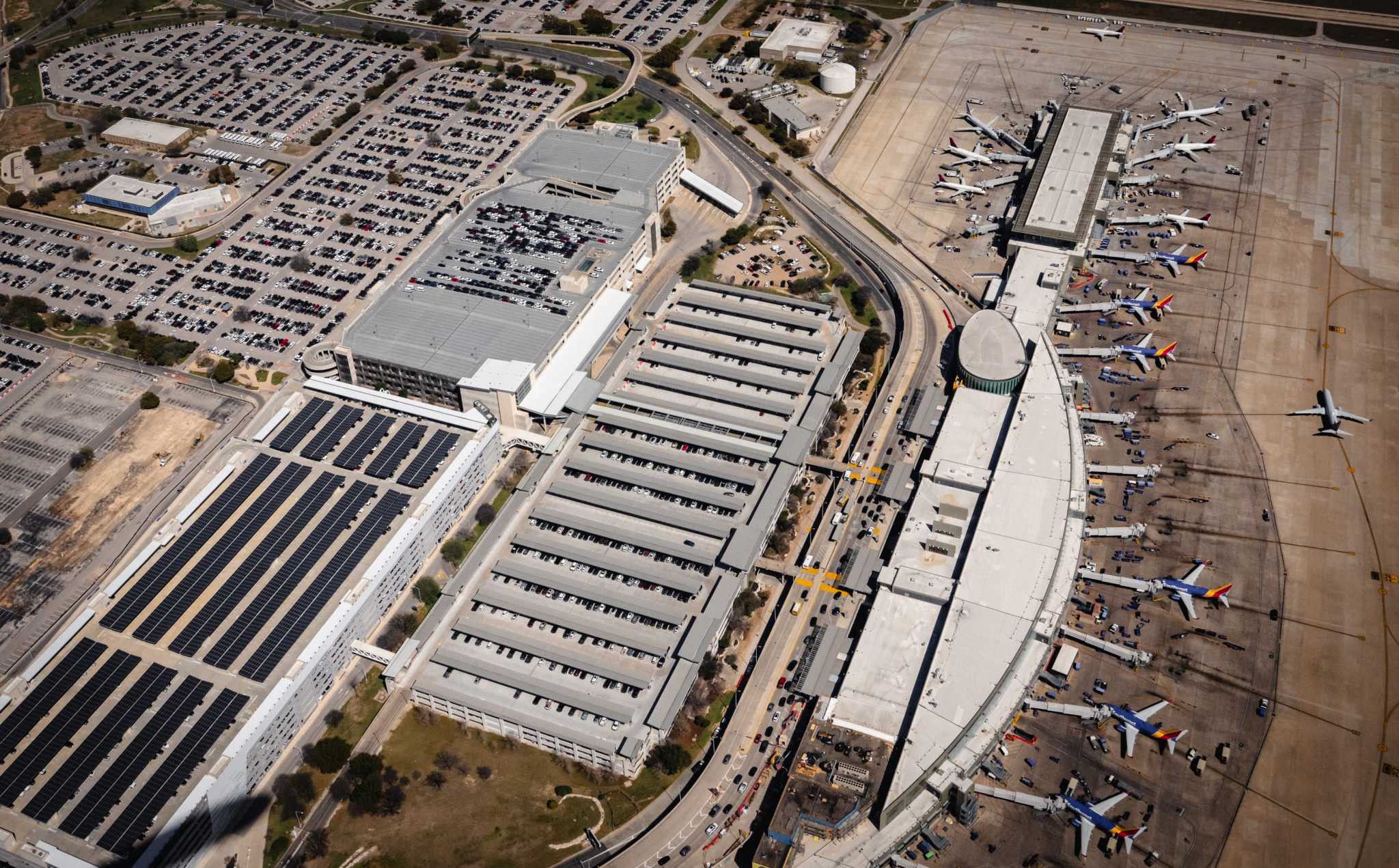
Austin's rising national and international profile over the years has made it difficult for Austin-Bergstrom International Airport to keep pace with the city's growth and popularity.
To walk through the airport is to walk through an embodiment of the city itself. Travelers can expect live music at nearly every corner, local favorites such as breakfast tacos and barbecue, and infrastructure straining under the weight of overwhelming growth and high demand.
Originally designed to serve 11 million travelers a year, Austin-Bergstrom was successfully operating at that size for years. However, as Austin began to turn into a tech, music and financial hub, officials knew its airport needed to grow. In 2019, nine gates were added to accommodate 15 million passengers annually. Yet, as Austin's rapid growth continued, the expansion proved insufficient almost immediately after completion.
Today, the airport is over capacity and understaffed, routinely accommodating more than 20 million travelers a year. Over the next five years, Austin-Bergstrom plans 14 new projects to redefine the airport and accommodate current and future growth.
According to Upgraded Points, Austin is the eighth fastest-growing airport in the country, growing 13.23% in recent years.
“Can the airport handle 20 million people? It can. We've successfully done it for several years in a row,” said Sam Haynes, the airport’s deputy chief of communications.
The airport’s two-pronged approach includes short-term projects to alleviate immediate stress, such as a new outbound baggage handling system, expanded passenger screening locations, a terminal expansion, and a redesign of the international arrivals process. The most immediate change, kicking off May 12, will add 12,000 square feet to the departure area to prevent security lines from spilling onto sidewalks.
“Now, it's just not the experience that our customers want, and quite frankly, it's not the experience we think this community deserves," Haynes said. "And so that's why we're moving forward with these near-term projects, to get relief as soon as we can.”
Long-term projects include a $865 million expansion of the arrivals and departures hall, expected by 2030, and a Concourse B Connector Tunnel adding 20 to 26 gates, with potential for nearly 40 gates in the future. By 2030, the airport aims to serve 30 million travelers.
“We're aiming to be able to comfortably serve 30 million and give or take. You know, 2 million, 3 million is not going to be a game changer, but it's unlikely that the airport would just rapidly expand in the next five years to 40 million. That's not possible,” Haynes said.
Funding comes from airport revenue bonds and the federal government.
U.S. Rep. Lloyd Doggett, D-Austin, has advocated for expansion and safety changes, citing a near-miss event in February 2023.
"We were about 150 feet away from a catastrophe in Austin that would have been worse than the one that happened over the Potomac in Washington," Doggett said.
Air traffic control staffing remains a concern. The FAA had aimed for 60 controllers by 2024, but Doggett disputes current staffing levels.
"We do have now 11 trainees, but that's a mixed blessing. It's the largest number of trainees we've had. But it takes time for them to learn," he said.
Doggett also expressed concerns about potential FAA cutbacks under Elon Musk’s Department of Government Efficiency.
"The FAA administrator announced in one of the newscasts the other day that they expect more cutbacks in FAA staff," Doggett said. "That means fewer people to review our air traffic controllers, fewer people to review these construction plans."
One proposed solution is emergency federal funding via the Airport Improvement Program Letter of Intent, which could grant $200 million.
Meanwhile, stakeholders like Shane Harbinson, chief development officer for Austin’s Aviation Department, emphasized long-term planning.
"When we were looking at what our next phases are going to do, or what the development plan is, we really looked at what's the long-term use of those 4,200 acres," Harbinson said. "Following that theme, we can go up to about 75 to 80 million passengers a year."
Jeremy Martin, Austin Chamber of Commerce president and CEO, highlighted the airport’s role in economic growth.
"So, air service is a key priority for especially headquartered companies, as they are trying to connect with their operations across the globe," Martin said.