

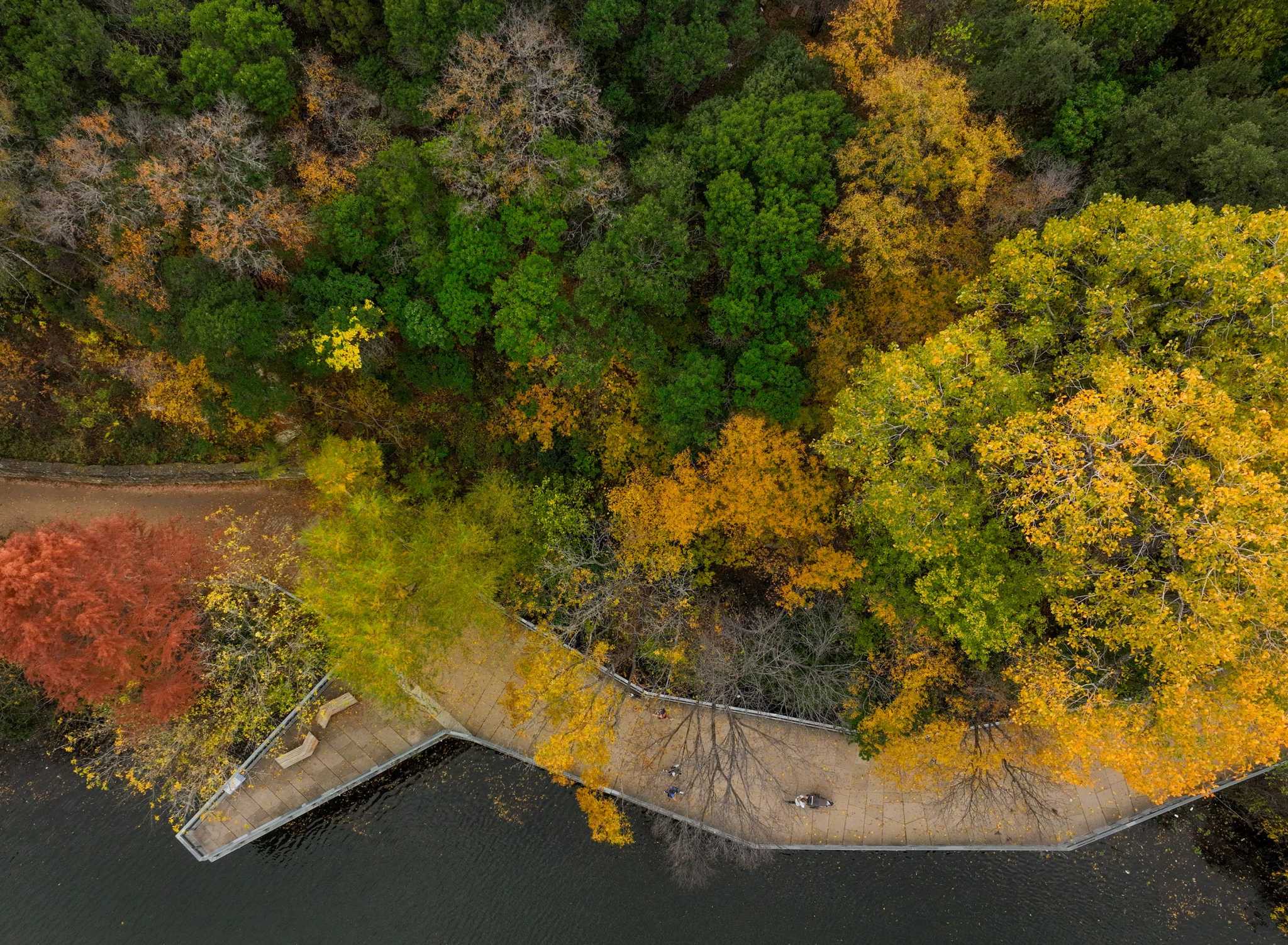
Colorful fall foliage on the banks of Lady Bird Lake in downtown Austin on Monday December 5, 2022.
Austin’s leaves are finally about to catch up to the calendar.
A regional fall foliage map projects that Central Texas will slide into its first real hint of color around Nov. 17, with Austin’s best reds, oranges and golds arriving closer to the end of the month.
When do leaves change color in Austin? See 2025 fall foliage map
Austin’s trees usually hit fashionably late on the fall calendar, and this year is no different. Forecast maps that track foliage across the country show our area moving from “little to no color” into “low color” right around Nov. 17, with peak color for much of Central Texas expected around Thanksgiving.
That lines up with typical Texas timing. Statewide, many spots see their best color between about Nov. 15 and Nov. 25, especially in North Texas, East Texas and the Hill Country.
What is fall foliage?
All summer, leaves look green because they are stuffed with chlorophyll, the pigment that helps trees turn sunlight into energy.
As days get shorter and the angle of the sun changes in fall, trees get the signal to start shutting down for winter. They stop making chlorophyll, the green fades, and other pigments that were there all along finally show through:
- Carotenoids, which give yellows and oranges
- Anthocyanins, which give reds and purples
Weather is the other big player. Cool, crisp nights and sunny days help build brighter reds. Long stretches of heat or drought can mute the show or make leaves brown and drop early.
Austinites do not have to leave the metro area to see the real color; you just have to know which trees to watch. Some of the biggest players in Austin’s canopy:
- Bald cypress: You see these tall, feathery trees lining Barton Creek, Lady Bird Lake and other waterways. In late fall, their needles turn a rusty orange or copper before they drop, so creek corridors can look almost canyon-like in color.
- Red oaks: Red oaks around neighborhoods, parks and trailheads are the ones that flash deep red, maroon and burgundy. In a good year with cool nights, some individual trees can glow almost crimson.
- Cedar elms: Common along streets and greenbelts, cedar elms usually shift to clear yellow. They are often among the first to hint at fall, with a soft wash of color before other trees catch up.
- Pecans: Our state tree does not always turn in dramatic fashion, but mature pecans can show buttery yellows and golds, especially in older neighborhoods and along the river.
Road trip season: Where to see fall colors in Texas
If you want a full-on leaf-peeping trip, some of the best color in the state comes from three parks that show up again and again on national foliage lists:
- Lost Maples State Natural Area (Hill Country): Tucked near Vanderpool, west of San Antonio, Lost Maples is famous for its stands of Uvalde bigtooth maples. Those trees typically peak in mid to late November. A Texas Parks and Wildlife foliage report from Nov. 6 says the recent strong cold front kicked off “great colors” throughout the park, with peak expected over the next week to week and a half.
- Eisenhower State Park (North Texas): On the shores of Lake Texoma, Eisenhower mixes lake views with hardwoods that turn orange and yellow along the bluffs and trails. It is often singled out as one of Texas’ top foliage spots on national lists.
- Daingerfield State Park (East Texas): In northeast Texas, Daingerfield blends tall pines with oaks and sweetgums that turn around the small lake, giving you classic “around-the-water” fall scenes.
Austin’s dry spell fades fall colors
Austin was on track for one of its driest starts to fall in nearly 70 years, with barely a tenth of an inch of rain recorded since early September at Camp Mabry. That dry stretch has pushed much of Central Texas into moderate drought and kept wildfire concerns high.
That kind of weather can blur the edges of leaf season. NOAA notes that drought and heat can dull color or knock leaves off early, while cooler, wetter conditions tend to support brighter, longer-lasting displays. Forecasts this year suggested that Texas’ fall color could be delayed by a week or two in some areas because of above-normal warmth in October and early November.
For Austin, that likely means: less of a “flip the switch” weekend, and more of a slow slide into color from mid-November into early December.