

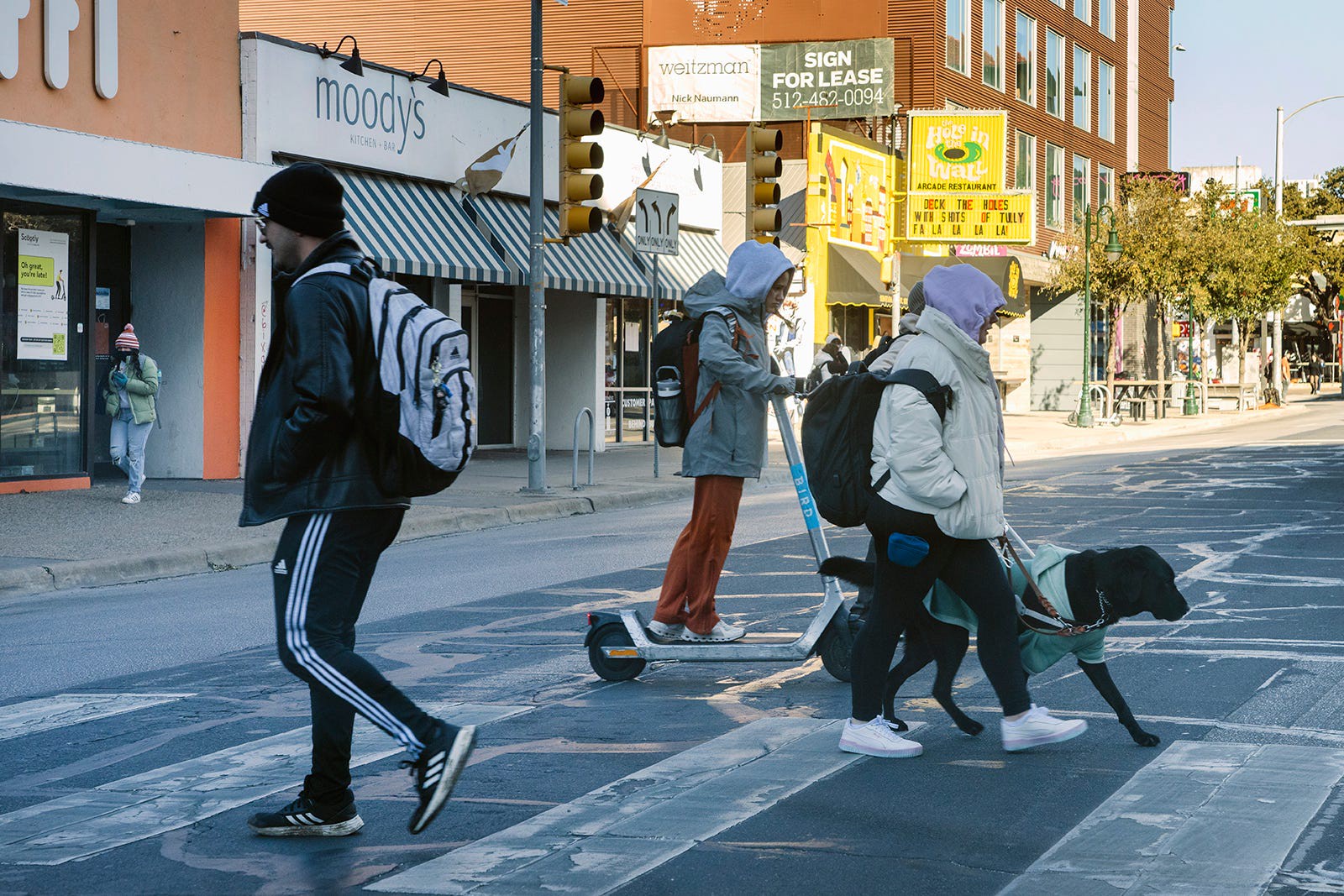
Winter is just around the corner in Central Texas, and with cold weather comes risks — but many winter weather-related accidents are avoidable if you’re careful.
Here are some of the things you can do to stay safe during a winter event:
Preventing car wrecks
Don’t drive if you don’t have to.
Car wrecks can cause head, neck and spine injuries from the car stopping suddenly while the body continues to move, as well as broken bones and chest injuries. Kristen Hullum, trauma injury prevention coordinator at St. David’s Round Rock Medical Center, said she also worries about abdominal injuries from the seatbelt being worn too high on the abdomen instead of across the hips.
She told people to stay home instead of trying to travel on the roads in poor weather, and while many people are emphasizing that, she emphasizes also to “stay inside your home.”
Preventing falls
During cold weather, emergency rooms also see a ton of people injured in falls, Hullum said. People step outside to get the mail or take out the trash and don’t realize that the sidewalks, driveways or porches have ice on them. Falls cause hip, leg and arm fractures, but they also can cause head injuries such as concussions or bleeding in the brain.
These falls are a particular worry for older adults, especially those on blood thinners.
Hullum also voiced concerns about a person who falls outside and is alone on the ground and can’t get up. Hypothermia or frostbite are a threat. “It could be absolutely fatal,” she said. “The trash can wait. The mail can wait.”
If you do have to go outside, be careful with every step. Bring your cell phone and a whistle to alert someone that you need help, and salt or sand your sidewalk, porch or driveway before stepping on it.
Preventing hypothermia
Dr. Ross Tobleman, emergency department director at Baylor Scott & White Medical Center — Round Rock, also worries about prolonged exposure to the cold.
If you are going to be out for a while, wear layers, especially covering extremities such as your feet and hands as well as your face. Then warm up inside with gentle warm air. Do not use hot water to try to treat frostbite or windburn.
During these weather events, he is especially worried about the homeless population and expects to start seeing them come into the emergency room with weather-related injuries.
Staying warm without creating a new emergency
Power outages can occur in the winter due to ice on trees and power lines. Power outages leading to people trying to heat their home with alternative means are a concern because of fire and carbon monoxide risks. Some guidelines:
- Do not use space heaters that do not have automatic shut-off switches.
- Do not use the oven to heat the house.
- Do not use portable generators inside the house.
- Do not run the car inside the garage.
- Be careful with candles and do not leave them burning without watching them.
- Do not use a fireplace that has not been cleaned and inspected recently.
- Make sure the fireplace flue is open before lighting it.
- Use extra blankets to stay warm instead of alternative heat sources.
If you avoid creating an emergency, that will free up fire and ambulance crews who will be stretched thin during the wintry weather, Tobleman said.
If you are receiving nursing care or hospice care, check in with your provider about getting portable oxygen tanks and other extra medical supplies sent to you or about help with electricity or heating concerns.
Get help if you need it
Cardiac events can increase during big temperature swings, Tobleman said.
Dr. Vivek Goswami, a cardiologist with Heart Hospital of Austin and Austin Heart, explained that cold weather causes muscles to constrict. The walls of the arteries are made up of smooth muscles. Constricting those muscles decreases the blood flow and causes the heart to have to pump harder and blood pressure to increase. The blood also clots more easily, which is why strokes and aneurysms can happen.
Anything below 30 degrees could lead to this constricting of muscles, Goswami said. Sometimes rapid changes in temperature also affect the heart this way. Texas is known for its 30-, 40- and even 50-degree swings in temperature, and this winter has been no different.
To avoid a heart attack or stroke during the winter or any other time of the year, do these things:
- Get screened for heart disease before a first heart attack. Annual monitoring of blood pressure, blood chemistry and cholesterol is important at any age. Do a screening check with a cardiologist by age 45 for men and 55 for women. That’s about 10 years before most people experience a heart event. Start those earlier if you have risk factors such as high blood pressure, high cholesterol or a family history of heart disease.
- Stick with routines such as taking medication properly, eating healthy food and exercising.
- Stay warm when going outside by dressing in layers and wearing proper winter clothing. This is especially important as we age and have thinner skin and less fat to keep us warm.
- Don’t wait to get help if you experience symptoms.
- Know the warning signs of heart attacks and heart disease. It can be different for men and women, but often it’s a discomfort in the center of the chest. Sometimes that discomfort is pain radiating down the left arm or in the jaw. For women, it can be more fatigue, back pain or even an upset stomach. Also look for a change in exercise ability, such as being less able to climb stairs or walk a long distance.
- For strokes, look for face drooping, inability to smile properly or equally on both sides, slurring of words and difficulty raising the arms.
If you are having chest pains, signs of a stroke or abdominal pains, don’t avoid getting help or calling for an ambulance, even if the weather is bad. And don’t try to drive yourself to the hospital.