

Snakes may not be out and about much when it’s cold outside, but since Texas winters can be mild, it’s never a bad idea to stay vigilant.
WorldAtlas, a geography news website, put together a list of Texas' six most snake-infested rivers — and the Colorado River, which passes through Austin, is on it, alongside Central Texas' Guadalupe River.
Which snakes can be found in the Colorado and Guadalupe rivers?
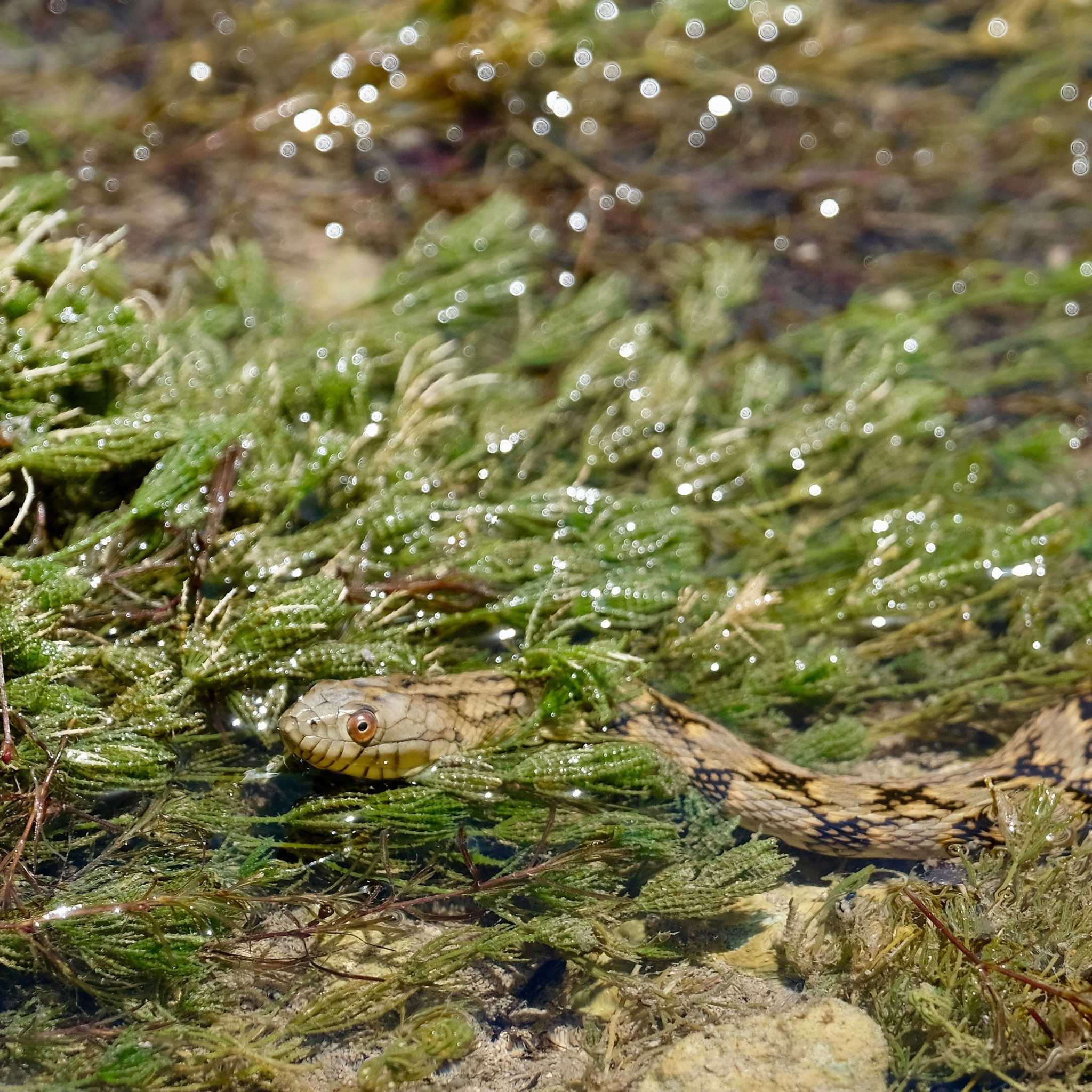
The site highlighted two species of water snake along the banks of the Colorado, including the diamondback water snake, which is most active at night, though can be seen during the day in the spring and fall. The diamondback water snake ( Nerodia rhombifier) is nonvenomous, unlike the similarly named diamondback rattlesnake, also found in Central Texas.
DIAMONDBACK WATER SNAKE:
- Size: Largest species of water snake in the area. It can be more than 4 feet long.
- Description: It’s marked with a repeating diamond shape or ’saddle’ pattern along the dorsal skin.
- Where it lives: It can be found primarily in along the banks of the water or in vegetation overhanging water.
- Notes: Its favorite prey is fish and amphibians, but it will also take crayfish and occasionally small water fowl. [Austin Parks & Recreation]
The Colorado is also home to the blotched water snake ( Nerodia erythrogaster blotched), also known as the plain-bellied water snake. It’s also nonvenomous and prefers areas with overhanging limbs or vegetation along the banks of the river. Both the diamondback and blotched water snakes prefer “quiet, slow-moving water,” WorldAtlas reports.
PLAINBELLIED WATER SNAKE:
- Size: Almost 3 feet long.
- Description: Most commonly encountered nonvenomous aquatic snake in Travis County. It’s very often confused with the Western Cottonmouth. Young plainbellied water snakes are strikingly patterned with dorsal ’bars' along the body and very distinct dorsoventral 'teeth' markings on the labial scales. They become more colorful with age.
- Where it lives: Primarily in or around water. It occasionally be found resting in aquatic vegetation and or tree branches overhanging water.
- Notes: Their favorite prey is fish, but it will also feed on crayfish and amphibians. [Austin Parks & Recreation]
Along the Guadalupe, rivergoers may find Western cottonmouths, a type of water moccasin nicknamed such because of the white tissue inside their mouths, which they often display when threatened. According to the Texas Parks and Wildlife Department, cottonmouths are the only semi-aquatic viper in the world. They can be dark brown, olive brown, olive green or almost solid black and marked with wide, dark bands. The snakes average about three and a half feet in length.
The Colorado River stretches more than 800 miles from Dawson County in northwest Texas to the Gulf of Mexico at Matagorda Bay, so snake populations might heavily depend on the region of Texas in which you find yourself. The Guadalupe River is much shorter — only about 237 miles — but also runs through several Texas regions from the Texas Hill Country to the Gulf of Mexico, so familiarize yourself with the snakes in your region to be prepared.
The other “snake-infested” Texas rivers include the Brazos, Trinity, Sabine and Neches. WorldAtlas said even though 105 species of snakes can be found along Texas' rivers, only 15 are venomous, and most snakes seen near rivers are harmless.
TPWD says there’s no hard-and-fast way to tell a venomous snake from a harmless one since both types can appear physically similar. The best way to be prepared is to learn which venomous snakes appear in your area and how to identify them.
Which venomous snakes can be found in Texas?
Texas is home to four groups of venomous snakes — copperheads, cottonmouths, rattlesnakes and coral snakes — according to TPWD.
Copperheads are identifiable by chestnut or reddish-brown bands on a lighter-colored body, and they’re often found in rocky or wooded areas. They’re rare in dry areas, and in the spring can be found along streams and rivers. They’re mostly found in central, west and southern Texas.
Cottonmouths, in addition to the identifying characteristics like dark bodies and white tissue in their mouths, can be primarily found in the eastern part of the state along waterways.
Texas is home to multiple types of rattlesnakes, including:
- Western massasauga
- Desert massasauga
- Western pygmy rattlesnake
- Western diamondback
- Timber rattlesnake
- Mottled rock rattlesnake
- Banded rock rattlesnake
- Blacktail rattlesnake
- Mojave rattlesnake
- Prairie rattlesnake
Not all of these rattlesnakes can be found throughout Texas, but the western diamondback is the state’s most common rattler, per TPWD.
Coral snakes are in the same family as Asia and Africa’s cobra family and are the most easily recognizable venomous snake due to their bright colors. The pattern is a broad black ring, a narrow yellow ring and a broad red ring. It’s important to note that a king snake, which is harmless, has a similar pattern. There’s a common rhyme to remember the difference: “Red and yellow, kill a fellow — red and black, you’re OK, Jack.” (Some rhymers say “friend of Jack,” but the sentiment remains the same.) TPWD notes that harmless snakes will never have red and yellow colors touching.
How to avoid snakes and what to do if you find one
Avoid tall grassy areas and keep your lawn mowed and trimmed. At your home, remove any piles of rocks, brush, wood or debris, as snakes and rodents will often hide in those areas. Never put your hands or feet where you can’t see them if you’re not wearing protective gear. If you see a snake, don’t kill it — even if it’s venomous — as snakes serve an important role in the environment, and you can also put yourself at risk if you try to interact. Generally, snakes are more scared of you than you are of them, so they likely won’t attack unless threatened — just let the snake go on its merry way and you go yours.
What to do if you're bitten by a venomous snake
Austin-Travis County EMS says to avoid applying tourniquets or sucking the venom out of the bite. If possible, keep the injured area above the person's heart level and apply ice or cold packs to the area to reduce swelling. If possible, take a photo or write down a good description of the snake. Call 911 if there's an obvious change in wellbeing, or if the bitten person can't breathe. A rash or redness can also indicate a need to call 911. For less urgent situations, EMS recommends contacting a doctor or the poison help line at 800-222-1222.