

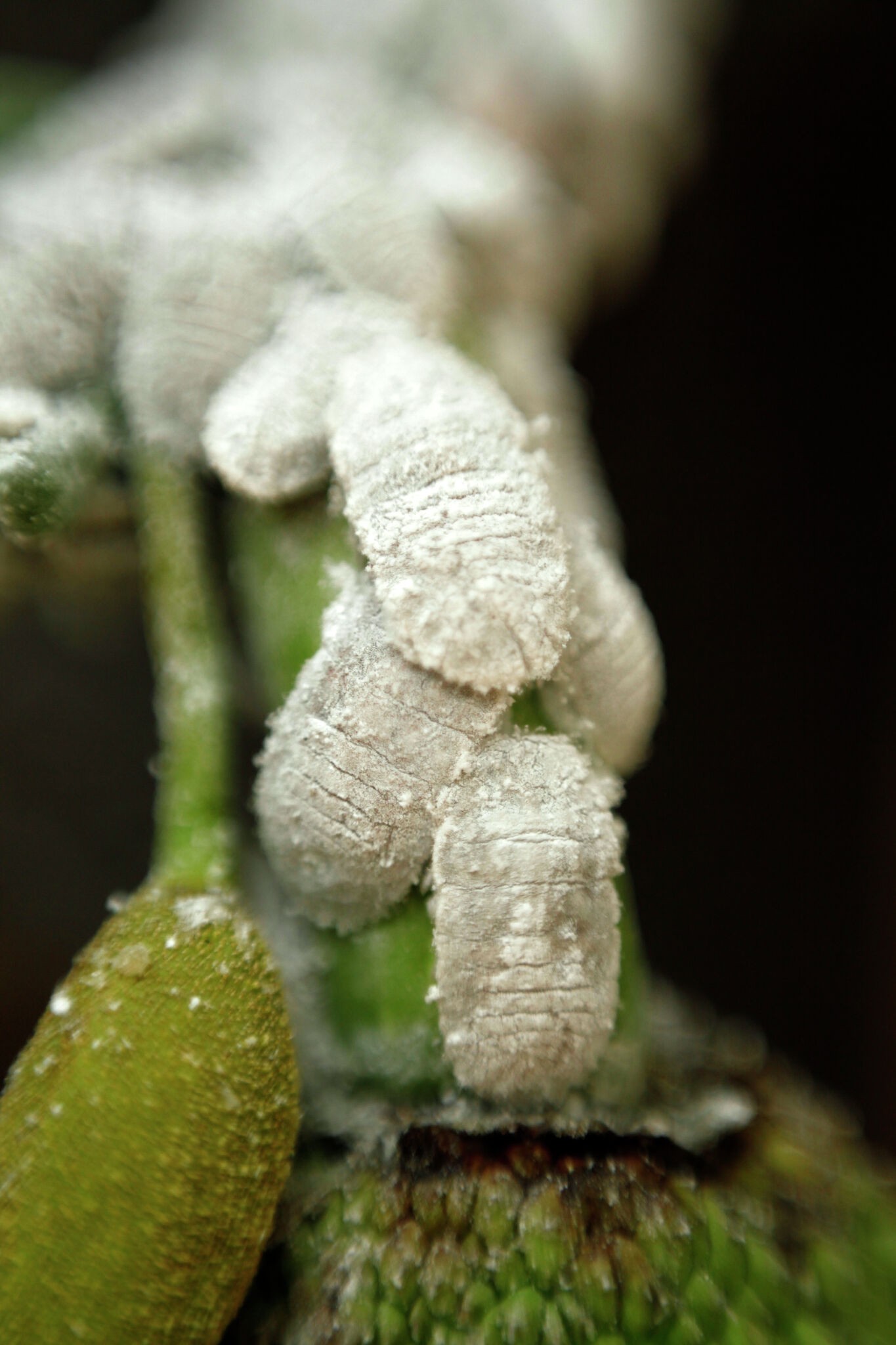
Mealybugs are common pests of houseplants. They are pink, soft-bodied insects covered with a white, waxy, cottony material. The white “fluff” helps protect them from excessive heat and moisture loss. (Photo by Zakir Hossain Chowdhury/NurPhoto) (Photo by Zakir Hossain Chowdhury/NurPhoto/Corbis via Getty Images)
Texas ranchers and hay producers have a bug problem. An annoying and encroaching pest has entered the Lone Star State, known as the mealybug (Helicococcus summervillei).
On Wednesday, Texas Agriculture Commissioner Sid Miller issued an urgent warning about the pasture mealybug, an invasive species previously unreported in North America that is already harming pastureland in several Texas counties.
"This is a completely new pest to our continent, and Texas is once again on the front lines," Miller said. "If the pasture mealybug spreads across Texas grazing lands like it has in eastern Australia, it could cost Texas agriculture dearly in lost productivity and reduced livestock capacity."
These insects could be in your home, feeding on your common houseplants as well.
What are mealybugs?
According to the University of Wisconsin-Madison, mealybugs are small, soft-bodied insects that are common plant pests — especially on houseplants, succulents, and greenhouse plants. They generally feed on house plants.
The Wisconsin Horticulture report states that mealybug feeding weakens plants, slowing their growth and leading to yellowing leaves, leaf drop, wilting, and overall decline. Severe infestations can even kill the plant. Citrus mealybugs also inject a toxin that deforms plant tissues. Additionally, mealybugs produce honeydew, which promotes the growth of sooty mold.
Where is the mealybug infestation in Texas?
During the current season, the pest has been found in the following Texas counties, according to the Texas A&M AgriLife Extension:
- Austin
- Brazoria
- Brazos
- Burleson
- Calhoun
- Cameron
- Colorado
- DeWitt
- Fayette
- Fort Bend
- Galveston
- Goliad
- Hidalgo
- Jackson
- Lavaca
- Matagorda
- Refugio
- Robertson
- Victoria
- Washington
- Wharton
- Willacy
What types of grass are at risk in Texas?
The pasture mealybug targets many of the forage and turf grasses commonly found in Texas. Plants known to be affected include:
- Bermudagrass
- Bahia grass
- Johnsongrass
- Hay grazer (sorghum–sudangrass)
- St. Augustine grass
- Various bluestem species
- other tropical or subtropical grasses
What are the signs of a mealybug eating my plants?
Signs of house plants and pasture being affected by mealybug infestation include the following:
- Yellowing and discoloration of leaves within a week of infestation
- Purpling or reddening of foliage
- Stunted growth and drought stress despite rainfall
- Poorly developed root systems
- Dieback starting at leaf tips and moving downward
- Premature aging, making plants more vulnerable to pathogens
What should people do if they see signs of a mealybug infestation?
If you see suspicious activity with your plants, you can contact the Texas Department of Agriculture at 1-(800)-TELL-TDA.
According to the Texas A&M AgriLife Extension, at this time, there are no proven management strategies for pasture mealybug in Texas. Most of the limited guidance available comes from Australia, and it may not apply well to Texas production systems. Significant research is still needed.