

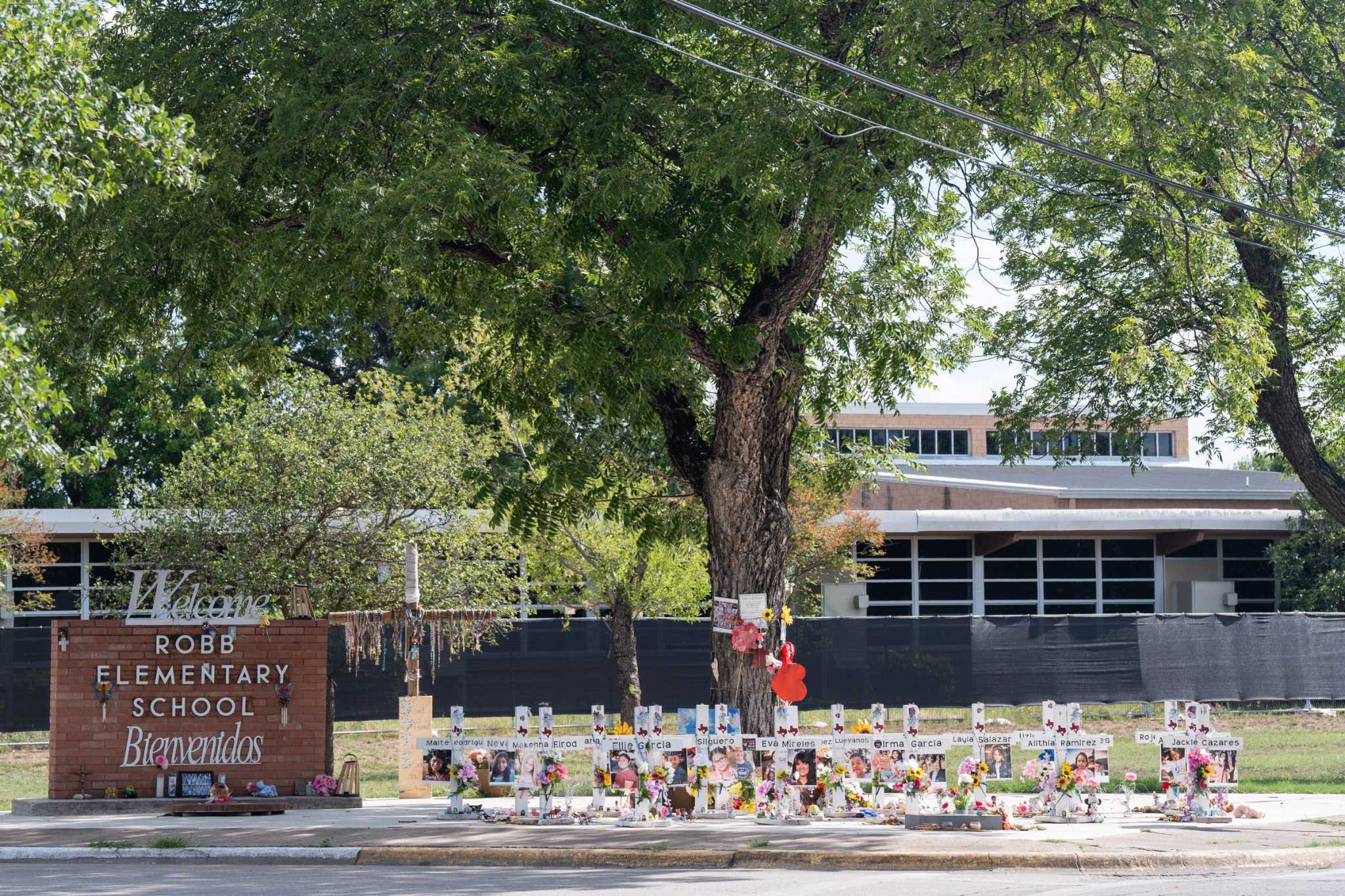
Uvalde school district police officer Adrian Gonzales was one of the first officers on the scene of the 2022 mass shooting at Robb Elementary School.
Former Uvalde schools police officer Adrian Gonzales is on trial in Corpus Christi on felony charges tied to what prosecutors say was a failure to act during the 2022 Robb Elementary massacre — a rare and closely watched attempt to hold an officer criminally accountable for inaction during an active shooter event.
The trial seated a jury on Monday, and open statements began Tuesday.
Here are five things to know about the trial.
1. The background: what happened at Robb Elementary
On May 24, 2022, a gunman walked into Robb Elementary School and killed 19 children and two teachers.
Seventy-seven minutes passed before law enforcement breached the classroom and killed the shooter, according to state and federal investigations.
During that time, students trapped inside called 911 and begged for help, investigators found. Reviews later described the police response as a failure marked by breakdowns in leadership, communication and training.
2. Gonzales’s charges: prosecutors say Gonzales heard gunfire and didn’t act
The case centers on accused inaction during an active shooter situation. Gonzales is charged with 29 counts of abandoning or endangering a child, according to court records.
The indictment alleges Gonzales was one of the first officers inside the school, heard gunshots and was advised of the shooter’s general location. Prosecutors say he failed to engage, distract, delay or confront the shooter despite having active-shooter training and time to respond.
Each of the 29 counts corresponds to a child who was killed or wounded in the classrooms, prosecutors said.
Each count carries a potential sentence of up to two years in jail if Gonzales is convicted.
3. Of nearly 400 responding officers, only two were charged
Nearly 400 officers responded to Robb Elementary, but Gonzales and former Uvalde schools police chief Pete Arredondo are the only two officers facing criminal charges.
Arredondo was the on-scene commander during the shooting and has been separately charged with 10 counts of felony child endangerment. Prosecutors say Arredondo failed to identify the situation as an active shooter, ordered officers to delay entry while searching for keys, attempted to negotiate with the gunman and directed officers away from immediate confrontation, even as children were being shot inside the classrooms.
While Gonzales was not the on-scene commander, prosecutors argue that doesn’t matter. The case hinges on whether Gonzales had an individual duty to act once he knew children were in danger — even amid confusion and broader command failures.
4. The case was moved out of Uvalde
At the request of Gonzales’ attorneys, the trial was transferred to Corpus Christi, with prosecutors agreeing it would be difficult to seat an impartial jury in Uvalde, where the shooting left deep and lasting trauma, court filings show.
Prosecutors still had issues finding impartial jurors during Monday's jury seating. The seating took 12 hours, with some potential jurors expressed strong emotions and argued they could not set aside their beliefs to hear the case in an unbiased manner, per the San Antonio Express-News.
5. The stakes go beyond this one case
Cases charging officers for failure to act during mass shootings are rare, legal experts have said. The most prominent comparison — a prosecution after the 2018 Parkland school shooting — ended in acquittal.
A conviction here could reshape how courts view police responsibility during active shooter events; an acquittal would reinforce how high the bar remains for criminal accountability tied to inaction.