

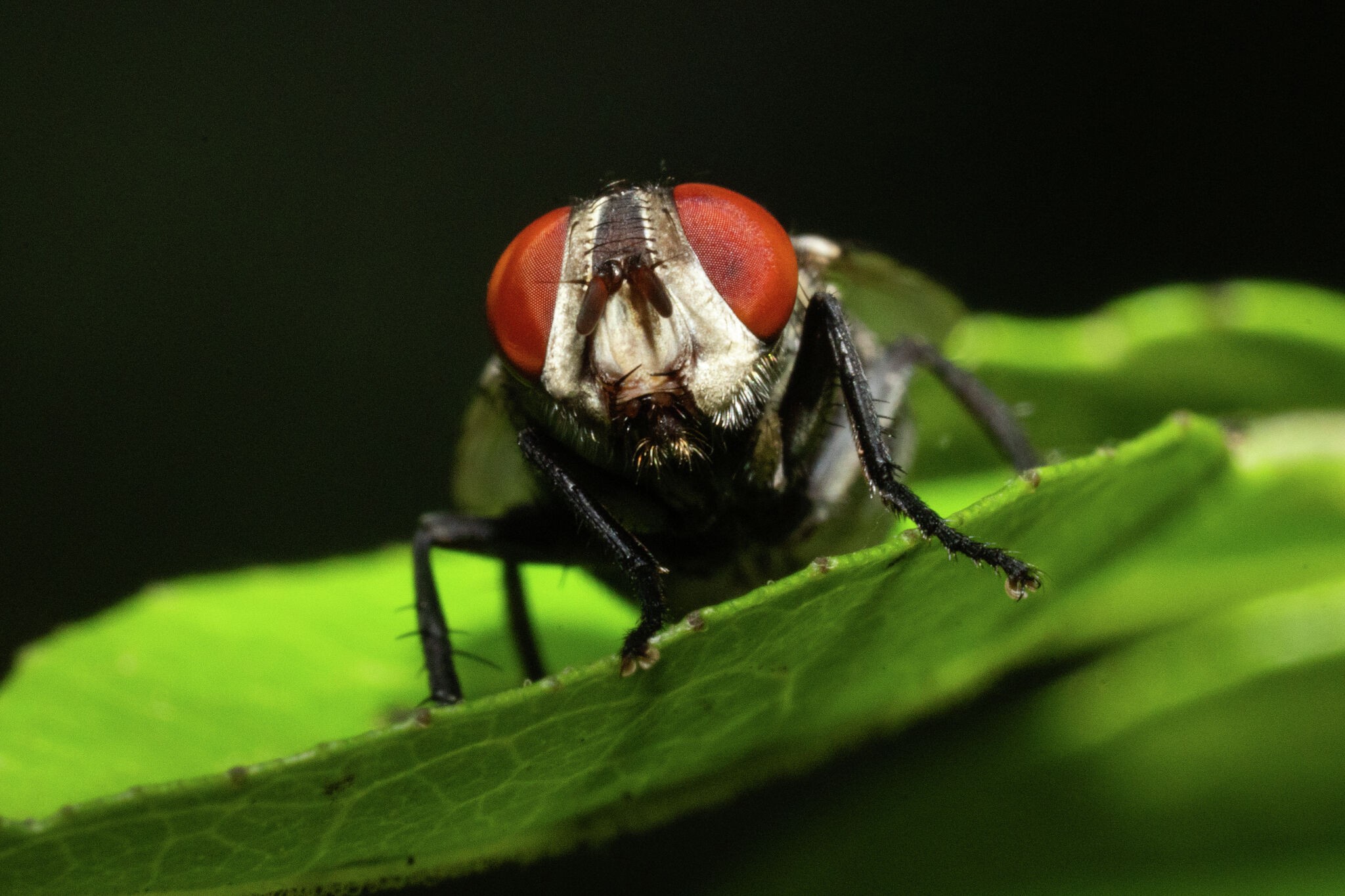
New World screwworm flies are roughly the size of a typical housefly—or a bit larger—and have orange eyes, a metallic blue-green body, and three dark stripes running along their backs. (Photo by Thilina Kaluthotage/NurPhoto via Getty Images)
A U.S.-based facility dedicated to releasing sterile screwworm flies began operations Monday in Texas, marking a major step in efforts to prevent the flesh-eating parasite from crossing the Mexican border and damaging the American cattle industry.
According to the Associated Press, U.S. Agriculture Secretary Brooke Rollins and Texas Gov. Greg Abbott introduced the new center at a former Air Force base near Edinburg. From there, millions of sterile male New World screwworm flies — raised in Mexico or Panama — can be released on both sides of the border.
The U.S. Department of Agriculture is constructing a new $750 million facility nearby to breed sterile flies, though Rollins said it won’t be completed until late 2027. In the meantime, the agency is investing $21 million to transform a fruit fly breeding center in far southern Mexico into a screwworm fly production site, with operations set to begin this summer.
The sterile males would breed with wild females, which mate just once during their several-week adult lifespan. The females would still lay eggs in open wounds or on mucous membranes, but those eggs would not hatch into the flesh-eating maggots that can infect livestock, wildlife, pets and even people.
According to The Centers for Disease Control and Prevention, The New World screwworm is a parasitic fly (Cochliomyia hominivorax) whose larvae (maggots) feed on the living tissue of warm-blooded animals, including livestock, wildlife, pets, and—rarely—humans.
Here’s the key thing that makes it dangerous: unlike most flies that lay eggs in dead or decaying tissue, female screwworm flies lay their eggs in open wounds or natural body openings. When the eggs hatch, the larvae burrow into the flesh, causing a painful and potentially fatal condition called myiasis if left untreated.
Is the New World Screwworm in Texas?
On Jan. 29, Gov. Greg Abbott issued a statewide disaster declaration in a preemptive response to the potential spread of the New World Screwworm fly that could have a deadly impact on livestock and wildlife.
The parasitic fly is not in the U.S. yet, but it is spreading north from Mexico and Central America. Abbott said that infestation of the fly larvae — which primarily burrows into and feeds on the flesh of livestock, wildlife and pets — could pose “a serious threat.” There are some cases, the Center for Disease Control and Prevention reported, of infestation in people.
The maggots cause "painful and foul-smelling wounds,” the CDC said, resulting in extensive tissue damage and potentially death.
“I will not wait for such harm to reach our livestock and wildlife,” Abbott said in a news release. “With this statewide disaster declaration, the Texas NWS Response Team can fully utilize all state government prevention and response resources to prevent the re-emergence of this destructive parasite.”