

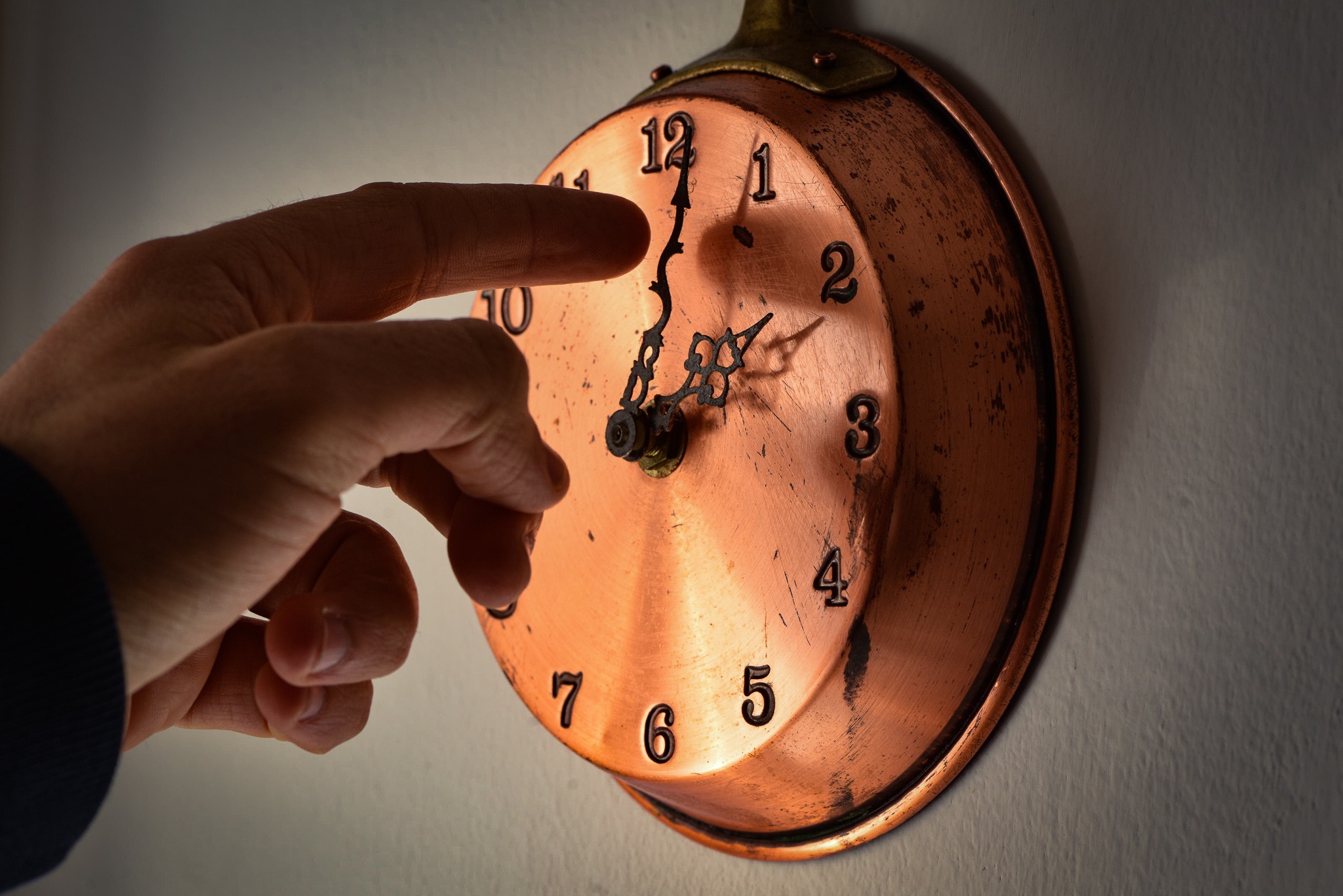
The purpose of Daylight Saving Time is to provide more daylight hours, primarily to save energy. Most states observe Daylight Saving Time, with the exceptions of Hawaii and most of Arizona. (Photo by Lorenzo Di Cola/NurPhoto via Getty Images) NurPhoto/NurPhoto via Getty Images
Whether digital or analog, Texans will set their clocks forward in just a few weeks as daylight saving time returns.
Despite years of debate in Congress and in Austin about ending the twice-yearly clock change, daylight saving time remains in place for 2026. That means most of the U.S., including Texas, will “spring forward” in early March.
Daylight saving time begins at 2 a.m. Sunday, March 8.
Clocks will jump forward one hour — from 2 a.m. to 3 a.m. — marking the start of Daylight Saving Time (DST).
Most smartphones, computers and other connected devices will update automatically. But Texans will need to manually change non-smart devices such as microwaves, older car radios and analog wall clocks.
A simple way to remember: “spring forward, fall back.”
When does daylight saving time end in 2026?
Daylight saving time ends at 2 a.m. Sunday, Nov. 1.
Clocks will move back one hour, giving most Americans an extra hour of sleep. Sunrise and sunset will occur about an hour earlier beginning Nov. 1.
Arizona, Hawaii and several U.S. territories do not observe daylight saving time.
Is daylight saving time going away?
Efforts to eliminate the biannual clock change have stalled at both the federal and state levels.
In 2022, the U.S. Senate unanimously passed the Sunshine Protection Act, which would have made daylight saving time permanent. The House did not take it up, and it was not signed into law.
The bill resurfaced in Congress in 2025 but again failed to advance.
President Donald Trump has voiced support for ending the clock changes. In December 2024, then-president-elect Trump said he wanted to eliminate daylight saving time and move to year-round standard time. He reiterated that stance in April 2025.
“The House and Senate should push hard for more Daylight at the end of a day,” Trump wrote on Truth Social. “Very popular and, most importantly, no more changing of the clocks, a big inconvenience and, for our government, A VERY COSTLY EVENT!!!”
Not all lawmakers agree.
“If permanent daylight savings time becomes the law of the land, it will again make winter a dark and dismal time for millions of Americans,” Sen. Tom Cotton, R-Ark., said in October 2025, arguing it would deprive Americans of morning sunlight.
Until Congress passes legislation and a president signs it into law, the clock changes will continue nationwide.
Will Texas stop changing clocks?
Texas lawmakers have also debated ending the time change.
House Bill 1393, known as “Texas Time,” would keep Texas on daylight saving time year-round and eliminate the twice-a-year clock adjustment. Gov. Greg Abbott signed the bill in June 2025.
However, the law cannot take effect unless Congress changes federal law to allow states to adopt permanent daylight saving time.
Supporters argue a consistent time year-round would reduce confusion, improve safety and help productivity. Opponents cite health and safety concerns and argue standard time year-round would be preferable.
For now, Texans will still change their clocks in March and November.
Why do we have daylight saving time?
Daylight saving time (DST) claims a variety of other names: daylight savings time, daylight time, summer time (not to be confused with summertime). It refers to the practice of setting clocks forward by one hour during the warmer months of the year and then setting them back one hour in the fall.
One way to remember the pattern: “spring forward, fall back.”
The idea dates back to World War I, although some credit Benjamin Franklin for daylight saving time due to a satirical letter he wrote in 1784 stating: “Every morning, as soon as the sun rises, let all the bells in every church be set ringing: and if that is not sufficient, let cannon be fired in every street to wake the sluggards effectually.”
To maximize resources for the war, Germany and Austria implemented the first daylight saving time in 1916. The U.S. did the same in 1918. An outdated idea, some argue.
The general idea of daylight saving time is to maximize the use of natural daylight, according to the Almanac. This always occurs around the summer months. As the earth moves around the sun and is tilted on its axis, certain parts of the world experience longer days during certain months. For those in the northern hemisphere, like the U.S., these longer days run from March to November, with June to August seeing the longest days.
For those in the southern hemisphere, such as Australia, the seasons are reversed: June through August mark winter months and are, therefore, the shortest of the year.