

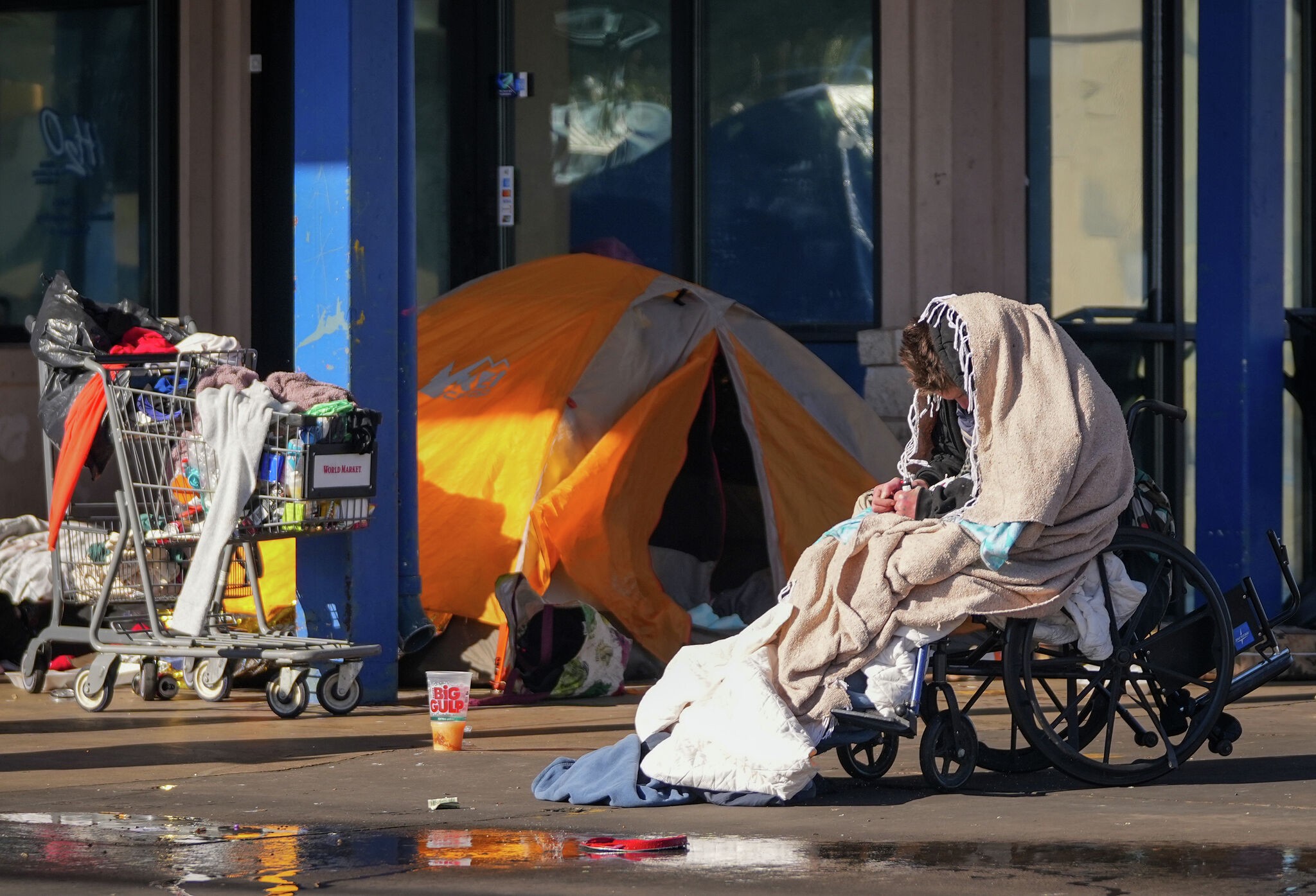
Amber warms herself in the sun outside her tent at a car wash on Menchaca Road on Monday, Jan. 26, 2026, where she and several other unhoused people have been sheltering during a major winter storm. Overnight temperatures fell into the teens.
Three years after becoming a standalone agency, Austin’s Homeless Strategies and Operations has its first strategic plan.
The two-year roadmap, released this week, calls for sweeping changes to agency operations through 2027 — from tighter performance tracking to better public communication and contracting procedures — and includes several specific goals like adding 650 new shelter beds and two additional housing navigation centers.
“Over the next two years, we will build on the progress our city has made while addressing the urgent and evolving challenges of homelessness,” Homeless Strategies and Operations Director David Gray wrote in the report. “Our strategic plan is both ambitious and practical: it identifies the actions we will take together, the values that guide us, and the measurable ways we will track our progress.”
The plan arrives at a politically sensitive moment for city leaders — three months after voters rejected a proposed property tax increase that would have helped fund homeless services during an ongoing budget crisis — and amid continued scrutiny over how Austin is addressing its growing homeless population.
The city is currently reviewing its social services contracts, including those with homeless service providers, an effort City Manager T.C. Broadnax announced after the failed tax rate election, to improve efficiency and transparency.
Many of the goals laid out in the 25-page strategic plan, which took eight months to produce, appear to align with those efforts and constraints. For example, it calls for office leaders to “pursue new public/private funding,” streamline contracting processes and implement a data-driven performance monitoring system.
Additional goals include:
- Increasing the involvement of people with lived expertise in policy development
- Finalizing a citywide outreach coordination plan
- Using technology to track real-time bed availability across the shelter system
- Implementing landlord recruitment strategies and incentive programs to boost unit availability
- Exploring how underutilized city property may be converted into shelters and navigation centers
Like City Hall at large — which has proposed a wave of public-facing dashboards aimed at rebuilding public trust — HSO also emphasized transparency in its report with plans for better website staffing, quarterly town hall meetings, the production of an annual report and an educational campaign for the business community.
Last year, City Council requested that the city launch public dashboards that track homeless encampment management and the performance of homeless service providers.
The latter was supposed to be completed by Dec. 3 but Gray extended the deadline to June 30. The encampment management dashboard is set to go live in fall 2025.
Feb 20, 2026