

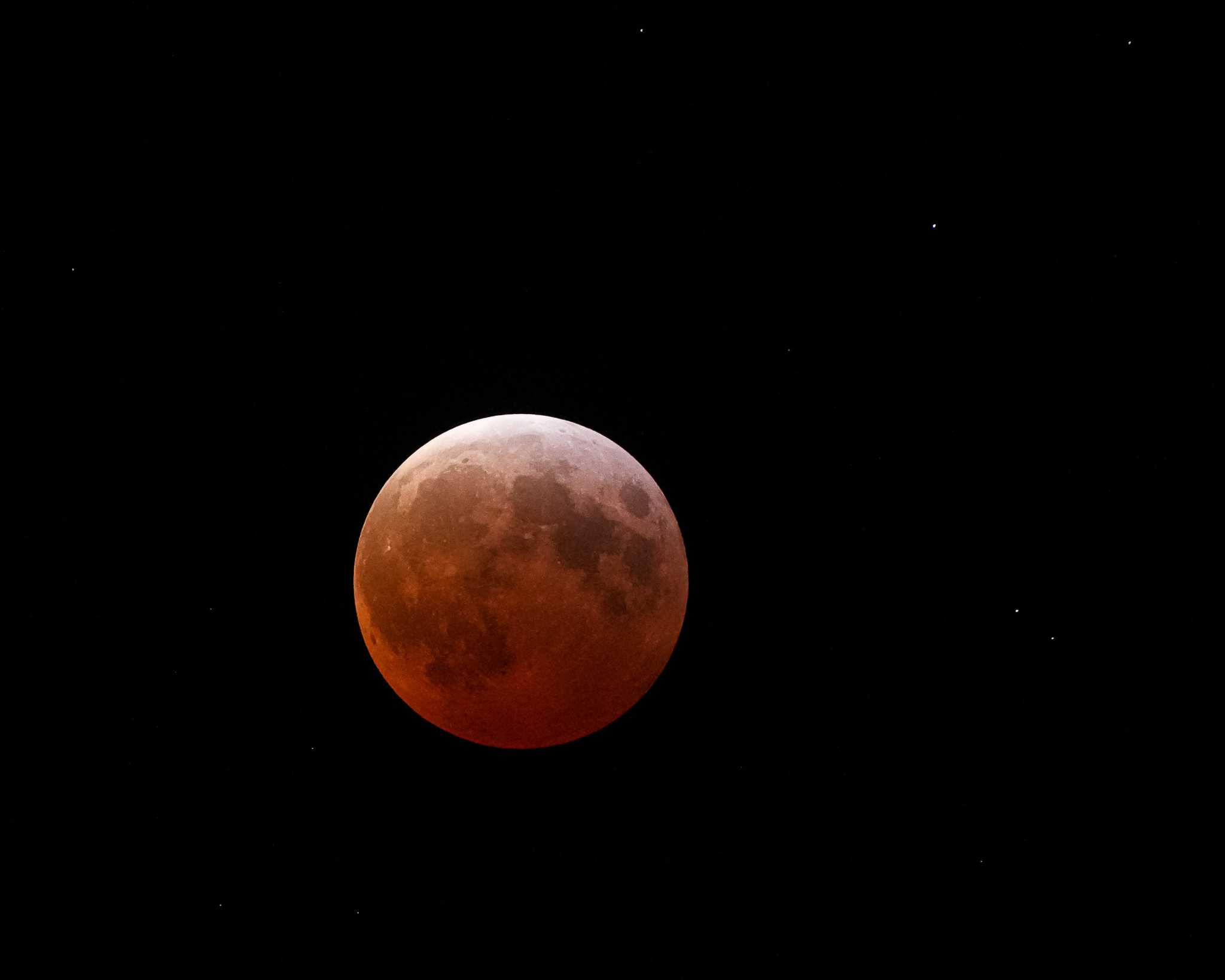
Moon watchers, stand by: March’s full moon will feature a total lunar eclipse. Lunar eclipses typically occur twice a year thanks to the moon’s tilted orbit — though total eclipses are only visible to parts of Earth, depending on timing.
Here’s what to know about the celestial phenomenon and how to view it from Austin.
Blood moons, which often refer to total lunar eclipses, happen when the full moon comes into complete alignment with the Earth and sun. This casts the moon in Earth’s shadow (called the umbra), where it dims and appears reddish-orange due to the blocked sunlight (except for the light from the edges of Earth). The rusty red color is where the term “blood moon” comes from.
A graphic shows the alignment of the moon, Earth and sun during a lunar eclipse (not to scale).
Scientific Visualization Studio/NASA
When is the next lunar eclipse/blood moon in 2026?
The first blood moon of the year is early on the morning of Tuesday, March 3.
This will be the only total lunar eclipse in 2026. There will be a partial lunar eclipse in late August.
What time is the 2026 total lunar eclipse?
March’s blood moon will peak at 5:33 a.m. in Austin, according to the Old Farmer’s Almanac. Totality, or the period when the moon will appear fully red, will span 58 minutes and 18 seconds.
Here is NASA’s full timeline for the eclipse, in Central Time:
- 2:44 a.m.: penumbral eclipse begins
- 3:50 a.m.: partial eclipse begins
- 5:04 a.m.: totality begins
- 6:03 a.m.: totality ends
- 7:17 a.m.: partial eclipse ends
- 8:23 a.m.: penumbral eclipse ends
Where will the blood moon be visible?
This total lunar eclipse will be seen in North and Central America, far western South America, eastern Asia and Australia, NASA reports. Central Asia and most of South America will catch a partial eclipse view.