

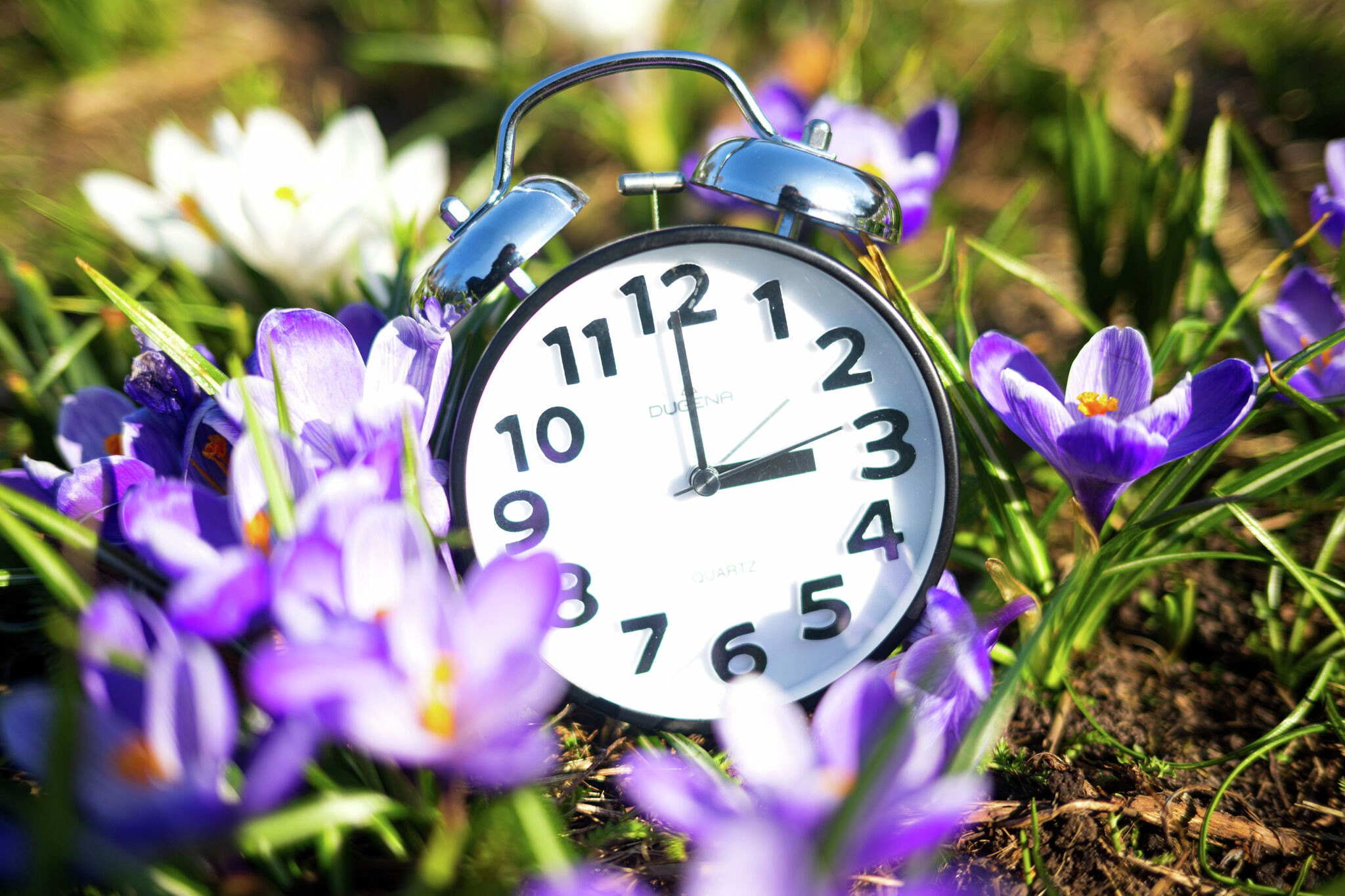
Texans should turn clocks on their non-smart devices forward one hour on Sunday, March 8.
Sina Schuldt/Picture Alliance via Getty Images
If you woke up confused or disoriented, you’re not alone — daylight saving time is the most likely culprit.
The “spring forward” time change occurred a week after meteorological spring began. Despite the groundhog’s predictions, Texas has already welcomed warmer weather along with the introduction of severe weather season — both indicative of the seasonal shift.
Here’s what to know about the time change practice and this year’s dates.
Did we lose an hour or gain an hour in the time change?
We technically lost an hour early Sunday morning, when time jumped forward from 2 a.m. to 3 a.m. and transitioned into local daylight saving time (DST).
Many devices, such as phones and computers, automatically change to DST. But non-smart devices, such as microwaves and some car radios, as well as any clock with hands, will need to be changed manually.
When does daylight saving time end?
The end of daylight saving time on Nov. 1 means there will be more light in the morning, and it will get dark earlier in the evening. Sunrise and sunset will be about one hour earlier on Sunday, Nov. 1, than they were on Saturday, Oct. 31.
For most Americans, except those in Arizona, Hawaii and a handful of other places, the end of daylight saving time means an extra hour of sleep on Nov. 1. It also helps the country accommodate more daylight in the mornings in preparation for winter.
How did daylight saving time start? 108 years of US law
Daylight saving time (DST) claims a variety of other names: daylight savings time, daylight time, summer time (not to be confused with summertime). It refers to the practice of setting clocks forward by one hour during the warmer months of the year and then setting them back one hour in the fall.
One way to remember the pattern: spring forward, fall back.
The idea dates back to World War I, although some credit Benjamin Franklin for daylight saving time due to a satirical letter he wrote in 1784 stating: “Every morning, as soon as the sun rises, let all the bells in every church be set ringing: and if that is not sufficient, let cannon be fired in every street to wake the sluggards effectually.”
To maximize resources for the war, Germany and Austria implemented the first daylight saving time in 1916. The U.S. did the same in 1918. An outdated idea, some argue.
The general idea of daylight saving time is to maximize the use of natural daylight, according to the Almanac. This always occurs around the summer months. As the Earth moves around the sun and is tilted on its axis, certain parts of the world experience longer days during certain months. For those in the northern hemisphere, like the U.S., these longer days run from March to November, with June to August seeing the longest days.
For those in the southern hemisphere, such as Australia, the seasons are reversed: June through August mark winter months and are, therefore, the shortest of the year.