

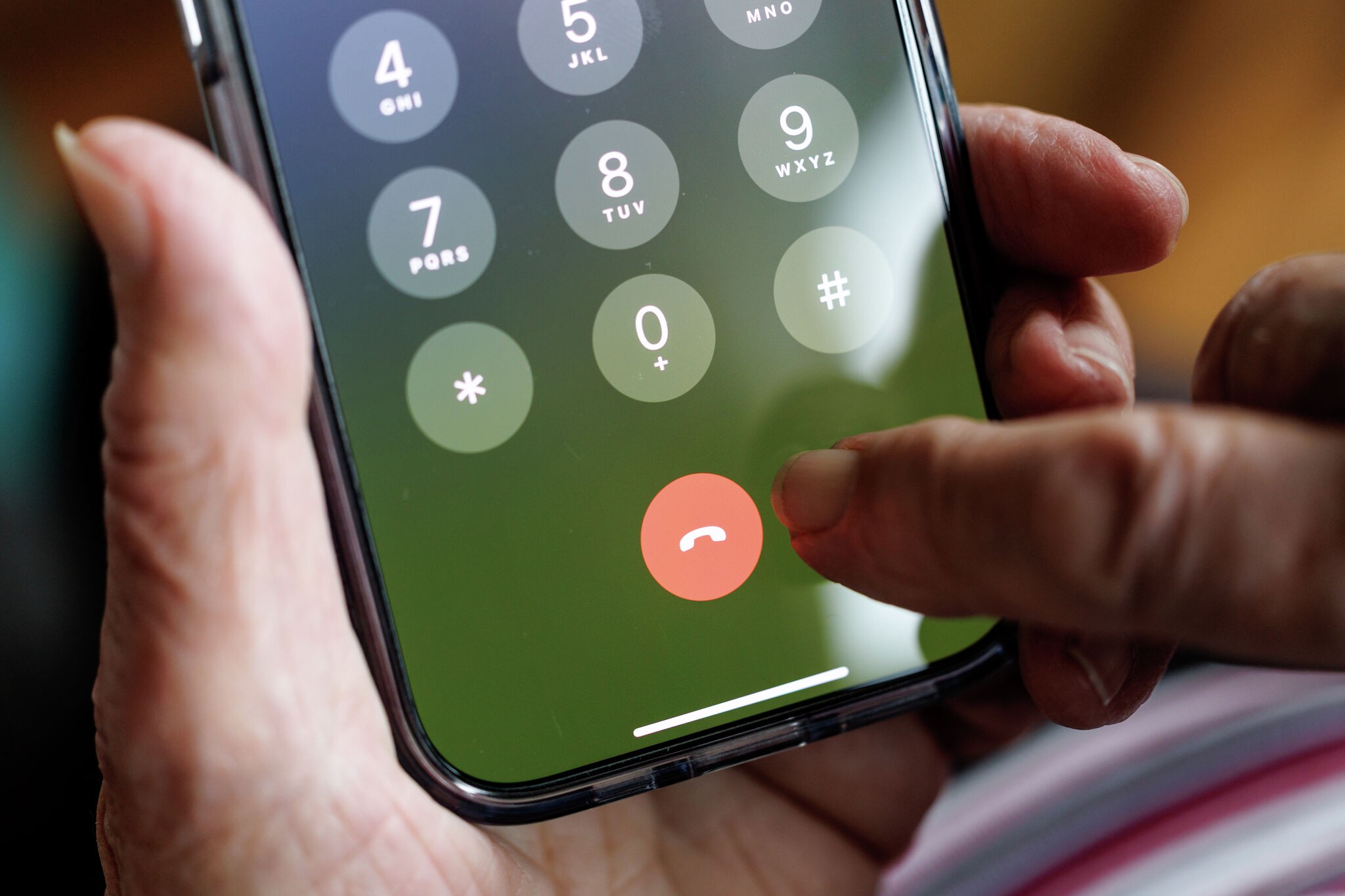
Scammers impersonating deputies, banks and family members are targeting Central Texas residents. Here’s how the calls work and how to block them on your phone.
The phone rings. A man identifies himself as a Travis County Sheriff’s Office deputy. He says you missed jury duty. A warrant has been issued for your arrest. But the whole thing can go away, he assures you, if you act quickly and pay a fine over the phone.
It is a lie.
The TCSO has been warning residents about this kind of call for years. In January, Leander police issued a similar alert, warning residents that callers posing as law enforcement or government officials had been threatening people with arrest warrants. But the mechanics of the fraud stay largely the same regardless of which badge is being impersonated.
Leander police and the TCSO say they will never request payment over the phone, through gift cards, or via cryptocurrency, and urged anyone receiving a suspicious call to hang up and contact the department directly.
Here is what residents in Central Texas need to know, and what tools are actually available to reduce the risk.
What does a scam call look like?
Local officials describe three main scripts.
The jury duty call is the most common. A caller claiming to be a sheriff’s deputy says the recipient missed a jury summons and a warrant has been issued. They demand immediate payment. Travis County Criminal District Court judges have warned publicly that any legitimate jury communication arrives by mail, never by phone.
The grandparent call is a second variant. The caller says a grandchild has been arrested and needs bond money immediately. An accomplice sometimes poses as the grandchild or as an attorney. According to the sheriff’s office, these calls often show the Travis County Jail as the incoming number on caller ID — a spoofed display that has no connection to the actual facility.
Bank impersonation calls typically begin with a text that looks like a fraud alert from a financial institution. When the victim responds or calls back, a scammer posing as a bank security representative instructs them to transfer funds into a “safe” account to protect against the supposed breach — an account the scammer controls.
Across all three, the common denominator is pressure and untraceable payment: gift cards read aloud over the phone, cryptocurrency, wire transfers, or a courier at the door. The sheriff’s office is unambiguous: it will never request any of those forms of payment, for any reason.
“Law enforcement agencies will not demand money over the phone,” the Travis County Sheriff’s Office says on its website. “Any caller who wants you to pay via crypto is a scammer.”
How to stop scam calls on iPhone and Android
Both major smartphone operating systems have features designed to screen calls from unknown numbers.
On an iPhone, Apple’s built-in call screening tool is found under Settings > Apps > Phone. Under “Screen Unknown Callers,” users can choose to silence any call from a number not saved in their contacts, which sends it to voicemail without ringing. Apple also offers a “Call Filtering” option under the same menu that moves calls from unknown numbers into a separate list for review.
Android’s built-in Phone app includes a Caller ID and Spam filter under its settings that can automatically screen suspected spam calls. Users can also configure Do Not Disturb mode to ring only for numbers saved in their contacts, with everything else going silently to voicemail.
Free robocall blocking tools from AT&T, T-Mobile and Verizon
The three largest U.S. wireless carriers each operate network-level tools that intercept suspected robocalls before they reach a customer’s phone, and each offers a free tier that many subscribers have never activated.
AT&T’s ActiveArmor app, which is free to all AT&T wireless subscribers, provides automatic fraud call blocking, spam detection, and the ability to route calls from specific categories to voicemail.
T-Mobile’s Scam Shield, also free to all T-Mobile customers, labels incoming calls flagged as likely scams before they ring. Customers can also enable Scam Block, which stops flagged calls from connecting at all.
Verizon’s Call Filter identifies and flags suspected spam calls for free, with an option to automatically block them based on a customer’s preferred risk threshold.
The FCC maintains a directory of call-blocking tools at fcc.gov/call-blocking for subscribers of smaller carriers.
Does the National Do Not Call Registry stop scam calls?
The National Do Not Call Registry, run by the Federal Trade Commission, is worth registering with, but it is not a defense against scammers. The registry obligates legitimate telemarketers to stop calling numbers listed on it. It has no mechanism to stop someone who is already operating outside the law.
Registration is free at donotcall.gov. It will reduce unsolicited sales calls from companies that comply with FTC rules. It will do nothing to stop the callers impersonating the sheriff’s office.
What to do if you receive a scam call
Central Texas law enforcement agencies recommend a simple response: hang up, verify independently and never send money.
Do not engage or press any buttons to opt out. The FTC says that it can confirm your number is active and lead to more scam calls.
Do not call back the number on your caller ID. Scammers can spoof legitimate numbers. Instead, look up the agency or bank yourself and call that number directly. If the caller claims to be with the Travis County Sheriff’s Office, use the non-emergency line at (512) 854-9770.
And do not send money, gift cards or cryptocurrency to anyone demanding immediate payment over the phone. Real law enforcement agencies and banks do not collect money that way.
For calls that resulted in financial loss, call local law enforcement. The FBI’s Internet Crime Complaint Center at ic3.gov also accepts reports and can connect victims with investigators.