

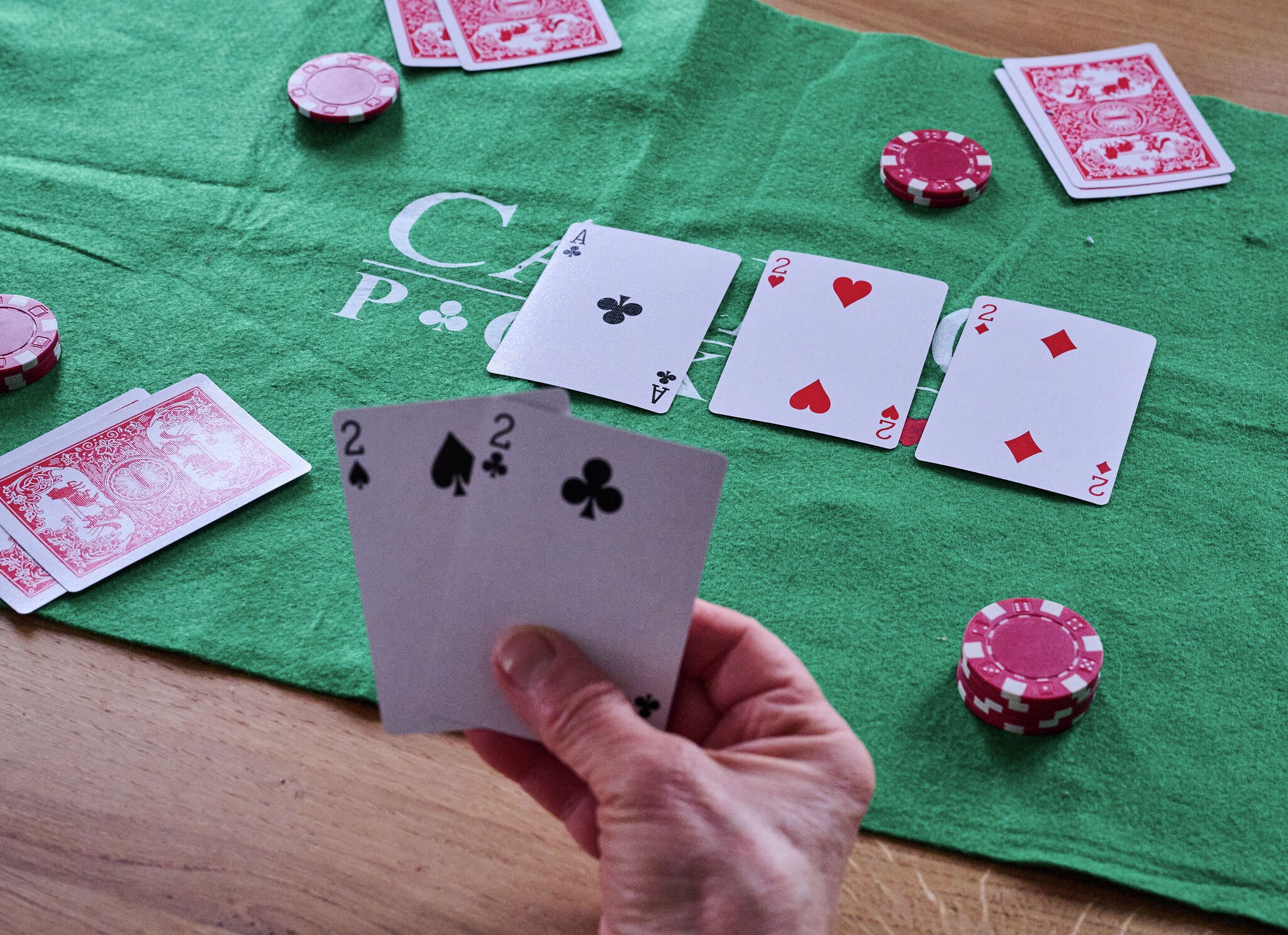
In 2019, a pair of private poker clubs were raided in Houston. The raid at Prime Social and Post Oak Poker Club led to the arrest of nine people involved with the poker rooms, according to ABC13. Photo: Annette Riedl/dpa (Photo by Annette Riedl/picture alliance via Getty Images)
While some people prefer to drive to casinos, others in Texas turn to poker rooms. If you drive around Austin or other cities in Texas, you might notice a few.
According to Poker.org, there are more than 50 poker rooms in Texas.
In 2019, a pair of private poker clubs was raided in Houston. The raids at Prime Social and Post Oak Poker Club led to the arrest of nine people associated with the clubs, according to ABC13. The owners who were arrested were charged with felonies; however, Harris County District Attorney Kim Ogg later dismissed the case due to conflicts of interest.
The central legal argument was whether the owner and operator profited from the poker matches being played. So, how are these poker rooms able to function within the law?
According to the Texas Penal Code, a person commits an offense when there are "plays and bets for money or other things of value at any game played with cards, dice, balls, or any other gambling device."
However, the law indicates the following exceptions:
- The actor engaged in gambling in a private place.
- No person received any economic benefit other than personal winnings.
- Except for the advantage of skill or luck, the risks of losing and the chances of winning were the same for all participants.
How do poker rooms operate in Texas?
Texas law prohibits most forms of gambling. Private businesses operate poker rooms through a legal loophole. These poker rooms charge a monthly membership fee and an hourly fee that members pay upon entering the club.
According to the law, the house isn't allowed to take a cut of the pot from the games being played. Instead, revenue comes from membership and seat fees.
Dealers also cannot accept tips. Clubs could be shut down if they profit directly from poker games or tournaments.
Poker rooms shut down in Texas
According to The Dallas Morning News, several crackdowns on poker rooms have been conducted to enforce state law.
However, there have been cases where poker clubs fought to stay open and won.
In 2025, A Dallas poker room remained open after the Texas Supreme Court declined to review the case, ending a long legal battle.
Texas Card House, a membership-based poker club located in the 11000 block of Harry Hines Boulevard, was originally granted a certificate of occupancy by the city in 2020. In 2021, the city attempted to revoke it, arguing the business was an illegal gambling operation and that the certificate had been issued in error.
Here's a list of poker rooms that are no longer in business or temporarily closed after law enforcement action:
- CJ's Card Club in Dallas: Permanently closed.
- Top Shelf Poker Room in the East Texas city of Flint: Permanently closed.
- Lucky's Card Room in Fort Worth: Was temporarily closed.
- Shuffle 214 in Dallas: Was temporarily closed.
- Lodge Card Club in Austin: Temporarily closed; investigation into illegal gambling and money laundering is ongoing.
Can a nonprofit host a poker night for a fundraiser?
According to the Texas attorney general's office, there is no exception to the gambling law in Texas for nonprofits to hold poker or casino night fundraising events.
However, under current law, it is legal for individuals to play poker or other casino activities in a private place if certain conditions are met. The law defines this as "a place to which the public does not have access."
Participants can bet, win and lose money; however, all money must be redistributed to the participants. The host organization cannot keep any portion of the proceeds.
Punishment for operating a poker club illegally
Poker clubs have not been legalized by a constitutional amendment or statewide referendum but are generally allowed, according to Zack Fertitta, who helped represent Prime Social in getting its case dismissed.
Fertitta wrote in the Texas Bar Blog that punishment can vary.
"In the future, however, it is anticipated that Texas prosecutors and local agencies, tempted by lucrative seizure opportunities, will once again attempt to shut down local gambling clubs," he said. "Certainly such efforts will not cease in Harris County as the district attorney made clear that such establishments are illegal. Moreover, the club owners and employees of Prime Social and the Post Oak clubs are not in the clear as their cases were referred to the FBI for consideration."