

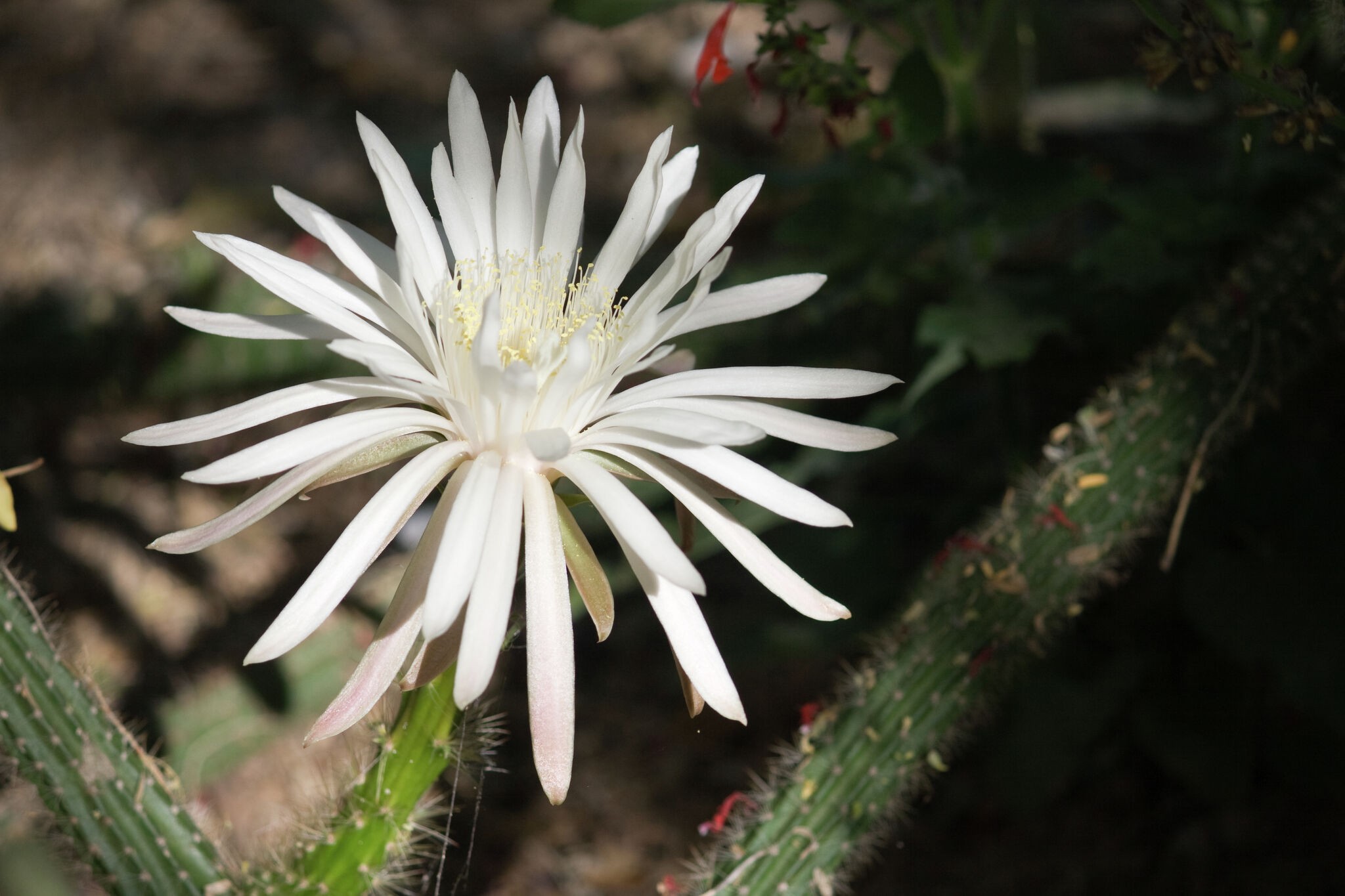
A little-known desert cactus found in parts of Texas puts on one of the state’s most fleeting natural displays — blooming for just a single night before disappearing again by sunrise.
Known as the night-blooming cereus, the plant spends most of the year blending into the desert as a spindly, stick-like shrub. But for a few hours each year, it produces large, bright flowers that open only after dark.
What is the night-blooming cereus?
Scientifically known as Peniocereus greggii, the plant is native to desert regions stretching from West Texas into New Mexico, Arizona and northern Mexico.
For most of the year, it’s easy to overlook — thin, grayish stems that resemble dried sticks tucked into surrounding brush. That low-profile appearance helps it survive in harsh desert conditions.
Its flowers are the opposite: large, pale blooms that stand out in the dark and are designed to attract nighttime pollinators.
When does the night-blooming cereus flower?
The cactus typically blooms in late spring, with most activity in May and June.
DarienP/Getty Images/iStockphoto

Even then, there’s no exact date. The plant responds to environmental conditions, so timing can vary from year to year depending on temperature, moisture and other factors.
Once it opens, the clock starts ticking. The flowers usually unfurl in the evening and begin closing by early morning, giving viewers just a few overnight hours to catch them.
Why does it only bloom at night?
The cactus relies on nocturnal pollinators like moths and bats, which are most active after sunset.
Blooming at night helps the plant avoid competition from other species and increases its chances of successful pollination in desert environments.
But that strategy comes with risk. If conditions — especially wind — aren’t favorable, pollinators may not show up, and the bloom can go to waste.
Why you’ll probably never see it
shanedhumphreys/Getty Images/iStockphoto

Even if you’re in the right place at the right time of year, spotting one isn’t easy.
The cactus blends into its surroundings during the day, and its bloom lasts just a few hours overnight. Miss that window, and it returns to looking like an unremarkable desert shrub.
It’s also protected in much of its range after years of being targeted by collectors, so experts say it should be left undisturbed in the wild.