

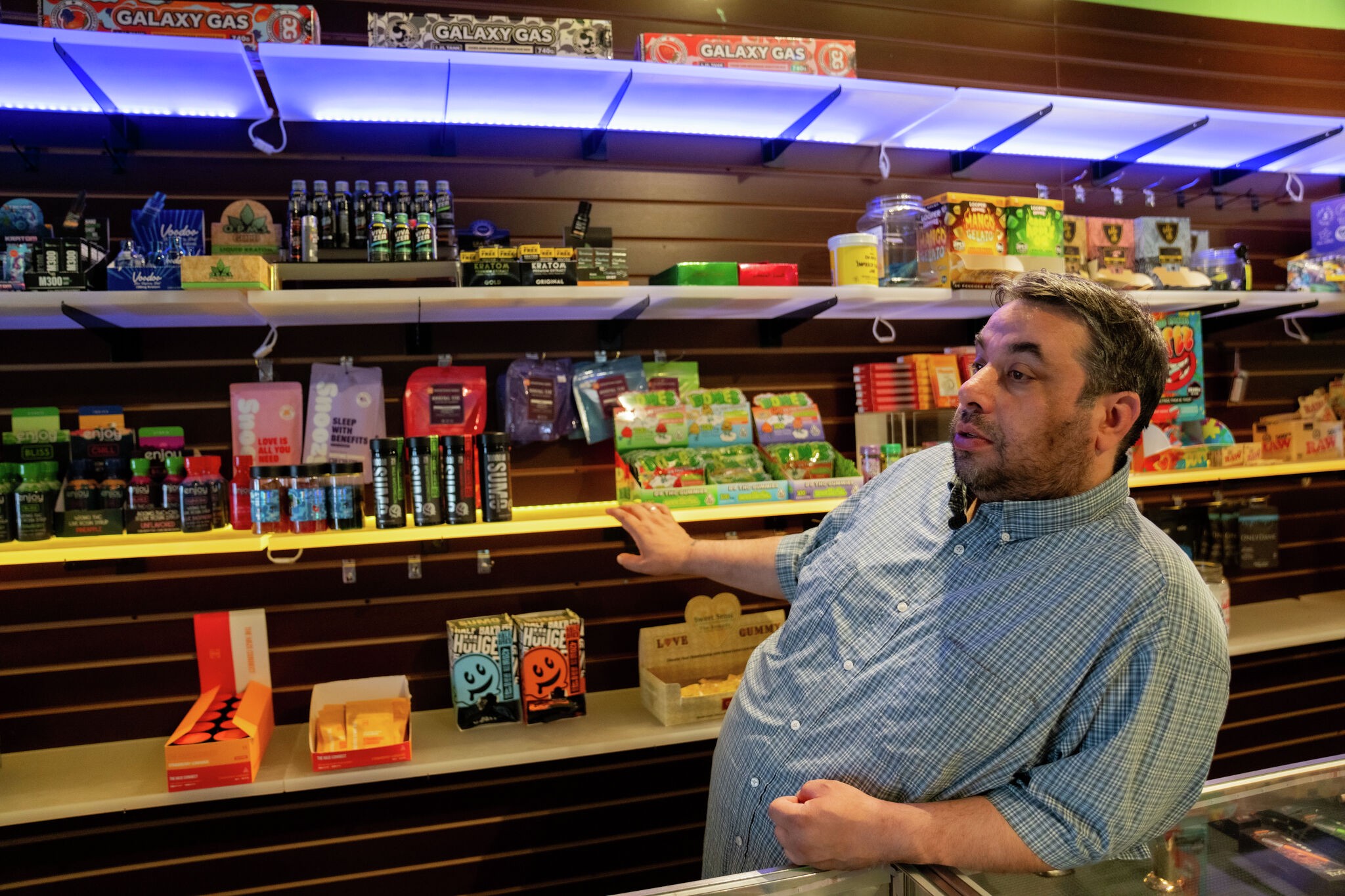
A few shelves inside iVape ATX on Guadalupe Street sit half-empty — an early sign of sweeping new Texas hemp rules set to take effect Tuesday.
Owner Kaab Malik moves through the store, straightening what is left: rows of cartridges, scattered gummies and glass pieces spaced farther apart. Where inventory once filled every inch, there are now empty pockets that feel less like disorganization and more like a business bracing for change.
New statewide hemp regulations set to take effect Tuesday are reshaping Austin’s hemp retail scene, forcing shops to clear out products, rethink inventory and prepare for steep licensing fees. For Austin shop owners, the changes aren’t theoretical — they’re already cutting into inventory, staffing and sales.
The changes could cost Austin dozens of jobs and millions of dollars in tax revenue, while disrupting customers who rely on hemp products for sleep, anxiety and pain relief.
At iVape ATX, the impact feels immediate.
Malik said the store has already had to cut two employees. Now it is just him and one other worker.
“It sucks because you have to spend money to buy all the stuff,” Malik said. “You have to go out there and find other products that are compliant. I still have to make rent. I still have to pay my employees.”
Now, he said, every restock feels like a gamble.
Under new Texas Department of State Health Services regulations, hemp products must remain below 0.3% total THC, including compounds that become intoxicating when heated.
The new rules tighten THC limits, specifically limiting the THC-A compound found in hemp flower — a shift that will effectively wipe out most smokeable hemp products. Hemp flower, pre-rolled joints and delta-9 products — items that make up a large portion of many shops’ inventory — will largely disappear from shelves.
In addition, state registration fees for shops will balloon from $155 to $5,000.
Malik gestures again toward the shelves. The emptiness is not accidental — it’s cautious. He said every product he restocks comes with the same question: Will it still be legal in a few weeks?
While edibles and beverages will remain legal if they meet THC limits and labeling requirements, for many retailers, those products are not big sellers.
Still, Malik said he is trying to hold onto what made the shop more than just a place to buy products.
“We like to engage with the local community, so sometimes we’ll host open mic or have bands come perform in our shop,” Malik said.
The pressure isn’t limited to one storefront.
A few blocks away, The Glassmith is a storefront on wheels, situated among food trucks that churn out everything from pad thai to burritos. In the heart of West Campus, students mingle on the patio, enjoying food and live music from local bands.
Glassmith displays hand-blown glass pieces, flower, vape products and other items in a dazzling array of colors. Music plays, conversations overlap and young employees move between customers, talking and laughing.
The scene feels unchanged — but the business behind it may not be.
“The vibe at Glassmith hasn’t lost its community feel, but the new hemp laws have added a layer of stress,” employee Faisal Saleh said. “Anytime regulations shift, you start wondering what it means for job stability, hours or even potential layoffs. Still, we’re adapting and doing everything we can to keep the doors open and the culture alive.”
Texas has more than 8,000 registered hemp retailers, which generate an estimated $5.5 billion in annual sales, according to an analysis by Whitney Economics.
At Lazy Daze, the impact is less visible — for now.
A few blocks north of the University of Texas, Lazy Daze is a smoke and coffee shop where customers sit in two large rooms, with couches and small tables that look lived-in. The coffee menu also includes infused drinks and house-made THC products. Customers can borrow bongs and pipes.
Catherine Williams, an Austin local, said she’s a frequent customer.
“I enjoy these types of shops because it gives me another sense of community, but it also gives me a clear state of mind knowing exactly where I get my products from,” Williams said.
“It’s the same as going to a bar, just more socially frowned upon,” she said.
With the March 31 deadline approaching, shop owners are adjusting.
Some are offering large sales to clear inventory that will soon be unsellable. Others are shifting toward non-THC products, accessories or events to keep customers coming in.
One smoke shop chain, Cloud 9, offered six Delta-9 prerolls for $30, about half the normal price.
While the new rules ban the sale of noncompliant smokeable hemp products, possession will not be a criminal offense.
Still, some attorneys warn confusion could lead to enforcement issues, since smokeable hemp closely resembles marijuana, which remains illegal in Texas except for those who qualify for compassionate use.
Legal challenges are expected some shop owners say, but for now, businesses are working against the clock.
At iVape ATX, Malik stood behind a counter stocked with products he may soon have to pull.
“We don’t know if we’re building for next year or closing by summer,” Malik told a customer. “We’ll see, man.”