

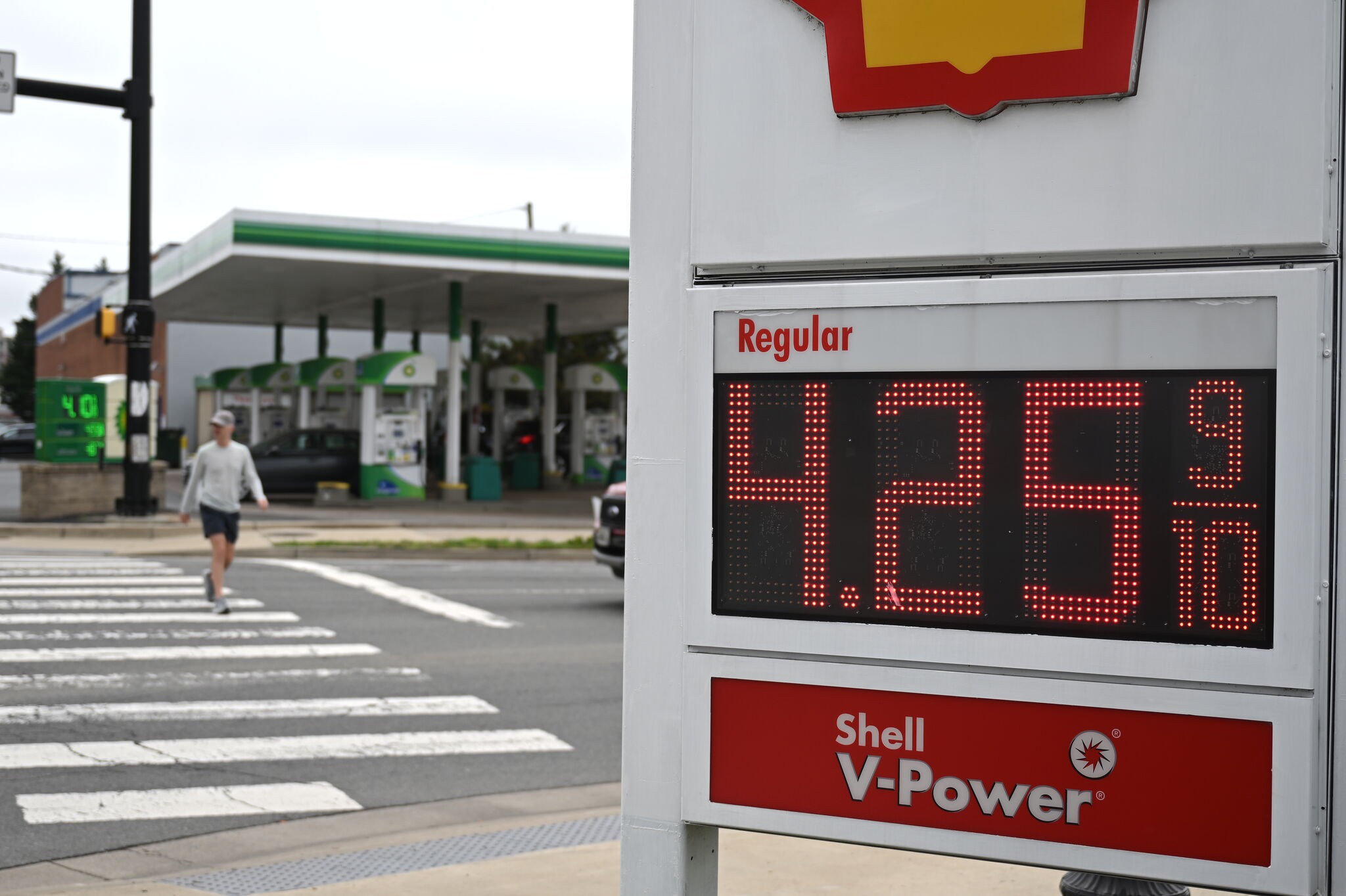
Gas prices continue to rise in Texas as global tensions — including the ongoing conflict involving Iran — continue to push up crude oil costs. (Photo by Fatih Aktas/Anadolu via Getty Images)
Anadolu/Anadolu via Getty Images
Gas prices continue to strain household budgets.
As of Tuesday, the national average for a gallon of regular gasoline was $4.14, a six-cent increase from last week, according to AAA.
Crude oil prices remain elevated as the conflict involving Iran enters its sixth week, putting continued pressure on fuel costs. Gas prices have climbed above $4 nationwide as the conflict disrupts global oil flows through the Strait of Hormuz.
The surge is being driven by constrained supply, low inventories, strong fuel demand, and ongoing refinery bottlenecks.
Here's what current gas prices are in Central Texas and how the price of gasoline is set.
Austin gas prices this week
According to AAA, gas prices are still rising throughout Austin. Last week's average in the Austin-San Marcos metropolitan area was $3.67.
Here's a look at Austin prices:
- Current price: $3.89
- Last week's price: $3.76
- Average price last year: $2.77
- Last month's average: $3.13
- Last year's average: $2.87
Why the Strait of Hormuz matters
According to the U.S. Energy Information Administration, the Strait of Hormuz is the world’s most critical oil chokepoint due to the vast volumes of petroleum that pass through it. In 2022, about 21 million barrels per day flowed through the strait — roughly 21% of global petroleum liquid consumption. During the first half of 2023, total flows remained largely steady compared to 2022, as increases in refined product shipments helped offset declines in crude oil and condensate.
"In 2022, the United States imported about 0.7 million b/d of crude oil and condensate from Persian Gulf countries through the Strait of Hormuz, accounting for about 11% of U.S. crude oil and condensate imports and 3% of U.S. petroleum liquids consumption."
U.S. Energy Information Administration
Who controls oil prices?
According to Forbes, while the U.S. is capable of producing its own oil, the country doesn't determine the price of oil. Multiple factors influence what Americans pay for fuel.
Wars, sanctions, or chokepoints — like the Strait of Hormuz — can reduce supply or create uncertainty, driving prices up.
"The U.S. leads the world in oil production, but oil isn’t priced locally, nor are prices set by oil companies," the article stated. "Because the U.S. exports oil to the global markets, it’s priced globally by traders bidding for oil. That is a distinction many people do not realize."