

After a few weeks of steady spring rainfall in Austin, you may notice more fire ant mounds in yards, parks and along roadways.
That's not a coincidence.
Children, pets and anyone else who enjoys spending time outdoors should watch their step this week as the aggressive ant colonies come up for air. Here's what to know.
Why do more mounds emerge after rainfall?
Warm temperatures combined with moist soil create ideal conditions for ants to become more active, so it's no surprise that Central Texas sees more mounds in the springtime.
Fire ants typically live in underground tunnel systems, but when heavy rain floods those tunnels, colonies respond by moving upward to escape the saturated soil. The rainfall forces them to relocate and start building their network of tunnels all over again to keep their queen and their young dry.
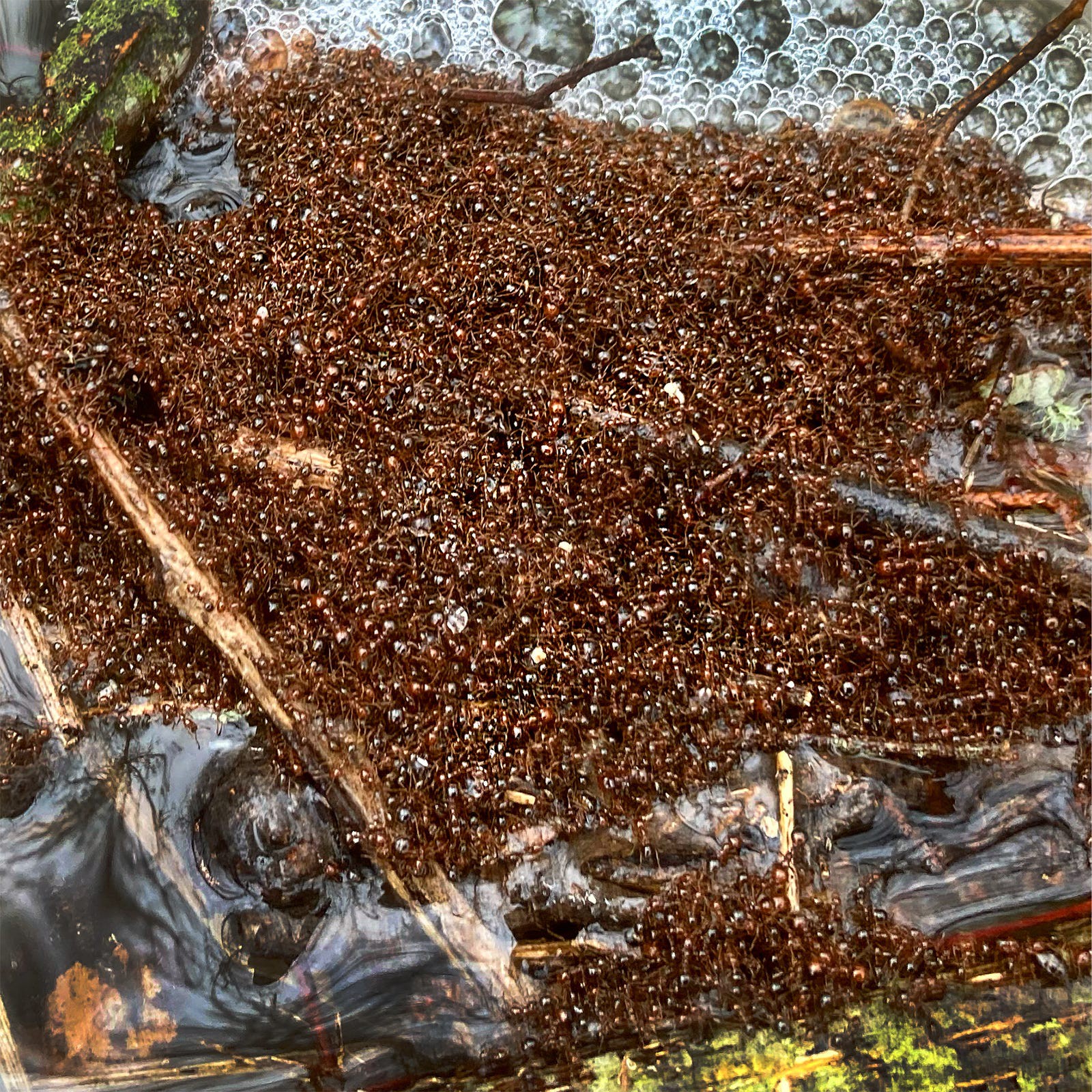
On flood waters, fire ants cling to each other to create ant rafts that float on top of the water,
Nell Carroll/American-Statesman, Austin American-Statesman
Fire ants can link together to form floating rafts, allowing entire colonies to survive floodwaters and move to new areas while sticking together.
They rebuild their nests above ground, creating loose, dome-shaped dirt mounds.
What are fire ants?
Fire ants are an invasive species that originated in South America and first entered the United States in the 1930s, likely through the port of Mobile, Alabama. They've spread since that time and are now most commonly found throughout the southern United States. Their colonies can contain thousands of ants.
Fire ants are known to be aggressive when their habitats are disturbed, and they can deliver painful stings. They typically attack "all at once," according to Texas A&M's Imported Fire Ant Research and Management Project, crawling in a vertical direction to deliver an onslaught of bites and stings. A sting from a fire ant usually leaves a white pustule on the skin.
More mounds after a period of high rainfall means more risks for stings in your own yard, especially if you have children or pets that may not realize they need to avoid the mounds.
Keep an eye on little ones and be conscious of where you're stepping to avoid bites or stings. If you're allergic to ant stings, take extra precautions.
If an allergic reaction occurs after a sting, seek medical help immediately.