

Texas A&M University is now home to what university officials are calling the world's largest academic-controlled explosions lab.
The Detonation Research Test Facility, which opened last week, provides researchers with a site to engineer and conduct explosions to analyze subsequent detonations and their impacts.
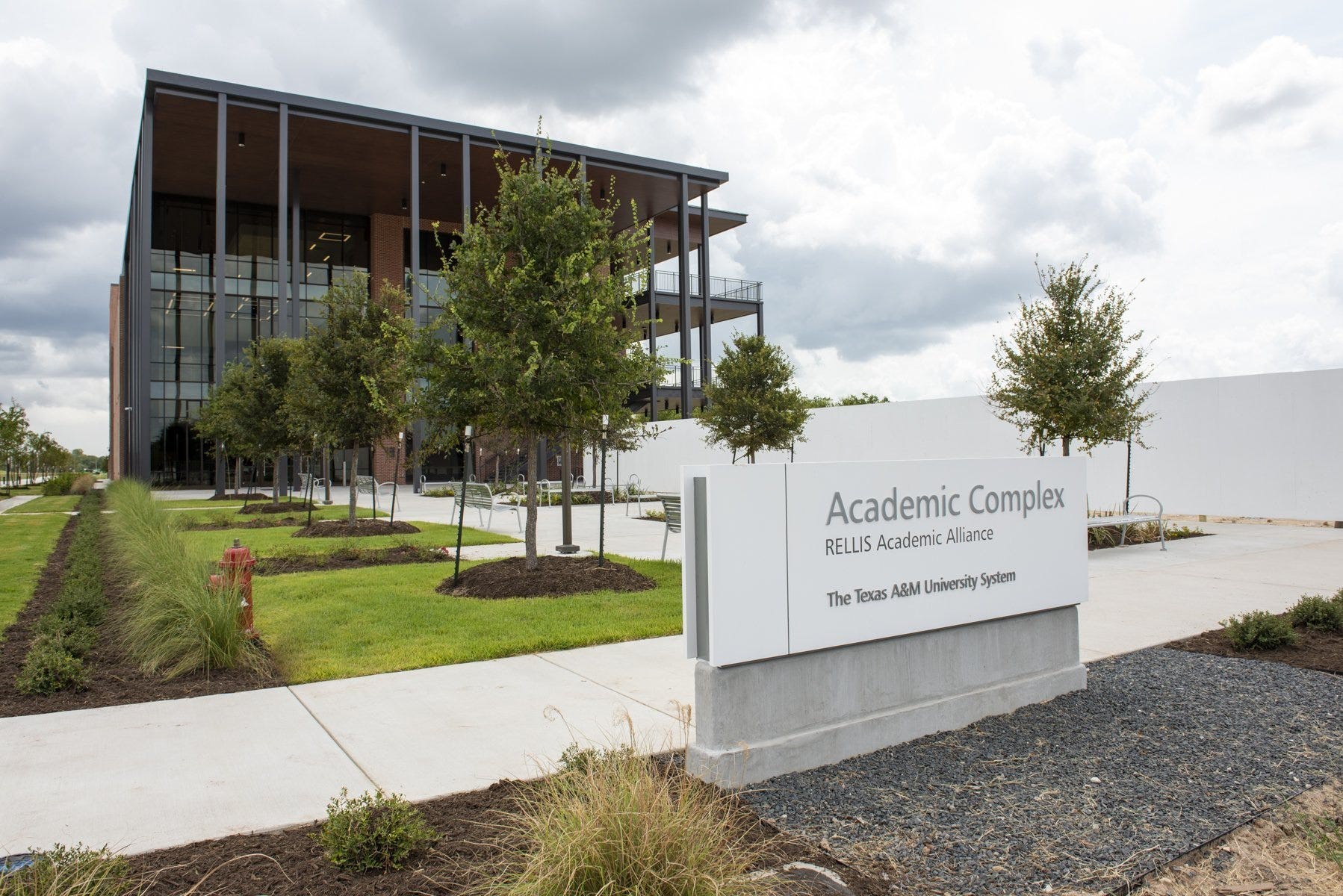
The facility is a nearly 500-foot-long detonation tube, more than 6 feet in diameter, built with three-quarter-inch-thick steel walls and a 90-meter earth-covered muffler, located on the Texas A&M-RELLIS innovation and technology campus.
College of Engineering aerospace researchers, Dr. Elaine Oran and Dr. Scott Jackson, conceptualized the facility and now serve as the scientific and technical director, respectively.
With backing from the Governor's University Research Initiative and the Texas A&M University System Chancellor's Research Initiative, the two professors assembled a coalition that included industry experts, national laboratories, Defense Department partners and international collaborators, according to the university.
Oran said the facility will help researchers understand detonations in a way that has not been “scaled before, or even been possible until now.”
Oran added that the purpose of this level of research includes examining detonation disasters and developing safer industrial designs and protocols that prevent unstable flames from evolving into larger catastrophes.
Researchers will also be able to explore the possibility of manipulating explosions into propulsions that could reach hypersonic speeds, potentially advancing commercial aviation and space propulsion.
By isolating and replicating physical systems, researchers can understand the behavior of various forms of energy through work at the facility.
Oran, Jackson and their team have already conducted a test in which an electric current traveled to the end of an exposed wire inserted into the facility's tube containing a flammable methane-air mixture.