

Survivors seeking protective orders in Travis County no longer have to begin the process in a public lobby or an attorney’s office.
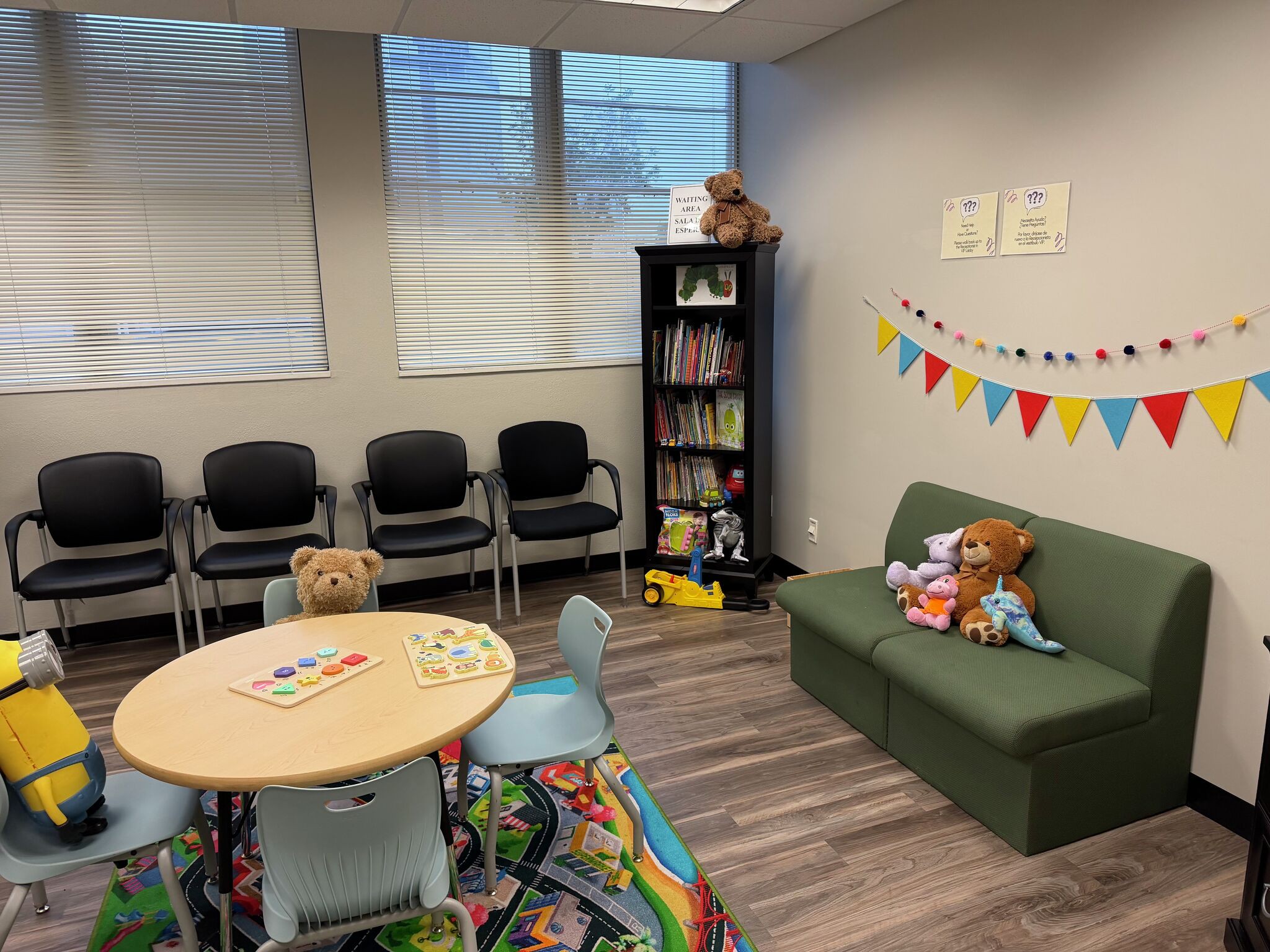
Inside the Travis County Attorney’s Office, a newly renovated area in the Ned Granger Building now gives people seeking help after family violence, sexual assault, stalking or human trafficking a quieter place to talk through what happened — with couches, windows, plants, children’s activities and interview rooms designed to feel less like government offices.
The space, which opened last fall, is part of a broader push by County Attorney Delia Garza’s office to make protective order services more accessible and less intimidating for survivors, officials said Wednesday during a media tour held near the end of Sexual Assault Awareness Month.
How the protective order process works
A protective order is a court order that limits or bars contact between one person and another. In Travis County, survivors can seek protective orders through the county attorney’s office, private attorneys or nonprofit organizations. The county service is free and does not have an income eligibility requirement, Garza said.
"We stand behind survivors," Garza said. "We are continually working to bring attention to this."
Garza said the office handles many of the final protective orders issued in Travis County, but not everyone knows the service exists. Applications can be started by phone or in person, a practice the office kept after the pandemic made remote access more common.
The office’s family violence division also prosecutes misdemeanor family violence cases. Felony cases are handled by the Travis County District Attorney’s Office. But survivors do not need to have a criminal case to seek a protective order, Garza said.
The process generally begins with an interview with a victim advocate or counselor. The survivor may provide a statement or affidavit, and the office then reviews whether the case meets the legal requirements for a protective order. If it does, attorneys file the request in court, where a judge decides whether to grant the order after a hearing.
Some cases can move faster if officials believe there is a high risk of serious violence, Garza said. Courts can also issue temporary orders before the other person is served. Final protective orders often last about two years, though judges can issue longer or lifetime orders in some severe cases.
A space designed around survivors
Elizabeth Whited, director of the Family Violence and Protective Order Division, said the new space was designed around a basic idea: survivors should not have to tell traumatic stories in rooms that make the process harder.
Before the new area opened, survivors often waited in a more public part of the building before being taken upstairs to a government office. Now, Whited said, they spend more of their time waiting in a private waiting area and meet with advocates in rooms meant to support conversation rather than create distance.
The rooms have natural light, softer seating and small tables for advocates’ laptops, so staff can take notes without putting a desk or computer screen between themselves and the person seeking help. Survivors can choose whether a door is open or closed and where their children wait, Whited said.
"They come in here, they’re greeted by our advocates, not lawyers," Whited said. "They’re going to meet with you in a soft interview room."
For some parents, that may mean keeping a child close enough to see but far enough away that the child does not have to hear the details of the abuse. The area also includes markers and child-friendly space, as well as charging stations and Wi-Fi for survivors who may be coordinating several needs at once.
The design was shaped by feedback from survivors, Whited said. A survivor-led committee toured the space, weighed in on what felt safe or unsafe and gave feedback on brightness, color and layout.
"Every part of this has been workshopped with many survivors over probably a good six months or so," Whited said.
Much of the furniture was donated by county attorney’s office staff, officials said. The renovation opportunity came after flooding damaged part of the building during the July 4 floods, allowing the office to repaint, replace flooring and move services into a more welcoming area.
Part of a bigger vision
The space is also a step toward a larger goal, a Family Justice Center, which Garza said the county hopes to open by the end of 2027.
The idea is to eventually bring multiple services into one place, so survivors are not handed a list of phone numbers and sent to several agencies, repeating their story each time. Garza said Travis County is looking at models in other Texas counties, including Bexar County, where similar centers bring together resources such as law enforcement, child care, food assistance and other support services.
The current rooms are expected to be folded into that larger center once it opens, officials said.
"This is kind of an evolution," Garza said, "moving from upstairs to downstairs to a bigger space, and then eventually moving on to the Family Justice Center."