

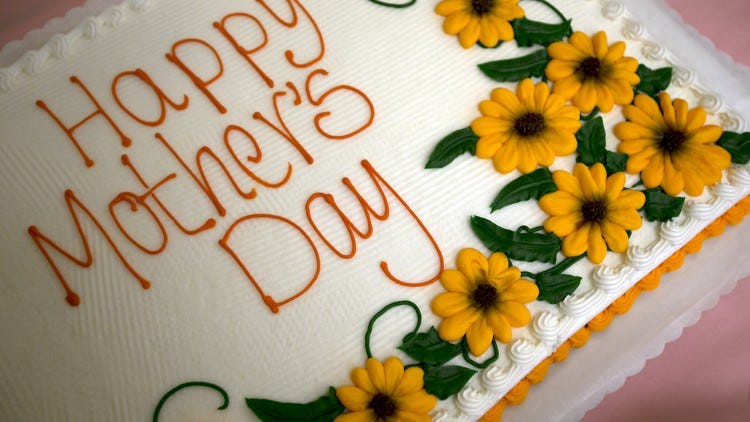
St. David's Women's Center of Central Texas, along with the non-profit organization Hand to Hold, hosted a Mother's Day celebration luncheon at the north Austin hospital for mothers with newborns confined to the Neo-Natal ICU Thursday afternoon May 7, 2015. The mothers were treated to lunch, gifts, and a corsage in celebration of this upcoming day to honor all mothers.
Mother’s Day is Sunday, which means it’s time to honor the person who gave you life.
Although the holiday was officially recognized in the U.S. in 1914, its roots trace back nearly 45 years earlier. It took generations of women activists to shape Mother’s Day into what it is today.
Mother’s Day in the U.S. is always observed on the second Sunday of May, which this year falls on May 10.
When is Mexican Mother’s Day 2026?
Unlike the U.S., Mother’s Day in Mexico (El Día de las Madres) is celebrated on the same day every year: May 10. The two holidays happen to align on the same day in 2026.
The date originated from Mexican journalist and founder of the El Excélsior newspaper, Rafael Alducin, according to the Hispanic Executive. He organized a nationwide initiative to choose a date to celebrate mothers. The country celebrated its first official Mother’s Day on May 10, 1922.
What was the original name for Mother’s Day? See history of holiday
The idea of Mother’s Day in the U.S. began with Julia Ward Howe, the author of the “Battle Hymn of the Republic” and an abolitionist, women’s rights advocate and peace activist. In the aftermath of the Civil War and during the Franco-Prussian War overseas, Howe issued an “appeal to womanhood throughout the world” in 1870. In what is known today as the “Mother’s Day Proclamation,” Howe “urged the creation of an international body of women who could find ways to avoid war and bloodshed,” according to the Smithsonian American Women’s History Museum.
“I earnestly ask that a general congress of women, without limit of nationality, may be appointed… to promote the alliance of the different nationalities, the amicable settlement of international questions, the great and general interests of peace,” Howe’s proclamation says in part.
Howe’s vision didn’t quite come to life. She then aimed for an official Mother’s Day for Peace, though that also failed to gain popularity.
Modern Mother’s Day observances have stronger ties to the work of Ann Jarvis and her daughter, Anna Jarvis. Ann Jarvis had around 12 children but lost most of them to disease. This prompted her to join a national public health movement and organize “Mothers' Work Clubs” for environmental and hygienic work.
The Civil War prompted Ann Jarvis to reorient the groups' focus to aiding sick and wounded troops on both sides. After the war, she “worked to promote peace and unity,” Smithsonian reports. Ann arranged a “Mother’s Friendship Day” to restore communal relationships between families of Confederate and Union troops, despite threats of violence.
Ann’s daughter, Anna Jarvis, picked up the endeavor after Ann’s death. While Ann focused on peace activism, Anna pushed for a holiday honoring mothers. Anna also began the tradition of using white carnations to celebrate mothers. In 1908, she sent hundreds of flowers to her hometown church and did the same in Philadelphia, according to Montgomery Magazine. White carnations were her mother’s favorite flower.
After Anna Jarvis inspired many others to follow her lead and write their mothers letters of gratitude, President Woodrow Wilson issued a proclamation for the first national Mother’s Day in 1914.
Despite the holiday receiving official recognition, Anna Jarvis “soon grew discontented as she noted increasing commercialization of the celebration,” the Smithsonian reports. Rather than the revered day she had envisioned, she noted how florists and greeting card companies profited from the celebrations. In 1943, she unsuccessfully tried to have the holiday abolished and died in a long-term medical facility five years later.
Why is Mother’s Day on the second Sunday of May?
The timing of Mother’s Day is attributed to Anna Jarvis: Her mother, Ann Jarvis, died on the second Sunday in May 1905.
When is Father’s Day 2026?
Father’s Day is always celebrated on the third Sunday in June, which this year falls on June 21.
May 10, 2026