

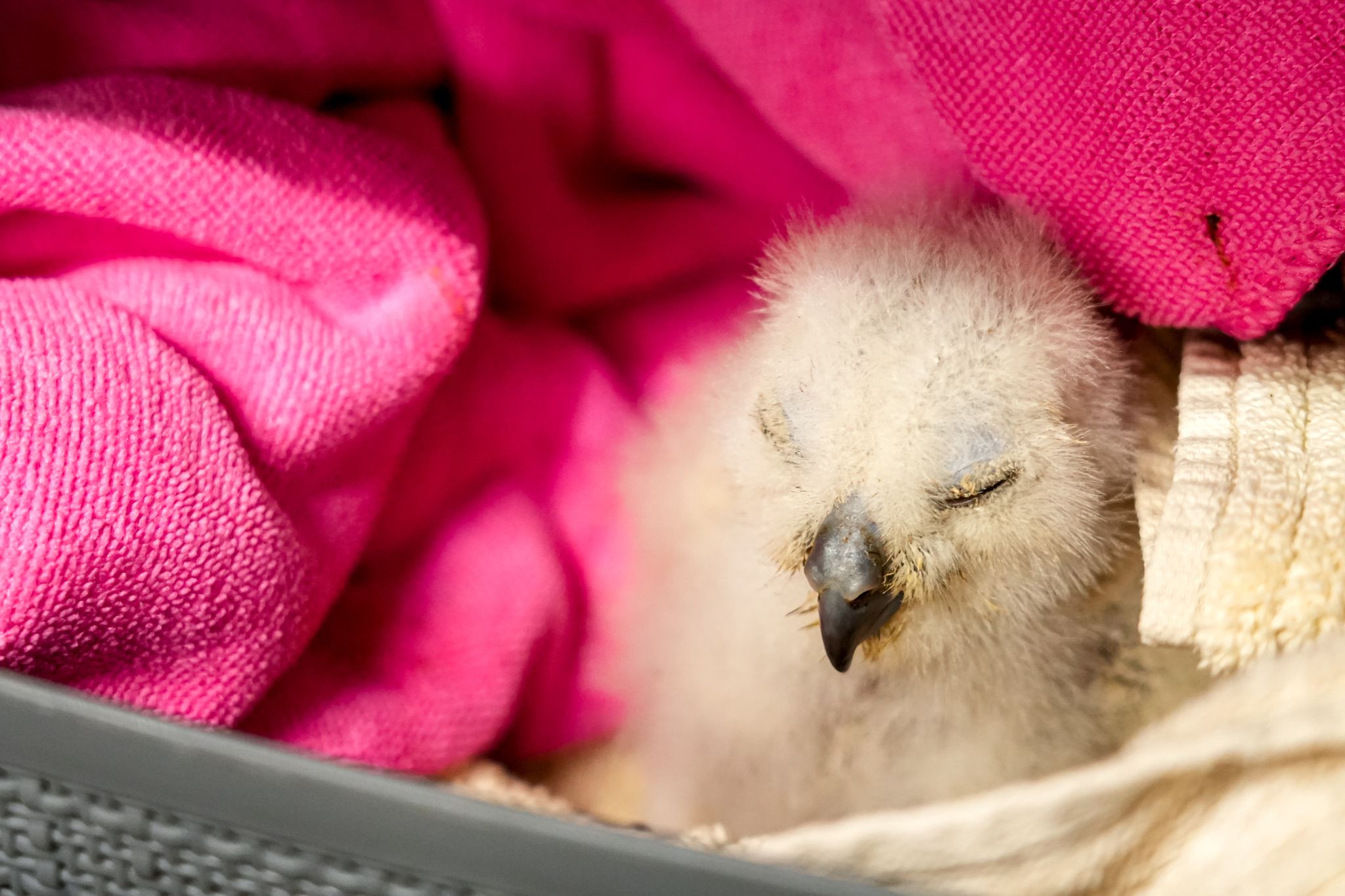
One of Athena's owlets, abandoned at the Johnson Wildflower Center, is placed in an incubator at Austin Wildlife Rescue on Monday, April 10, 2026 near Elgin, Texas. Aaron E. Martinez/Austin American-Statesman
The great horned owlet born in a nest at the Lady Bird Johnson Wildflower Center is continuing its recovery after being thought dead from possible hunger, this time with help from a surrogate.
The young owl, which was removed from the Wildflower Center’s nest last month after staff realized it was still alive, has been adopted by Eddison, a female great horned owl. The placement will help raise it with less human contact and a better chance of learning the skills it would need in the wild, Austin Wildlife Rescue and the Wildflower Center said.
Athena is the Wildflower Center’s longtime great horned owl, whose annual nesting season has drawn a devoted following through a live camera operated with the Cornell Lab of Ornithology. Earlier this spring, officials believed Athena’s nesting attempt had failed after one owlet died and the other was also thought to be dead. But staff later saw movement, and the Wildflower Center worked with Austin Wildlife Rescue to remove the surviving owlet and get it into rehabilitation.
One of Athena's owlets, abandoned at the Johnson Wildflower Center, is fed at Austin Wildlife Rescue on Monday, April 10, 2026 near Elgin, Texas. Aaron E. Martinez/Austin American-Statesman
Austin Wildlife Rescue said Eddison quickly accepted the owlet into her nest box and has been keeping close watch over it. And the owlet “is growing by leaps and bounds (with quite the personality),” according to the rescue.
Surrogate care can be especially important for young wild animals because it allows them to learn from their own species rather than becoming too accustomed to people, the Wildflower Center said. For raptors, that kind of care can help reduce the risk of human imprinting and better prepare them for eventual release.
Austin Wildlife Rescue is also using the update to ask for donations as it continues caring for orphaned and injured wildlife across Central Texas. Donors have been offering to match public donations to Austin Wildlife Rescue during the fundraiser. The nonprofit said one donor offered to match up to $5,000 and another up to $10,000, and supporters donated enough to secure both amounts. Now, an anonymous donor has said they will match up to $20,000, which the rescue hopes to secure by extending its Spring Baby Shower fundraiser through Wednesday, May 13.