

The New Jersey Motor Vehicle Commission recently recalled a vanity license plate with the acronym "FDT 8647." According to NJ.com, the phrase “to 86 something” is commonly used in restaurants to mean removing an item from the menu, especially when it has sold out. Some conservative lawmakers have interpreted the phrase “8647” as a threat against President Donald Trump, who is the 47th president of the United States. Others on social media have noted that conservatives used similar “8646” slogans during President Joe Biden’s term.
While this license plate is now prohibited in New Jersey, can you get an "FDT" or "FDT 8647" vanity plate in Texas?
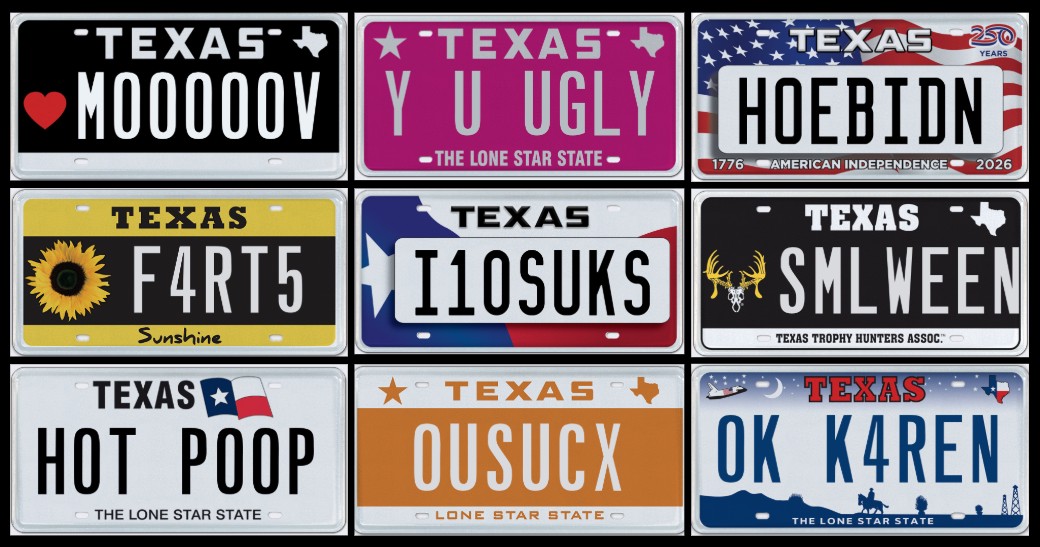
The Texas Department of Motor Vehicles rejects thousands of personalized license plate names each year. Nearly 2,000 license plate requests were denied in 2025 for violating state decency standards, according to data obtained from the DMV. The DMV doesn’t give a reason for rejection of each tag, but Texas law prohibits combinations of letters and numbers that are indecent, sexual in nature, vulgar, profane, or derogatory. It also bars references to crime, violence, drugs or the government and prohibits negative instructions to other drivers.
According to the My Plates website, which processes personalized plate orders for the DMV, entering "FDT8647" shows the personalized plate is not available. Other options, such as "FDT" or entering Trump's middle initial to make it "FDJT," were also not available. It's still unclear whether Texas has rejected these plate names. According to the DMV, if your online request shows "unavailable," it means the pattern is either already taken or deemed inappropriate. You must choose a new combination.
Texas can reject or cancel a personalized license plate if officials decide the plate violates state rules — even if the plate was approved earlier. The DMV does not have to consider what the driver says the plate means. The agency can also reject a plate if its meaning changes over time or if it could be interpreted as objectionable.
Under state rules, Texas can reject plates that:
- Conflict with the state's license plate numbering system.
- Have already been issued to another vehicle owner.
- Could be considered indecent, vulgar or derogatory.
- Refer to sex acts, sexual body parts, bodily fluids or excrement.
- Include profanity or curse words.
- Demean or disparage a person or group based on race, ethnicity, nationality, gender or sexual orientation.
- Give a negative command to another driver.
- Refer to gangs, illegal activity, threats, violence, crime or unlawful conduct.
- Refer to controlled substances, intoxication or drug-related states.
- Falsely suggest a connection to law enforcement, a government agency or a public office.
- Could be misread by law enforcement.
The rules also cover slang, acronyms, phonetic spellings, numbers, backward spellings, mirror-image patterns and coded references that only some people might understand.