

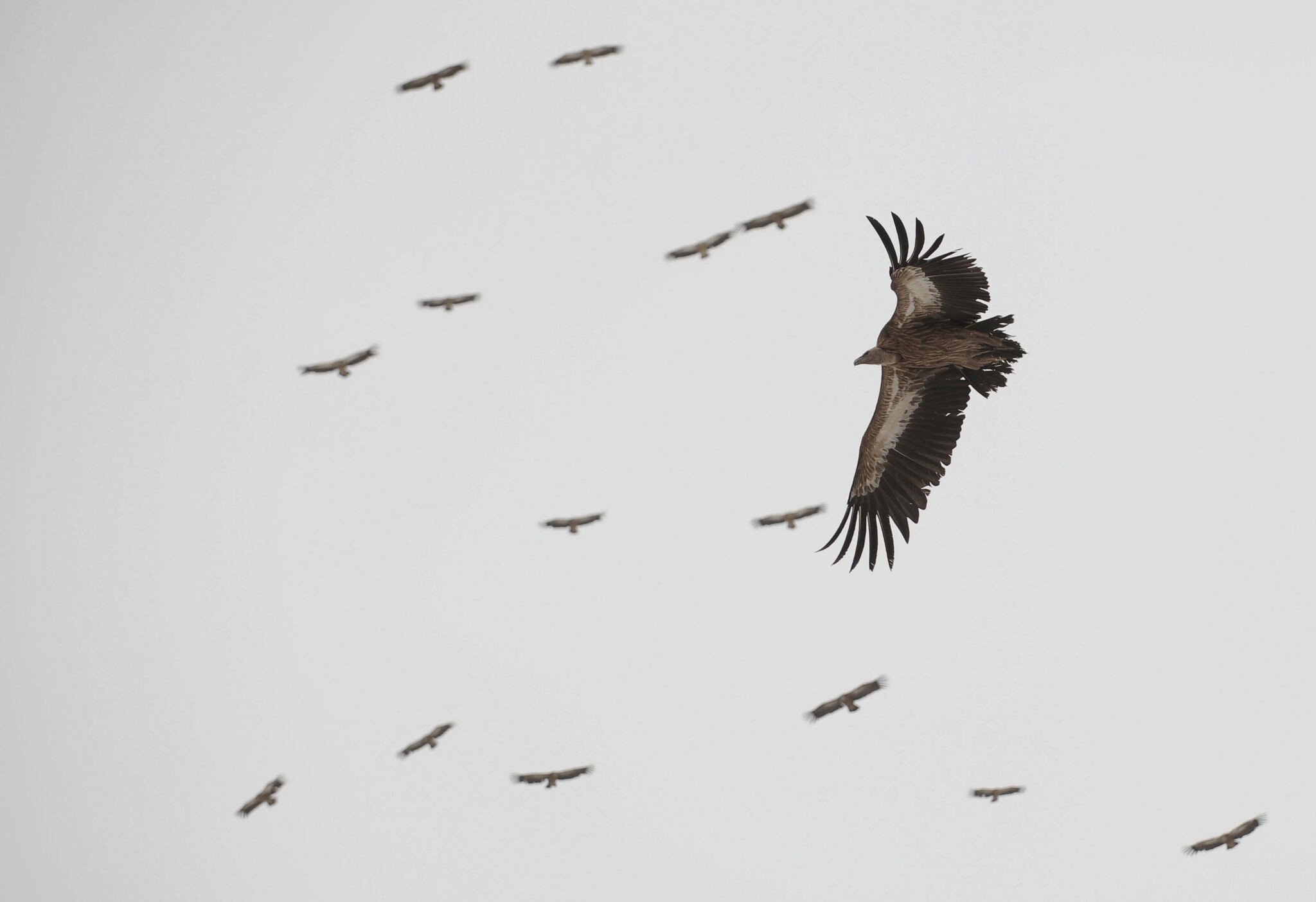
If you’ve ever seen large, dark-feathered birds gathered around roadkill in Texas, the sight can be unsettling. But vultures play an important role in the state’s ecosystem.
Turkey vultures and black vultures are the most common species in Texas, according to Texas Parks and Wildlife. The birds feed on dead animals, helping limit the spread of disease caused by decomposing carcasses, flies and maggots.
Still, large groups of vultures can create problems for homeowners and ranchers. Roosts can damage rooftops and vehicles, create foul odors from droppings and vomit, and even pose risks near roads and airports.
That raises a common question: Is it legal to kill a vulture in Texas? Here's what to know.
Yes, killing a vulture is illegal in Texas without a permit.
Vultures are federally protected under the Migratory Bird Treaty Act, making it illegal to harm or kill them without authorization from the U.S. Fish and Wildlife Service.
The issue can be especially challenging for ranchers. According to the Texas Farm Bureau, vultures are often drawn to livestock birthing areas. While they help clean up afterbirth and stillborn animals, black vultures in particular have also been known to attack vulnerable livestock during birth.
What are the penalties for killing a vulture?
Federal penalties for harming or killing vultures without a permit can be severe under the Migratory Bird Treaty Act.
Misdemeanor violations can carry fines up to $15,000 and up to six months in jail.
Felony violations can result in fines up to $250,000 for individuals or $500,000 for organizations, along with prison sentences of up to two years. Additional state penalties may also apply.
Are there legal ways to remove vultures in Texas?
Yes. Texas ranchers and property owners can apply for depredation permits that allow limited lethal removal as part of a broader nonlethal harassment strategy.
Under Texas’ sub-permit system, ranchers may remove up to five black vultures each. The U.S. Fish and Wildlife Service has also issued a statewide permit to the Texas Wildlife Damage Management Association authorizing the removal of up to 750 vultures statewide.
Texas Wildlife Services State Director Mike Bodenchuk said limited lethal control is often used to scare away larger groups.
“So, by shooting one and hanging it as an effigy, a rancher can reinforce hazing and chase another 50 of them off,” Bodenchuk told the Texas Farm Bureau.