

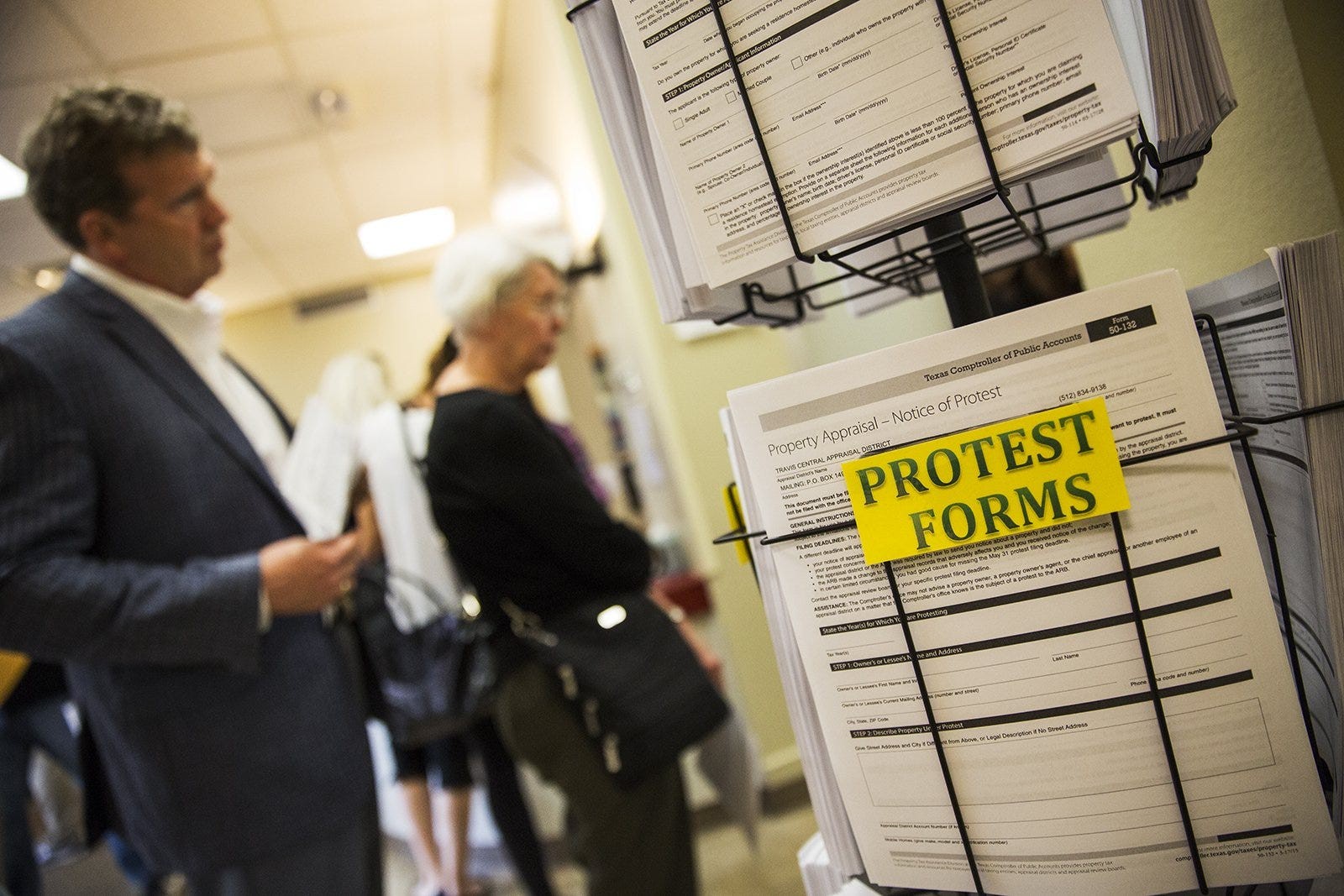
Property owners wait in line to submit their protest forms at the Travis County Appraisal District office in Austin, in May 2017.
Friday is the deadline for many Travis County property owners to protest their appraised value, and missing that window can cost you your best shot at lowering this year’s tax bill.
The deadline landing today is for appraisal protests: May 15, or 30 days after your appraisal notice was mailed — whichever is later. Other key property tax dates include April 30 for most exemption applications and Jan. 31 for paying your tax bill without penalty and interest.
Each one carries a different consequence. One is forgiving. One costs you your best legal option. One starts costing money within days.
The most forgivable deadline to miss: property tax exemptions
Property tax exemptions are the most recoverable deadline on the calendar.
Travis Central Appraisal District says homeowners who own and live in their property as their primary residence can qualify for a homestead exemption that reduces their bill. The average Travis County homestead exemption saved property owners $3,663 in 2025.
The normal filing deadline is April 30. But the appraisal district says homeowners who miss it can still file a late homestead application within two years after the taxes become delinquent.
There are other exemptions available as well, including additional tax breaks for homeowners who are 65 or older, have disabilities or are disabled veterans. These can also generally be applied for after the April 30 deadline, though the late-filing rules vary depending on the exemption.
Exemption information and applications are on tcad.org. You can drop off paperwork at the Travis Central Appraisal District office or apply online.
The costly deadline to miss: appraisal protests
The protest deadline is less forgiving.
Notices of appraised value typically go out in mid-April. Homeowners generally have until May 15, or 30 days after the notice was mailed — whichever is later — to file a challenge. Miss that window, and you lose your ordinary right to dispute this year’s value.
The Appraisal Review Board can still hear a late protest if a property owner shows “good cause” for missing the deadline and files before the board approves the year’s appraisal records, according to the Texas Comptroller’s property tax guidance. After that, the ordinary late-protest path is usually closed.
A few narrow remedies still exist after the deadline: challenging a required notice you never received, fixing clerical or ownership errors, or seeking a correction if a residence homestead was appraised at least 25% above its market value. Those come with extra conditions, including payment rules and filing requirements before a tax bill goes delinquent.
One new wrinkle this year: the appraisal district warned in January that a U.S. Postal Service change means postmarks may now be applied later in the mail stream, not when an envelope first enters the system. The district says protests or exemption forms mailed too close to a deadline could be treated as late. Its recommendation: submit online, use certified mail, or hand-deliver.
The most expensive deadline to miss: property tax payment deadline
This is the one where consequences arrive fast.
Unpaid property taxes become delinquent Feb. 1. State law automatically adds a scaling percentage for each month you are late:
- 7% in February
- 9% in March
- 11% in April
- 13% in May
- 15% in June
- 18% in July
And interest keeps accruing after that. Travis County says it has no legal authority to waive those charges.
A payment postmarked Feb. 1 or later is considered late. The county says homeowners are still responsible for paying even if a bill never arrived in the mail.
Ignoring the bill makes things worse. A tax lien automatically attaches to your property on Jan. 1 to secure whatever is owed. If taxes stay unpaid long enough, the county can pursue a foreclosure lawsuit — described on the county’s foreclosure page as its last resort for collection. Delinquent bills can also pick up an additional penalty of up to 20% for attorney fees, depending on timing.