

PFLUGERVILLE — A 4-mile stretch of Texas 130 just got a whole lot smarter.
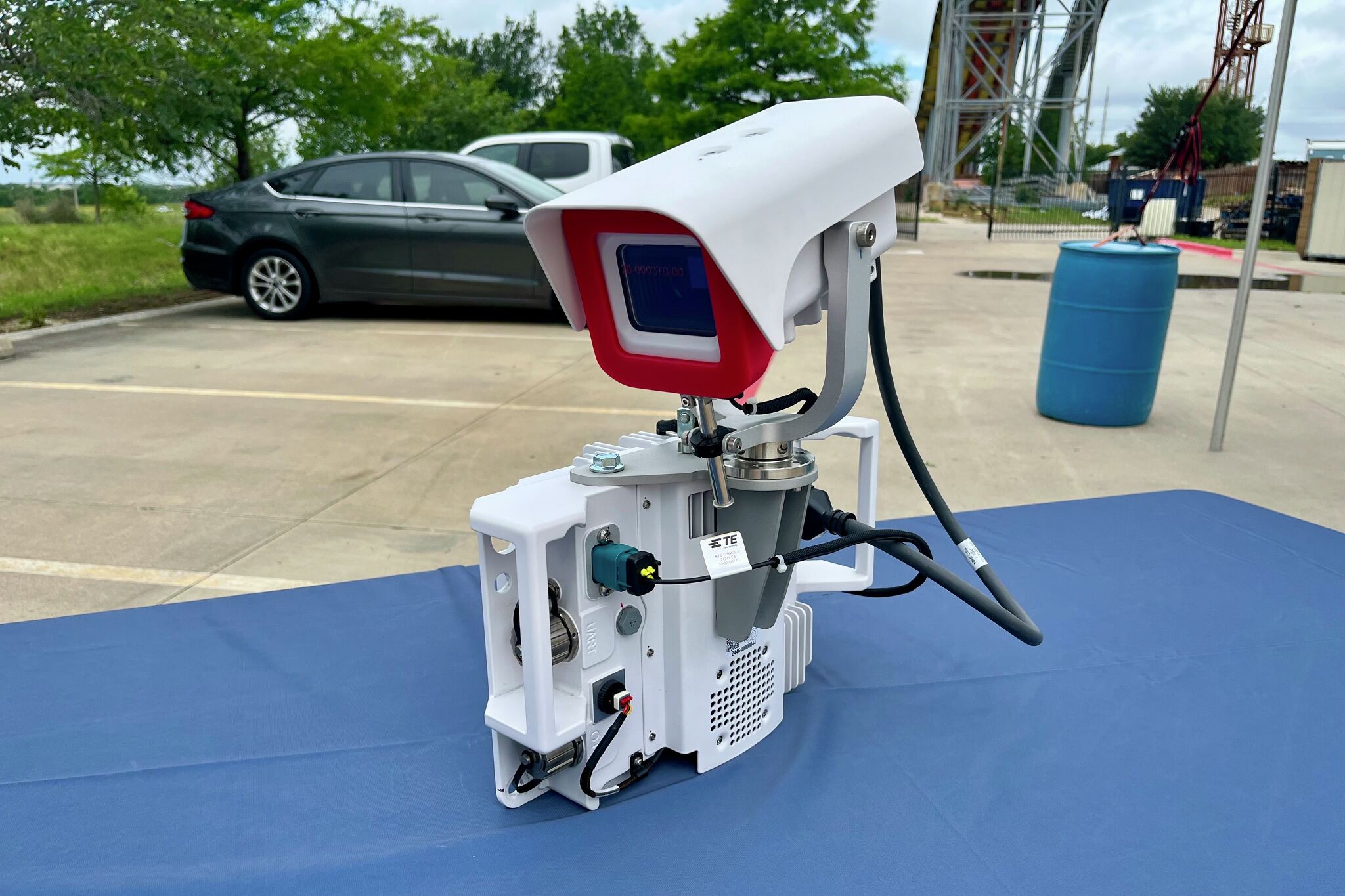
The Texas Department of Transportation unveiled the state's first "smart corridor" Wednesday, which uses artificial intelligence-powered cameras to monitor traffic conditions and is designed to identify problems such as crashes and breakdowns almost instantly. The department partnered with Cavnue, a Washington, D.C.-based highway technology firm, to install 66 cameras between East Pflugerville Parkway and Cameron Road.
The $6 million project is the first of its kind in the U.S., officials said.
Mike Arellano, TxDOT’s Austin District deputy engineer, said the cameras will supplement human operators in the agency’s traffic management center who monitor roadways throughout the district. The new cameras use onboard AI to identify road hazards and alert operators almost immediately, potentially cutting response times to limit traffic disruptions and secondary crashes, Arellano said.
"It learns to determine between an 18-wheeler, a car, a bicycle, a human being or a ladder in the roadway," Arellano said. "Those insights can be almost automatic and go to our operators in real-time so that we can dispatch emergency services."
The technology could cut response times to a crash by five to seven minutes, Arellano said.
"Five to seven minutes is like another entire crash, because you have the over-reactors and all the secondary crashes," Arellano said.
Tyler Duvall, president of Cavnue, said the system could reduce crashes by 20% to 50% and congestion by up to 30% over time, according to the company’s own estimates.
"It's really about safety, congestion and reliability," Duvall said. "Just the ability to move quickly changes everything."
Within months, Duvall said, the system will be sending detailed alerts directly to phone navigation apps such as Waze and Google Maps. TxDOT is testing the functionality now.
"It's not just a Waze alert meaning 'problem ahead' — it's 'you've got a tire in the right lane four meters into the road,'" Duvall said. "That kind of information, particularly for a truck that's going 65 or 70 mph, is incredibly important. They don't have a lot of reaction time."
The cameras are not capable of scanning license plates or tracking individual drivers, TxDOT said.
TxDOT said it will monitor the pilot program's performance to improve the system, with the eventual goal of expanding the technology across the state and the Austin metro area — especially as the department undertakes a massive reconstruction of Interstate 35 through the heart of the city.
"Everything we're learning here is going to inform what we're going to put on I-35 during reconstruction," Arellano said.
Cavnue is owned by engineering firm Consor, which acquired the company in February.