

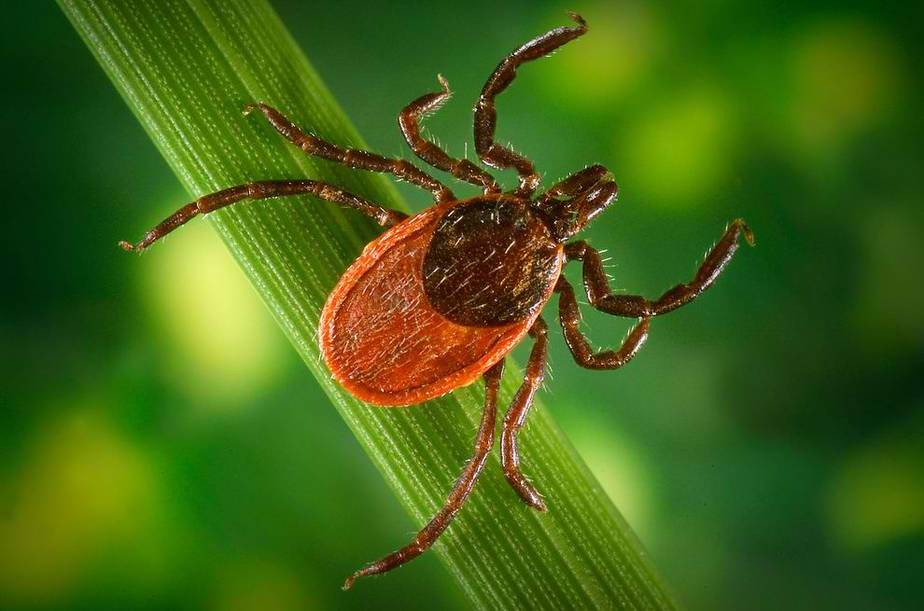
Black-legged (deer) ticks can be found across Eastern Texas and parts of the middle of the state. They can carry Lyme disease, which is only transmitted by a bite from an infected tick.
Lyme disease has been spreading across the United States, with more cases covering more territory in recent years, according to the Centers for Disease Control and Prevention.
It has been spreading across the United States from New England states like Connecticut, Vermont, Maine and New Hampshire. Texas does have the environmental conditions for the black-legged ticks that carry the disease, which is relatively uncommon here.
Lyme disease is spread by a bite from black-legged ticks, also called deer ticks, that are carrying bacteria, either Borrelia burgdorferi or Borrelia mayonii. It is the most prevalent vector-borne disease (one caused by an insect or an arachnid) in the United States; even more prevalent than West Nile or dengue fever, which come from mosquitoes.
Ticks are actually arachnids because they have eight legs. It's most common for adult female ticks to bite people, but ticks in the nymph or larva stage also can bite and carry Lyme disease, according to the CDC. Spring begins the tick-biting season that can last through fall, but it's also possible for ticks to bite during above-freezing winter days.
Lyme disease is named after Lyme, Connecticut, where there was a cluster of cases in 1975, though Lyme disease has probably been around since the 1880s.
East Texas and the center of the state, including Austin, have the right kind of environment for black-legged ticks, according to the CDC. These ticks like to be in areas where their food sources, mainly deer or other large mammals, are prevalent. They like forests and tall grasses and will feed on the blood of many mammals, including mice, squirrels, cows, dogs and humans.
Black-legged ticks have been identified in Bell County north of Austin; Bexar County (San Antonio) and Real County, west of San Antonio; as well as in counties around Houston and Tyler. They have not been found in Travis, Williamson, Hays or Bastrop counties, according to the CDC, but that doesn't mean they are not here.
Texas has had cases of Lyme disease, most of which were from people bitten while traveling elsewhere and then returning home. From 2014-2020, Texas had 331 reported cases, 212 from people who had traveled, 74 from unknown origin and 45 from local ticks, according to the Texas Department of State Health Services. Bastrop and Hays counties had no cases. Travis County had 27 cases, including one thought to be locally acquired, and Williamson County had five cases, none known to be locally acquired.