

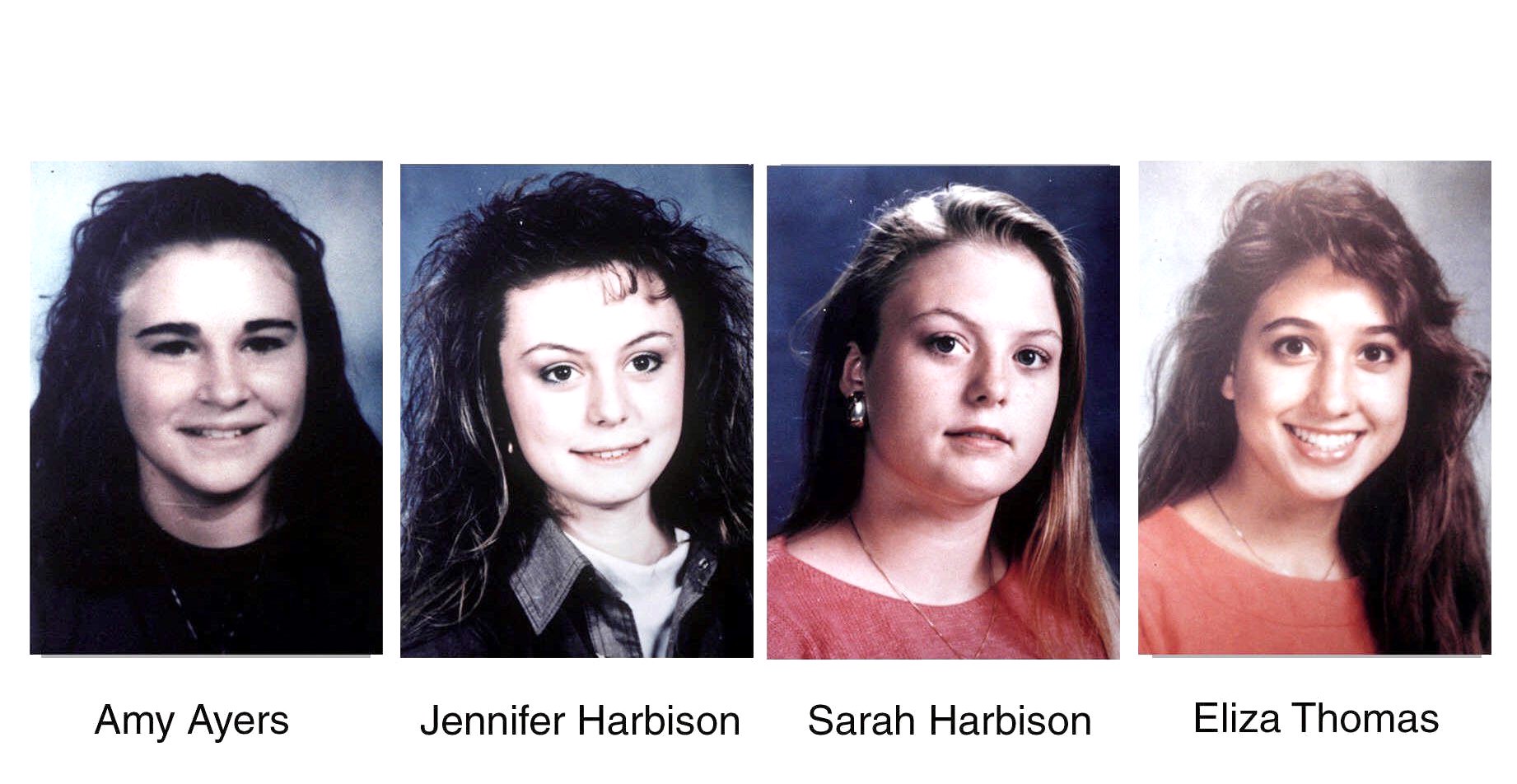
For more than three decades, Austin has wondered what happened inside an “I Can't Believe It's Yogurt!” shop. The murders of Jennifer Harbison, 17; Sarah Harbison, 15; Eliza Thomas, 17; and Amy Ayers, 13, on a December night in 1991 became a wound revisited through trials, overturned convictions and endless speculation.
Now, HBO’s “Yogurt Shop Murders” series returns with a fifth and final episode that asks a different question: What happens after the wondering ends?
The new episode arrives months after Austin police announced deceased Robert Eugene Brashers as a suspect. The revelation upended decades of assumptions about the case and formally cleared the four men long accused in the murders.
Closure in this episode is not presented as neat or complete. Instead, it examines the emotional aftermath of finally having an answer in a case that many believed would never truly be solved.
“There was a lightness that was not there before,” director Margaret Brown said in an interview about the families featured in the documentary. “All of the family members felt better knowing who did this, even though the person who did it is a serial killer.”
The documentary series is streaming on HBO Max. Episode 5, titled "The End of Wondering" premieres on the platform Friday at 8 p.m. CT.
The final episode follows Austin cold case detective Daniel Jackson as he reexamines the decades-long case. Jackson, who joined the cold case unit in 2022 and inherited the yogurt shop file on his first day, told the Statesman he intentionally avoided reviewing the confessions that once sent two men to prison.
“I didn’t want to put myself in a position where I had a confirmation bias,” Jackson said. “I just wanted to see what we could do with the physical evidence to get it resolved.”
That decision is one of the defining threads of Episode 5. Instead of focusing on interrogations that influenced public opinion for years, Jackson focused on an unresolved piece of evidence: male DNA recovered from one of the victims.
“We have male DNA inside of a young girl where it shouldn’t be,” Jackson said. “Until we figured out the identity of that DNA, the case would remain unresolved.”
In the episode, Jackson walks viewers through forensic techniques like Y-STR DNA analysis and genetic genealogy used to identify Brashers, a transient offender linked to crimes across several states before his death by suicide in 1999.
Jackson said investigators resisted announcing the breakthrough prematurely because of the case’s long history of collapsing leads and failed certainty.
“This is yogurt shop,” he said. “Every time you think you’ve got it resolved or a good lead or a good suspect, it falls apart.”
By the time police publicly identified Brashers, investigators believed the evidence was overwhelming. Brown noted the DNA probability reached "3.7 trillion to one," a level of certainty she said mattered deeply.
“There’s a moment where Dan could have broken the story and said, ‘We solved it,’” Brown said. “But he waited. I think that’s incredible.”
Jackson also revisited one of the case’s lingering witness tips: a report from the night of the murders that described a man behaving strangely inside the yogurt shop before the killings. The witness recalled a man lingering around the business, going into the bathroom and never seeming to leave. Jackson told the Statesman the account remains one of the tips that feels most credible to him.
“Knowing Brashers, knowing the way he operates, that sounds just like him,” Jackson said. “In my heart, I think that probably was him, but we’ll never know.”
The emotional center of Episode 5 lies in the people still carrying the weight of the case. Brown described filming conversations with Brashers’ daughter as among the most difficult interviews of her career.
“I just saw beauty in her heart,” Brown said. “She saw a lot of pain that her father had caused and wanted to address that somehow.”
The documentary also revisits the damage caused by the original investigation and the years of suspicion placed on Robert Springsteen IV, Michael Scott, Maurice Pierce and Forrest Welborn after police obtained confessions later challenged in court. Springsteen was once sentenced to death before his conviction was overturned.
Interviews with Pierce’s family in the episode touch on the lingering trauma they believe followed him after years of interrogation and public scrutiny.
Pierce was shot and killed in 2010 by Austin police during a routine traffic stop after he escaped and allegedly slashed an officer’s neck. At the time, authorities said it was unclear why Pierce ran, but his wife and daughter say the interrogations and years spent tied to the yogurt shop case left him fearful of law enforcement.
The city of Austin now plans to pay $35 million to Springsteen, Scott and Welborn, as well as Pierce’s family. The agreement still requires City Council approval.
Beyond the investigation, the episode also shows how the case resurfaces for Austinites in ordinary moments decades later.
Brown recalled filming a moment at the yogurt shop memorial site when a survivors’ relative unexpectedly encountered people connected to the night of the murders, including a former employee from the neighboring Mr. Gatti’s restaurant and the case’s original detective John Jones.
“In Austin, that happens around this story,” Brown said. “People feel connected to it.”
Even with investigators now pointing to Brashers as the likely killer, unanswered questions remain. Jackson acknowledged authorities may never know why Brashers came to Austin or specifically targeted the yogurt shop.
“Was there a reason?” Jackson said. “Or did he just get off the highway and decide to commit the crime?”
The case remains open as detectives continue searching for any evidence of a possible accomplice, though Jackson said investigators currently have “zero evidence” anyone else was involved.
For Brown, the documentary’s final chapter is ultimately less about solving a mystery than understanding how people survive unimaginable trauma.
“These people lived through it,” she said. “I always thought there was so much I could learn from them.”
For Austin, the last episode is a sign of reckoning with what certainty can — and cannot — provide after 34 years of grief.