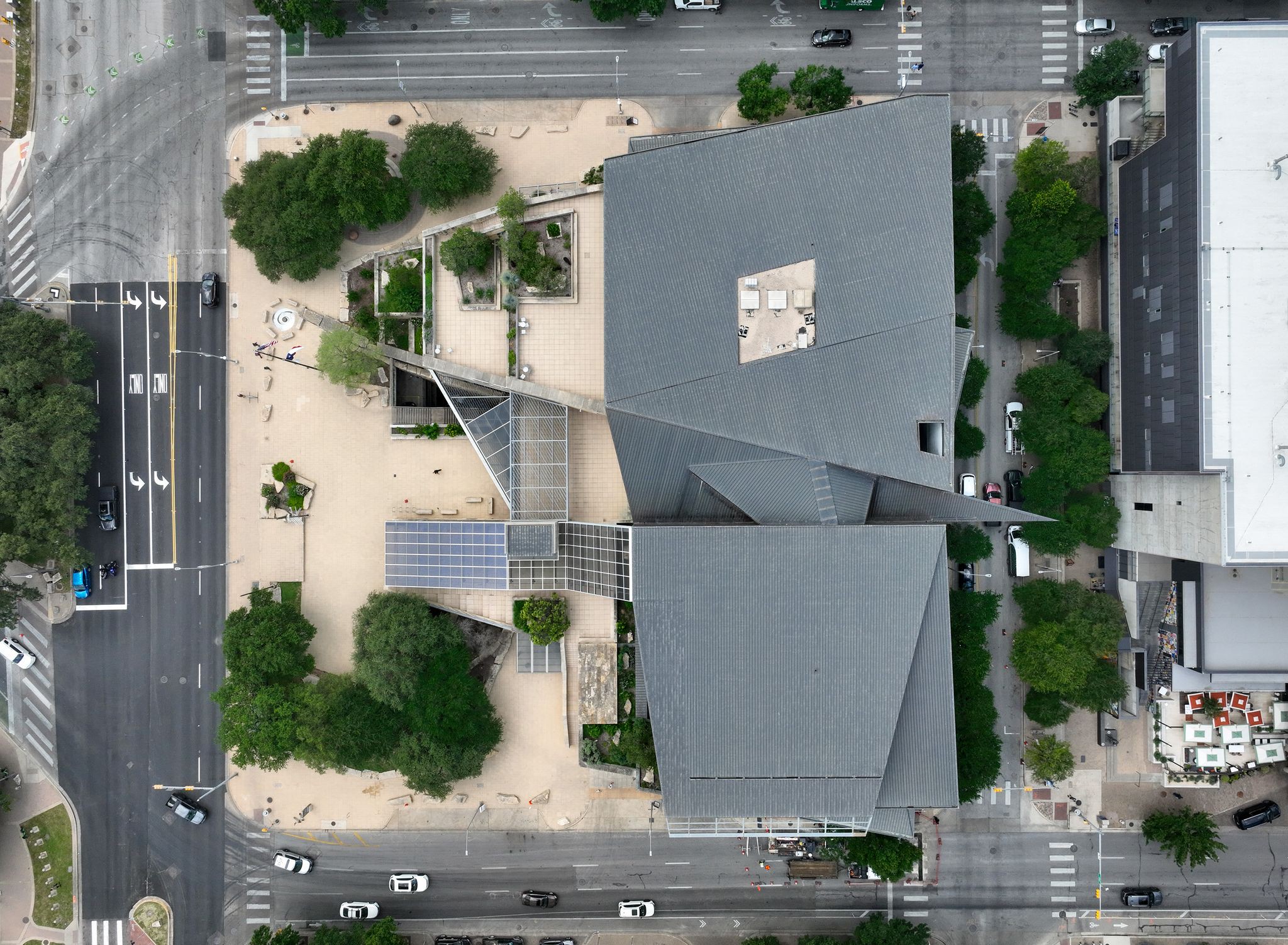
Austin tour guides have long told visitors that City Hall is shaped like an armadillo, but architects say the truth behind the building’s famous “tail” is different. The tale prevailed in part thanks to the building’s primary architect, the late Antoine Predock, who referred to the project as “the animal” during the design phase and later seized on the armadillo comparison while presenting his work. Former Austin City Manager Toby Futrell said Predock embraced the analogy, but from the air, City Hall looks nothing like an armadillo. Austin architect Phil Reed, who worked with Predock, said the cantilever was never described internally as an armadillo tail and was likely inspired by the local topography. Austin City Hall on Monday, May 18, 2026. Jay Janner/Austin American-Statesman Though the building wasn’t designed to resemble an animal, it was intentionally rooted in Austin’s landscape. Predock was inspired by the city’s terrain and atmosphere and incorporated the cream and copper tones of Bull Creek limestone into City Hall. Current Mayor Kirk Watson said City Hall was designed to feel distinctly Austin, though not in any literal sense. While the pointy projection was apparently never referred to as an armadillo tail until much later, Reed and others recalled another animal-related nickname: The stinger. The moniker was likely born out of an incident at the old City Hall building that left Predock bleeding profusely. At some point, the armadillo comparison took over, and the nickname became part of the building’s identity — not because that was the architect’s original vision, but because Austinites decided that was what they saw in it.
news
Is Austin City Hall really shaped like an armadillo? What to know
Austin tour guides have long told visitors City Hall is shaped like an armadillo, but architects say the truth behind the building’s famous “tail” is different.
Published May 25, 2026 at 10:00am by Chaya Tong