

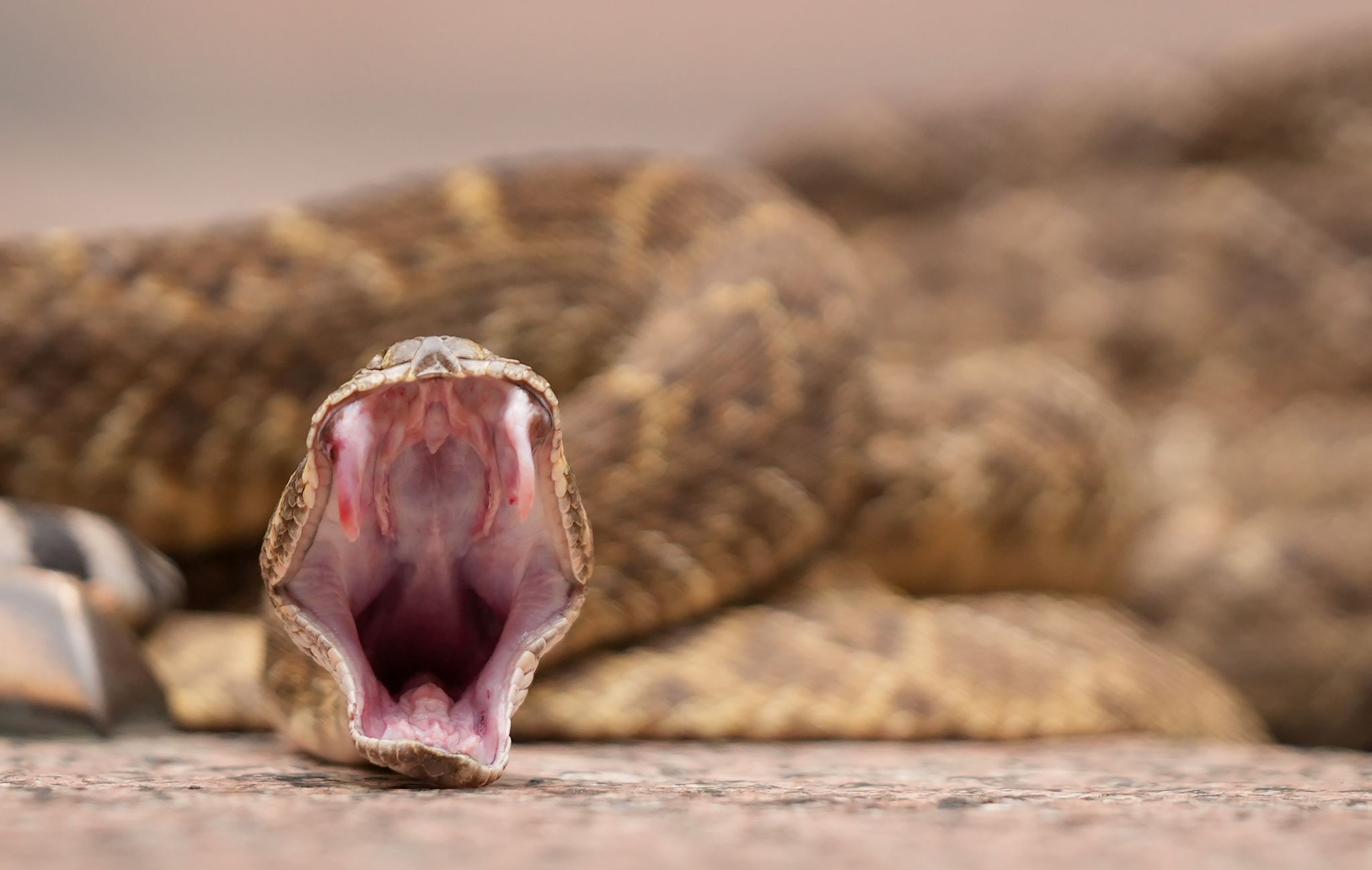
As temperatures climb in Austin, there are a few critters to keep an eye out for: The bats are back, the bugs are buzzing — and snakes are slithering across Central Texas parks, trails and waterways.
Most snakes pose no threat to humans, but Central Texas is home to four groups of venomous snakes: rattlesnakes, coral snakes, copperheads and cottonmouths, also known as water moccasins.
Venomous snakes in Central Texas:
- Rattlesnakes: Identifiable by the characteristic rattle on their tails. Western diamondback is the state's most common rattlesnake.
- Coral snakes: Identifiable by their red, yellow and black bands. Venomous coral snakes have red touching yellow on their bodies.
- Copperheads: Gray and brown bands with a copper-colored head.
- Cottonmouths: Often called water moccasins. The inside of their mouths is white, giving them their name.
Nonvenomous snakes in Austin:
- Watersnakes: Often confused for cottonmouths.
- Bull snake: Can grow up to more than 9 feet long.
- Western rat snake: Often seen in trees.
- King snake: Black blotches on a gray body.
- Coachwhip: Can play dead when threatened.
- Racers: Fast-moving snakes.
- Brown snakes and earth snakes: Small, brownish snakes.
- Garter snakes: Often found near bodies of water.
Snakes can be found throughout Central Texas, including in Austin's parks, greenbelts and neighborhoods. River corridors are also prime snake habitat.
If you encounter a snake outdoors, stay still and allow it to retreat. Back away slowly and carefully if you need to move. Do not attempt to kill or handle the snake.
To make your property less attractive to snakes, don't leave food or water outside, keep your yard clean, address rodent problems, and consider installing mesh fencing.
If bitten by a snake, seek medical attention as soon as possible, keep the victim calm, wash the bite area, and limit movement. Do not cut the bite area, use a tourniquet, apply ice, or drink alcohol.