

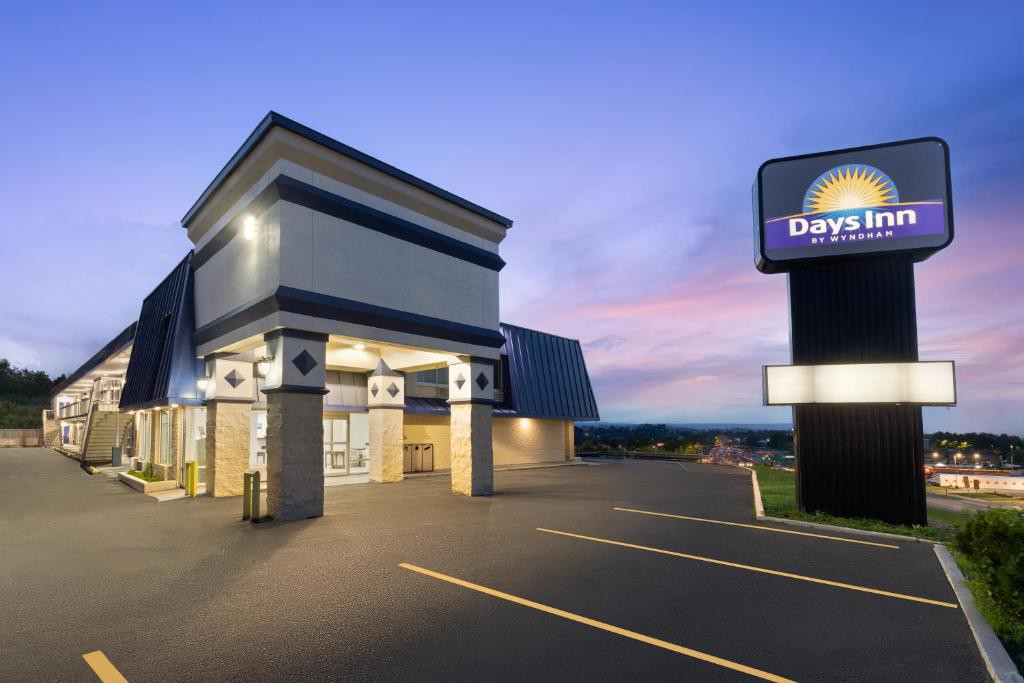
When police raided her Days Inn motel room in 2014, the woman inside was shocked, but relieved. She later filed a federal lawsuit in Austin under a federal act meant to fight sex trafficking. She has since reached settlements with all of them. Booking.com
When police raided the Days Inn motel room, the woman inside was shocked, but relieved, she recalled years later.
For seven months, she had been trafficked for sex at Austin hotels along Interstate 35 and U.S. 183. She was strung out on drugs much of that time.
Images posted without her consent by at least three different men on the now-defunct Backpage.com website advertised her availability. She was controlled through physical violence and forced to perform sex acts, she said in a suit filed in federal court.
When police burst through the door of that motel room in February 2014, the first words out of the then-26-year-old woman’s mouth were: “I’m pregnant.”
Now nearly 40 and married with children, the woman identified in federal court documents only as H.E.W. wants accountability from the companies she says benefited from her exploitation. The list includes a half-dozen Austin hotels and their parent companies — including some of the nation’s biggest hospitality brands.
“Because the hotels would — I feel workers and hotel, you know, front desk people — turned a blind eye to me being trafficked,” she said in a deposition.
According to the lawsuit she filed in U.S. District Court in Austin, “She was beaten, drugged, sexually assaulted, and mentally abused” under their noses.
It was one of an increasing number of lawsuits filed under the Trafficking Victims Protection Reauthorization Act against the hospitality industry for what plaintiffs describe as a willing blindness to the victims in their hotels. In the legal language of such complaints, they “knew or should have known.”
“Defendants have failed, at all levels, to take appropriate action in response to their knowledge of widespread and ongoing human trafficking in their hotels,” H.E.W.’s suit said. “Instead, they have continued financially benefiting.”
Her suit came close to being the first such case to go to trial under the act in Texas, a hotbed of human trafficking. But settlements — including an 11th-hour deal with the last of the hotels in mid-May— allowed some of the nation’s biggest hospitality brands to avoid a costly and potentially embarrassing trial.
Settlements are private
A handful of such cases have been tried nationally, though, with one landmark case last year awarding $40 million to a victim. Terms of H.E.W.’s settlements with the companies are not public. She declined to be interviewed.
In depositions that are part of her lawsuit, though, she said she was shuttled mostly along I-35 between the Country Inn & Suites, Orangewood Inn, America’s Best Value Inn, Baymont Inn & Suites, Days Inn and Super 8. Many of the discount hotels are or have since become affiliated with global hospitality giants like Radisson Hospitality Inc., Wyndham Hotel Group, Red Lion Hotels Corp. and others.
A&D Hotels LLC, which operates Orangewood Inn & Suites off I-35 south of Rundberg Lane, was the last to settle. All other defendants, including global giants Radisson and Wyndham, had done so months earlier.
Before it settled, A&D Hotels tried and failed to get the case thrown out through summary judgment.
It argued in court filings that the 10-year statute of limitations had expired on the woman’s claim, that H.E.W. had willingly performed commercial sex acts prior to the trafficking time period, that her timeline was inconsistent and uncorroborated and that the hotel did not knowingly participate nor knowingly benefit from the criminal acts.
Judge Robert Pitman denied the request, saying there were many disputed facts in the case that a jury should decide. He also took umbrage at the hotel’s characterization of the woman’s drug addiction and the notion that prior work in a strip club and massage parlor disqualified her from litigation.
The court rejects A&D’s near-frivolous argument that “[n]either force, coercion, nor fraud drove [her] into the commercial sex trade” he wrote.
The ruling came just days before the company settled.
Defense strategies
When they deposed H.E.W. in preparation for a possible trial, lawyers for the hotels laid out the likely foundations of their defense.The biggest strategy seen in such cases across the country has been to make the case about the person claiming to be a victim and less about the issue of sex slavery.
In court filings, the companies highlighted the woman’s past work at strip clubs and a two-week stint at an unlicensed sensual massage parlor, both suggesting unforced participation in the commercial sex trade. In depositions, they asked extensively about her addiction to the prescription painkiller Vicodin and her termination from the nursing home where she had worked over allegations she was stealing drugs from residents.
They asked about photos on her social media accounts during the time of her alleged trafficking, where she appears without bruises or other signs of force. They pointed to the unreliability of her memory due to alcohol and methamphetamine use, the time that’s passed since the last incident of alleged trafficking and her inability to identify any hotel staff.
They also asked why, if Austin police and the Travis County District Attorney’s Office failed to notice she was being trafficked when she was arrested, should their hotels have been expected to?
The hotel attorneys also wanted to know why, when police burst into the motel room in 2014, she went to jail rather than telling the officers she was a victim. Her response: She feared that the men trafficking her would bail her out and retaliate.
“I was afraid,” she said. “I didn’t know how long I was going to be in there and if [he] was going to come find me.”
Hotels on notice
Her case was filed in 2023, beating a 10-year statute of limitations on cases brought under the Trafficking Victims Protection Reauthorization Act. Its original version allowed victims to sue traffickers in civil court and, in 2008, was expanded to allow claims against those who “knowingly” benefit from the practice. That could include hotels, cab companies, night clubs and other businesses traffickers might use.
By early this year, more than 1,600 civil lawsuits had been filed under the act. About 1,000 were for sex trafficking and 612 for labor trafficking, according to Martina Vandenberg at the Human Trafficking Legal Center. The current total value of settlements and court-ordered damages is more than $1 billion, according to the Washington, D.C.-based center’s data.
The number of filings for sex trafficking has increased rapidly in recent years as the hospitality industry has been targeted under the act's revisions. More cases were filed in 2024, the last year for which records are available, than in the previous two years combined. That year, more than 80% of the 209 sex trafficking civil cases filed in federal courts were against hotels, according to the center.
Texas is one of the leading states for such filings but, to date, no case has gone to trial here. Across the U.S., the biggest settlement so far is the $40 million judgment last year in Georgia.
Despite the small number of public resolutions, legal experts say the act is having an impact on trafficking.
“I think having a certain critical mass in terms of number of cases that have resulted in the settlement or a jury verdict is sufficient to put all hotels and hotel chains on notice that they need to take certain steps,” said Jonathan Todres, a professor of law at Georgia State University who has had years of experience working on human trafficking cases.
Amid the increasing attention, hotel companies are beginning to provide additional training for staff and to conduct internal investigations to find instances of trafficking in their establishments.
Lawsuits under the act also have been successfully filed against websites like Backpage.com, with one leading to a $215 million settlement.
Some also have been filed against companies like Apple Inc., Tesla Inc., Dell Technologies Inc. and others for labor trafficking. Plaintiffs have argued the tech companies benefited from forced mining of cobalt in the Democratic Republic of Congo. A federal judge in Washington, D.C., disagreed that buying the cobalt in supply chains could be considered a “venture” under the act.