

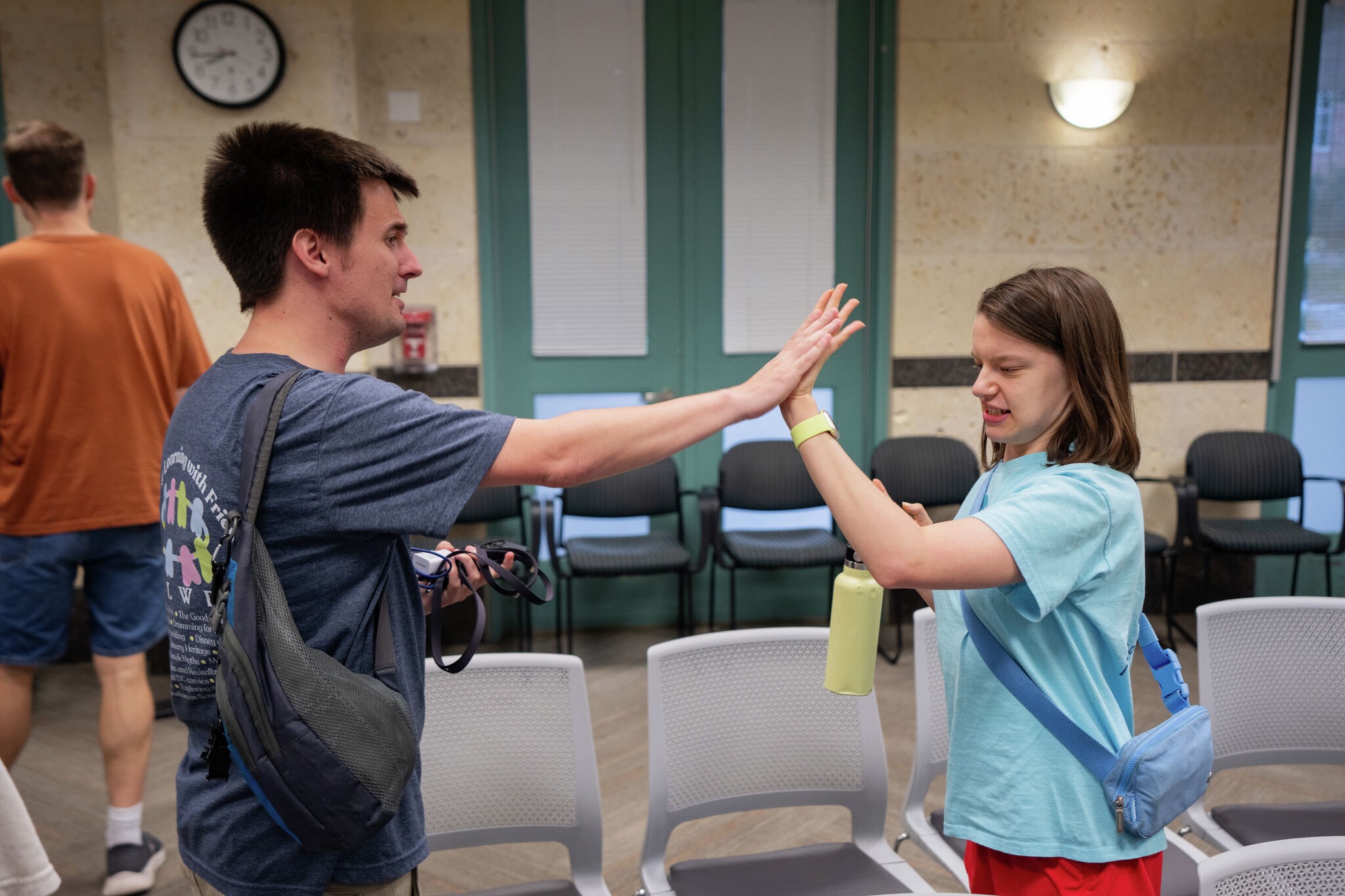
On a Sunday evening at the University of Texas, a group of students discussed their dating goals in a class offered by Lifelong Learning with Friends, a nonprofit that gives students with intellectual and developmental disabilities access to classes at UT infused with rigor, accessibility, and fun. The Sunday course, based on the popular Netflix show "Love on the Spectrum," equips students with skills to achieve their dating goals, walking through the often unspoken social rules of dating and helping students learn how to spot a good romantic match.
"It's just this really human interaction," Kaelin Rubenzer-Kassam, the instructor and Lifelong's executive director, said about the class. "It's all founded on this underlying need for connection."
The course fills a too-common gap in support for adults with intellectual and development disabilities, or IDDs, challenging perceived limitations about what people with IDDs such as autism and Down syndrome are capable of learning, wanting, and pursuing. Students have been asking for a "Love on the Spectrum" course for a while, seeking the same things others do: a partner, an education, and a family.
Since 2010, more than 700 students have enrolled in Lifelong classes, and 1,600 UT students have volunteered with the program. The classes and capabilities of the students exceeded expectations, with some students taking courses since the very beginning. The program has no age, term, or ability restrictions, and students pay $150 a course for a rare opportunity in special education, where classes typically focus on vocational or life-based skills or have strict age caps on enrollment.
"It's engaging with this reputable higher education powerhouse in the Austin community, and making (volunteers) better communicators, making their expertise more accessible," Rubenzer-Kassam said. "Having contact, meaningful contact, and exposure to people with disabilities helps a lot with disability advocacy."
The program also helps the university, teaching UT volunteers to question their assumptions about people with different abilities and making inclusion efforts more meaningful. Lifelong hopes to grow to other universities and reach more students, helping individuals raise expectations of themselves and experience a paradigm shift of what people with disabilities are capable of.