

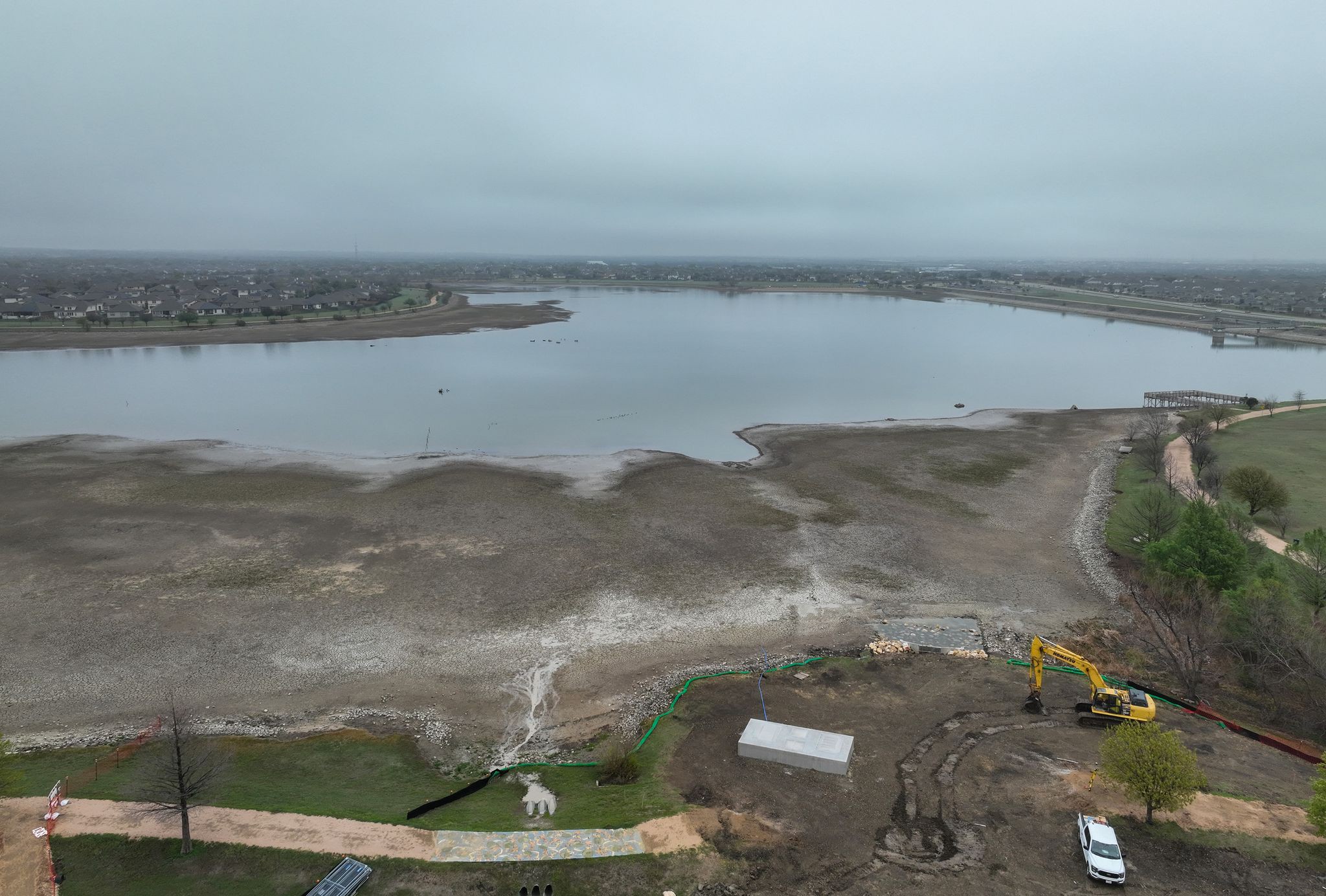
Water is flowing into Lake Pflugerville again, but conservation measures remain in effect as repairs continue. Pflugerville water customers will remain under modified Stage 1 water conservation measures even after the city resumed pumping water into Lake Pflugerville this week. The city has been operating under a water emergency since March after a construction accident caused a break in its 30-inch raw water pipeline. Officials said the pipeline has broken five times since September, and a March 3 report from divers revealed the lake had significantly less water than city staff realized. The pump had been turned off for water line repairs since Memorial Day.
"There are multiple factors affecting the water conservation measures and restrictions, and a definite timeframe is not available now," said Ty Bishop, a city spokesman. "We are evaluating the situation and will provide updates when the change occurs."
Under the modified Stage 1 measures, in place since May 1, city water customers are allowed handheld lawn watering on one designated day per week before 10 a.m. or after 7 p.m. Automatic irrigation systems, including a hose attached to a sprinkler, are not allowed, and washing outdoor surfaces such as sidewalks, driveways, patios, walls or other exterior areas is also prohibited.
Lake Pflugerville is the city's main source of water. Water conservation by customers has helped the city meet its goal of limiting water use to around 4 million gallons per day, said Shelby Granger, assistant director of water operations.
City staff turned on the 24-inch temporary water line again on Wednesday night. The lake's elevation was 633.77 feet on Thursday morning, according to the city's website. Lake Pflugerville is considered full at 635.5 feet. The city installed a 24-inch bypass line in March to provide water to the lake. It also activated other wells and collaborated with Manville Water Supply Corporation to help boost the lake level.
Construction is expected to be finished on the city's new secondary 42-inch water line by the end of June, said Matt Rector, the city's utility director, at a City Council meeting Tuesday. The line is fully installed at Lake Plugerville, and only the final connection at the Colorado River remains before the 15-mile line is complete, according to the city. It said replacement materials for the damaged 30-inch raw waterline are on the way. Those repairs are expected to be complete by mid-July, said Rector.
To help protect the system from future damage, crews have installed flowable fill around portions of both raw waterlines, officials said. Flowable fill is a water and soil mixture that hardens as it dries and feels like rock when struck.
Water system upgrades continue
Once the repairs on the existing water line are complete and construction of the secondary waterline is finished, the city will have the capacity to pump 22 million gallons of water per day from the Colorado River into Lake Pflugerville, Rector has previously said.
Additional repairs at the city's pump station at the Colorado River may require a few days of shutdown this summer, but city staff expect minimal impact on Pflugerville water customers, the website said.
City staff plan to buy replacement filtration equipment, called membranes, for the city's water treatment plant, pending City Council approval, said Granger. The membranes cost about $750,700 and will increase the amount of water the plant can treat, she said. Currently the plant can treat 8 million gallons of water per day, but it has the capacity to treat 17.7 million gallons of water per day, officials said.
The filtration equipment, which has to be shipped from Europe, would be available by the end of June and take about two days to install, Granger said.
It will support future reductions in water restrictions, according to the city's website. "We are evaluating what this means for our current water conservation measures," it says.
Expansions to the water treatment plant are expected to be complete by December, said Rector. When they are complete, the plant will be able to treat 30 million gallons of water per day.