

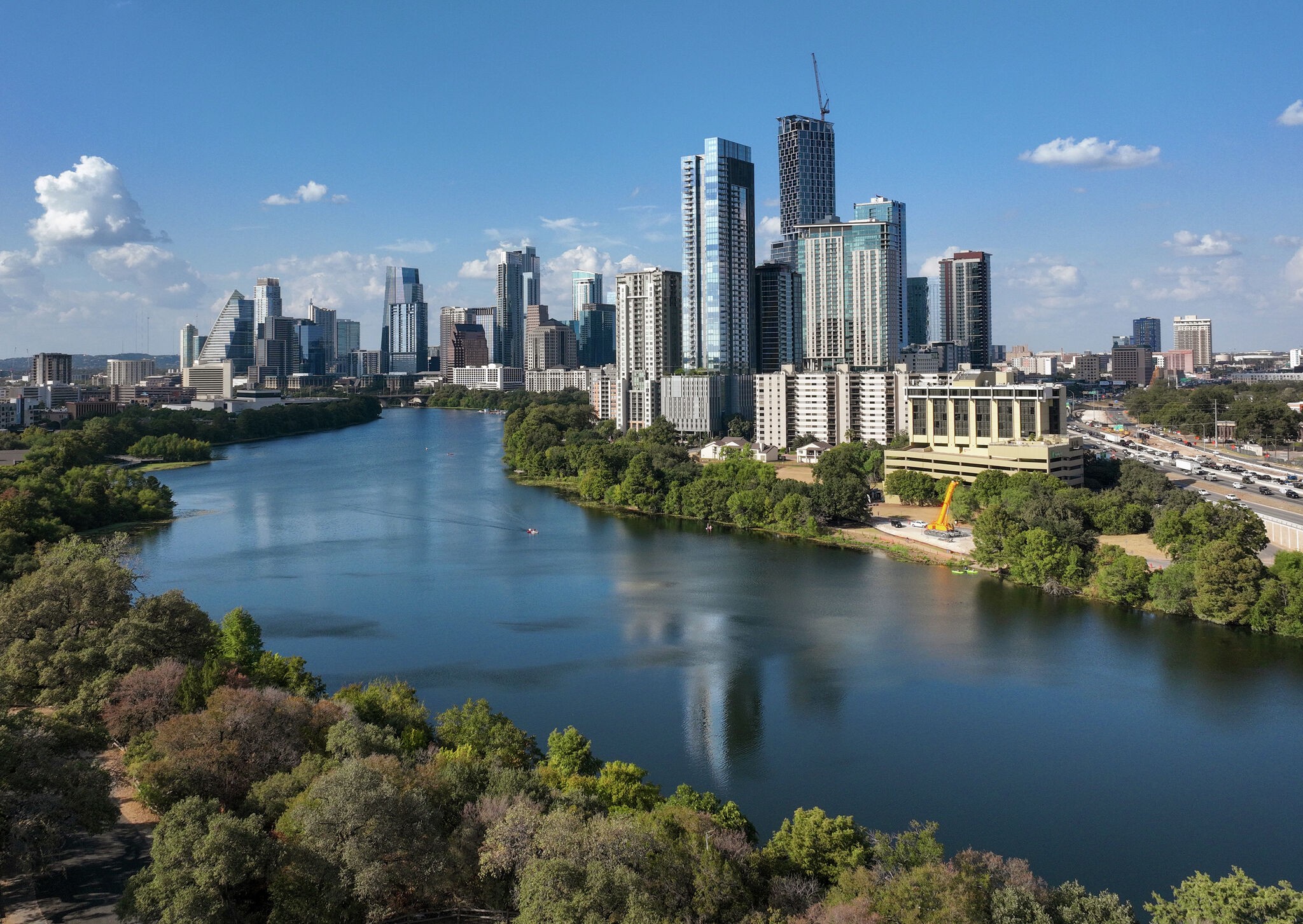
Long before Rainey Street became known for luxury towers and nightlife, it was a small residential neighborhood sitting at the edge of Downtown Austin. Former Austin City Manager Toby Futrell says the change over the past two decades is striking. Cranes crowded the skyline, high-rises multiplied, and the neighborhood that once felt open became engulfed in downtown’s growth.
Futrell, who served the city for 31 years and led it as city manager from 2002 to 2008, describes pre-boom Rainey Street as a "unicorn" — one of the last surviving Mexican American neighborhoods west of Interstate 35 as downtown development intensified around it.
"It was a close, tight-knit community of color," Futrell said. "And all around it grew downtown."
For those who grew up there, the loss is not abstract. It arrives in flashes: a backyard gone, a porch replaced by a parking garage, a rent receipt from 1991 for $250 that now reads like fiction.
Teresa Velasquez lived in the neighborhood from 1987 to 1996. She has receipts folded between old family photographs and papers she has kept for decades.
“Received from Teresa Velasquez,” one says, “$250 rent payment for 91A Rainey Street."
She still laughs when she reads it aloud. The same patch of land where her duplex once stood is now occupied by apartments that rent for more than $1,800 a month.
“It was very pleasant,” Velasquez said of Rainey Street in the years before the bars arrived, before the towers. “It was a place for families.”
The Velasquezes’ lives revolved around the family’s taxi business just off Interstate 35. People moved in and out of one another’s houses without announcement, the way families do when they are familiar with the neighborhood.
Rainey moved at a slower pace then. Children played football in the street. Neighbors knew one another through school and church. The names Velasquez remembers from those blocks — Solis, Sanchez, Mendez, Guerra — map onto an older Mexican American Austin that survives now mostly in memory.
“It was quiet,” she said. “Pretty. The houses were nice to see."
Some of those houses were already old when she lived there. The duplex she rented had once been a large single-family home, later split down the middle by a wall. That house was relocated through a preservation program to another neighborhood east of downtown. Velasquez sometimes thinks about knocking on the front door to see what remains of her former home.
“I always want to ring the doorbell and say, ‘Can I look around?’” she said.
Today, when she passes through the district on the way to visit family in East Austin, she sees crowds spilling onto the sidewalks. People park blocks away from the bars and weave across frontage roads and interstate ramps, drawn to a version of Rainey that feels far removed from the neighborhood she once knew.