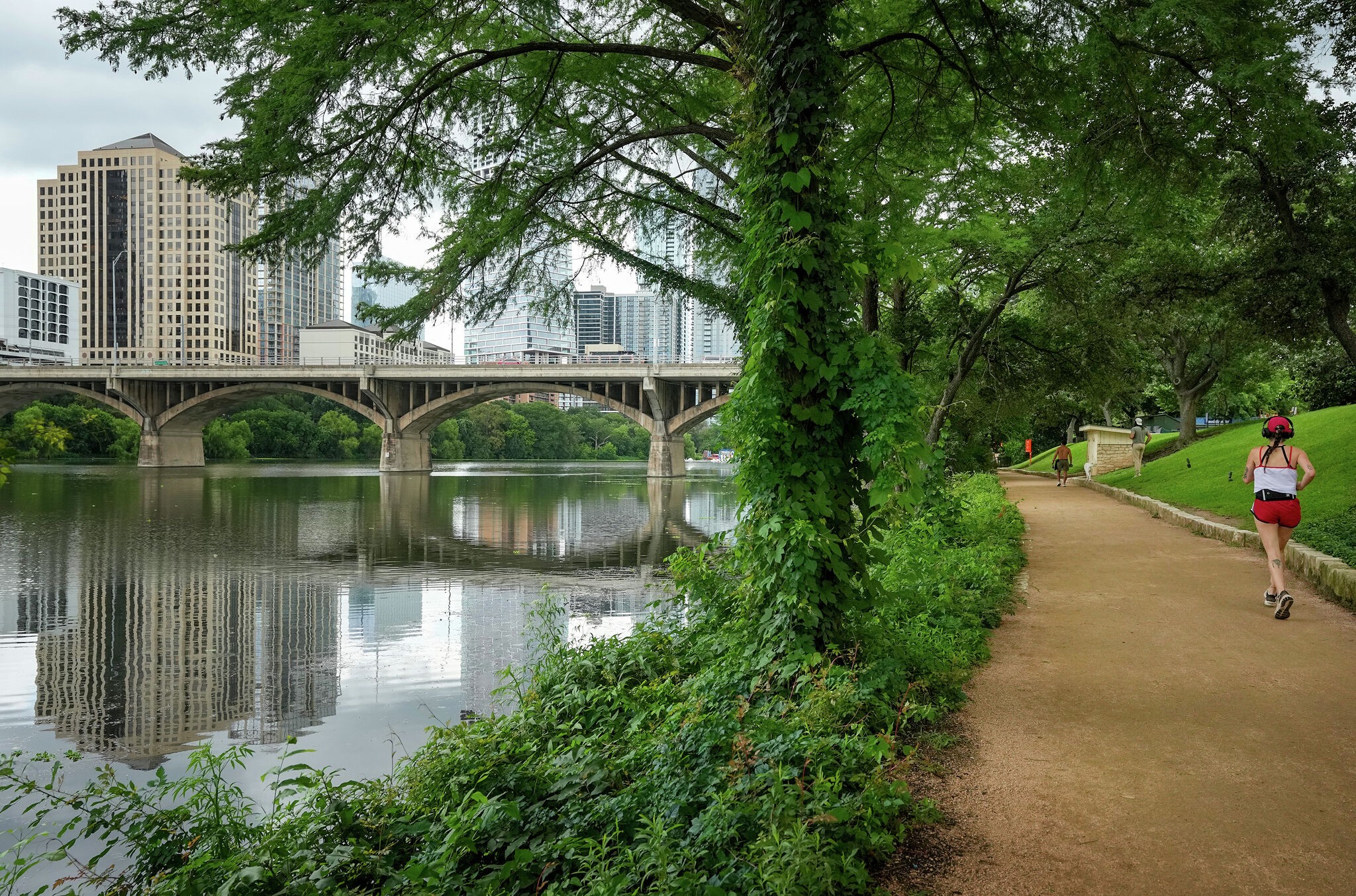
If, after heavy rainfall, you've looked at Lady Bird Lake and thought the water looked closer to brown than its usual sparkling blue-green, you're not wrong. The lake gets most of its runoff from city watersheds — the channels and creeks that drain into the Colorado River. Those watersheds are full of dirt, clay and rocks. During a heavy rain, the water rushes through, picks up that sediment and dumps it into the lake, making it look muddy and brown. It's a symptom of the "urban stream syndrome" — the way waterways flow in densely populated, heavily developed areas — said Alex Lari, a senior public information specialist with Austin Watershed Protection. That city department works installs control measures to capture as much debris as possible from flowing into Lady Bird Lake. Austin-area residents can do their part by installing rainwater tanks, cisterns, rain gardens and landscaping with native plants instead of grass and turf. Luckily, the phenomenon is short-lived. Austin's centerpiece will be back to its vibrant hue soon. Unless we get more rain. (URL)[https://www.statesman.com/story/news/local/2023/05/16/why-lady-bird-lake-looks-brown-heavy-rain-austin-texas/7018430700688/]
news
Why does Lady Bird Lake look brown after heavy rain?
Austin city experts told said Town Lake's color changes after heavy rain and flooding because of sediment from watersheds.
Published June 16, 2026 at 9:06pm by Faith Bugenhagen