

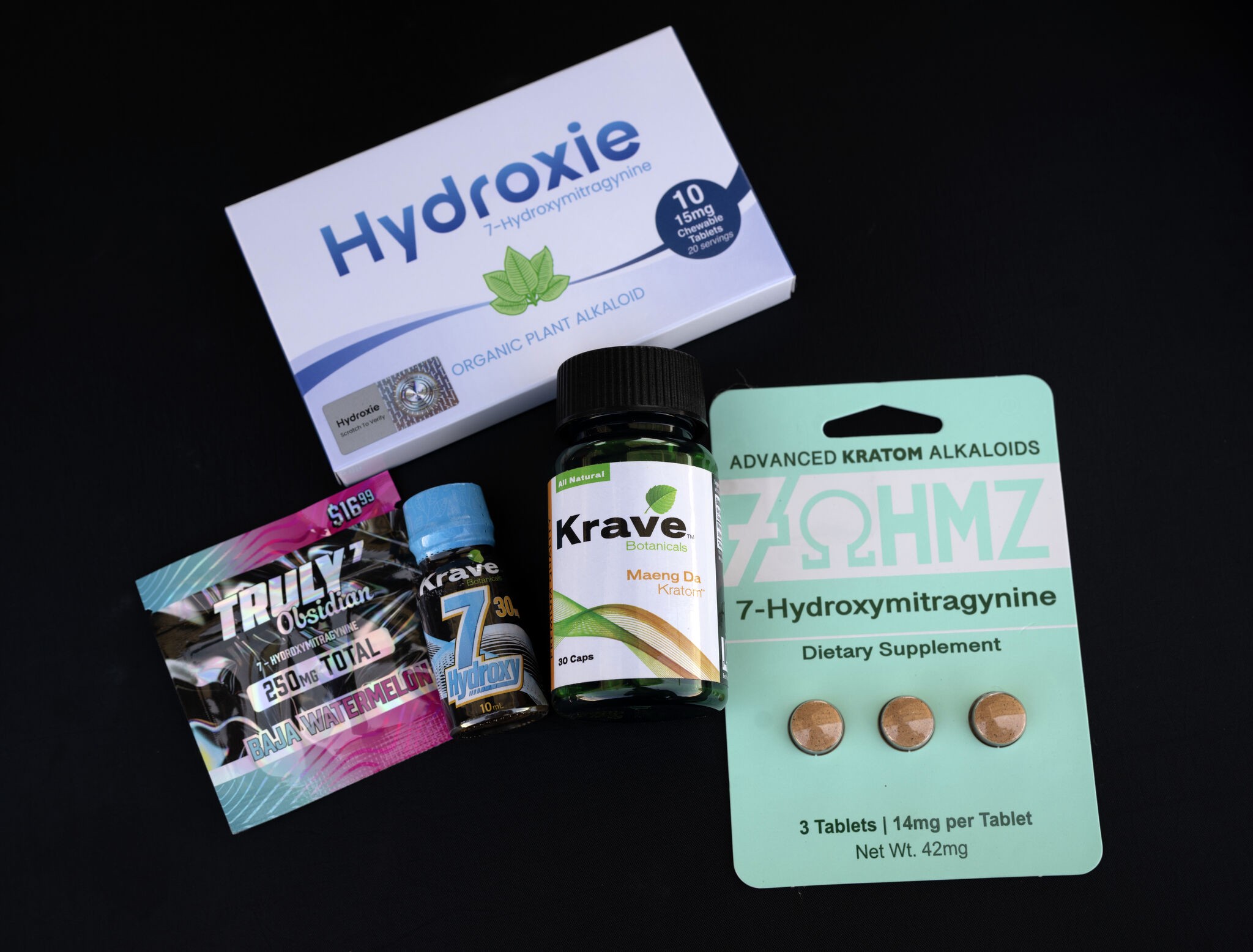
According to the U.S. Food & Drug Administration, both tianeptine and kratom are unregulated, over-the-counter substances frequently sold in convenience stores and smoke shops. Photo by Mindy Schauer/MediaNews Group/Orange County Register via Getty Images
Most convenience stores stock grab-and-go items such as snacks, bottled water, and alcohol while also selling kratom, a psychoactive substance often displayed near the register.
Some users say kratom helps relieve chronic pain, anxiety, and fatigue, and it is not typically included in standard drug screenings. However, health officials have raised concerns about its safety and potential for dependence.
The Botanical Education Alliance estimates the kratom industry is worth $1.13 billion, with continued growth across the U.S.
But is kratom legal in Texas? Here's what to know about the substance, its effects, and its legal status.
What is kratom and why is it so popular?
According to the U.S. Drug Enforcement Administration, kratom comes from a tropical tree native to Southeast Asia. The plant's leaves contain compounds that can have stimulating effects at lower doses and sedative effects at higher doses. Kratom is commonly smoked, brewed into tea, or taken in capsule form. Long used in Southeast Asia, the substance is also known by names including ketum, thom, and kakuam.
Texas Senate Bill 497 regulates the processing, distribution, and sale of kratom products. The legislation became effective on Sept. 1, 2023.
Does kratom feel like an opiate?
According to Mayo Clinic, kratom contains compounds that interact with some of the same opioid receptors in the brain that drugs like morphine, oxycodone or heroin affect.
Mayo Clinic says that some people take kratom to ease the symptoms of quitting opioids, also known as withdrawal. Kratom may be easier to access than prescription medication, but it may lead to addiction.
"Depending on the amount of active ingredient in the product and the health of the user, taking kratom can be harmful," the Mayo Clinic report said. "There are too few studies to be able to rate the claims about the benefits of kratom."
Why is kratom used?
According to DrugFree.org, people consume kratom for medicinal purposes. It reportedly can provide short-term effects similar to cannabis.
Depending on the dosage, the supplement can either act as a depressant or a stimulant.
"Many sellers advertise their products as being able to boost energy and concentration," the report said. "Some retailers sell 'energy shots' – similar to a Five Hour Energy – that they claim can help provide 'cognitive boosts' and can be used prior to a workout. Others promote specific strains for relaxation."
Its properties include:
- Pain relief
- Energy boosts
- Lifting one’s mood
Is kratom addictive?
The DEA warns that kratom use can lead to dependence and notes that some users have reported severe side effects, including hallucinations, delusions, and confusion.
Concerns about dependency have also surfaced in professional sports. A recent report by The Athletic found that some athletes have used kratom to aid recovery and later developed a reliance on the substance.
One former MLS player, who spoke anonymously to The Athletic, said he began taking kratom capsules regularly five years ago before switching to a kratom drink called Feel Free.
"They’re these little blue bottles that you find at gas stations," the former player said. "I mean it’s everywhere, every store I go into, every gas station, every mini-mart or convenience store."
Is kratom a drug class?
According to the DEA, kratom is not controlled under the federal Controlled Substances Act, though some states have regulations or bans on its possession and use.
The FDA has not approved kratom for any medical use, and the DEA lists it as a Drug and Chemical of Concern.
What states banned kratom?
According to Congress.gov and other legal tracking sources, kratom is banned in several states.
Rhode Island became the first state in the nation to reverse a statewide kratom ban after lawmakers passed the Rhode Island Kratom Act in 2025. The law, which took effect April 1, 2026, replaced the state's 2017 prohibition with a regulated market for kratom products.
The report notes that some states classify kratom as a Schedule I controlled substance, placing it in the same legal category as heroin and LSD under state law.
These drugs are considered to have no accepted medical use and a high potential for abuse.
Here's how these states currently classify the substance:
- Alabama
- Arkansas
- Connecticut
- Louisiana
- Vermont
The American Kratom Association provides a map of where states have banned kratom, where it's legal, and states that are considering a ban.