

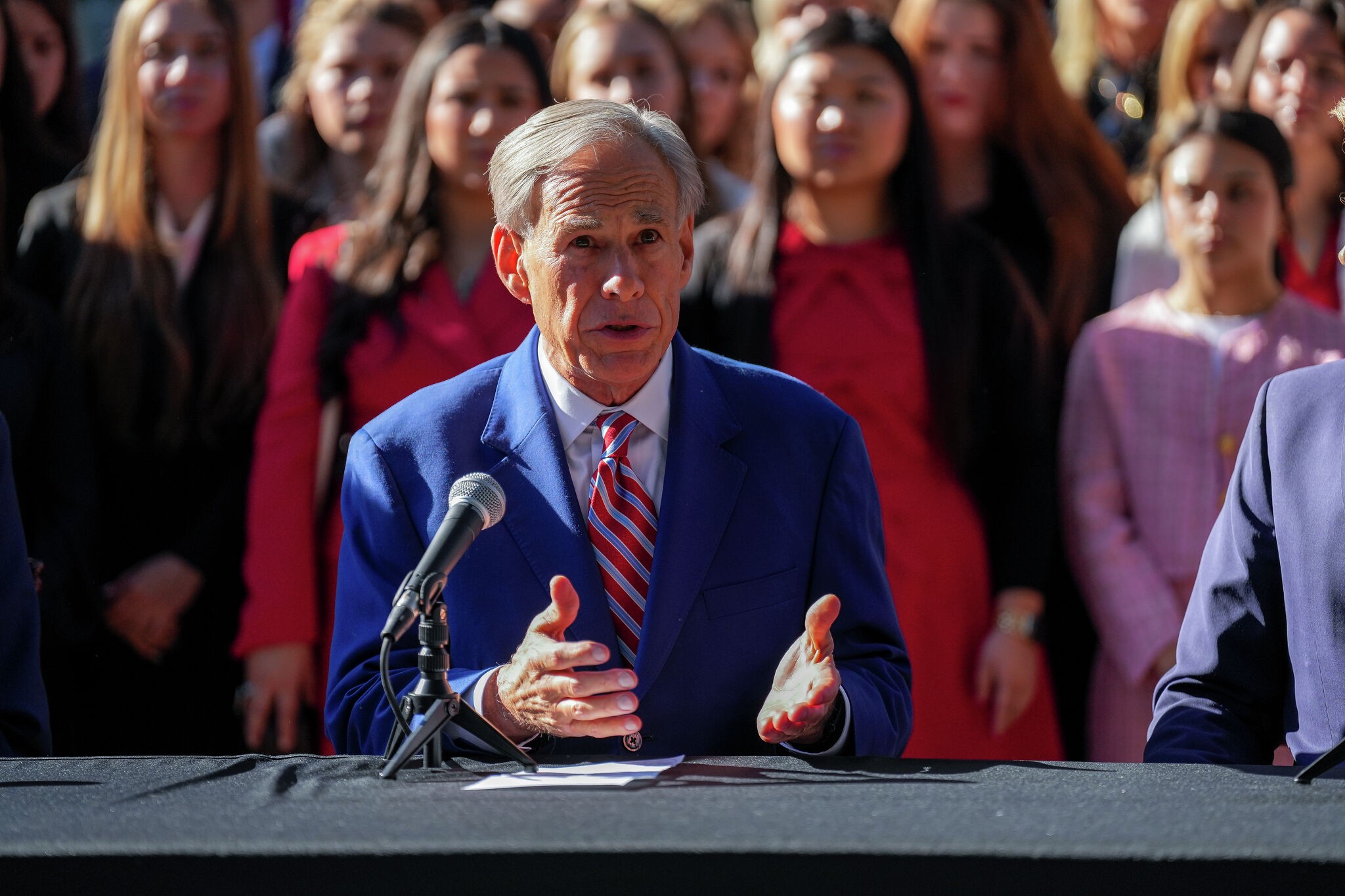
As Texans vote in Tuesday’s primary, Gov. Greg Abbott appears headed for another win on the Republican side, with early returns showing the incumbent in a commanding position in his party’s race. But with Abbott already having served three terms as governor, it brings up a question: How many terms can a governor serve in Texas?
Under Texas law, there is no term limit for governor. The Texas Constitution sets the governor’s term at four years but does not cap how many times a governor can run and win.
Abbott has served as Texas governor since 2015. He previously served as Texas attorney general, a justice on the Texas Supreme Court and as a state district judge in Harris County. He has built one of the longest-running modern governorships in the country. Tuesday's primary is the latest example of how Texas’ system works: If a candidate keeps winning elections, that person can keep serving.
The history of gubernatorial terms
For much of Texas history, the governor’s term was just two years, which meant governors had to run again — and face voters again — much more frequently. That changed in the early 1970s, when Texans approved a constitutional amendment that lengthened the governor’s term from two years to four years, taking effect for the 1974 election cycle (governors elected in 1974 and after would serve four-year terms). But that amendment only changed the length of each term — it did not create a cap on how many terms someone can serve.
Who is Greg Abbott?
Greg Abbott is a lawyer-turned-judge-turned-statewide officeholder who has spent most of his public career climbing through Texas’ legal and political ranks — first on the judges' bench, then as the state’s top lawyer and now as the face of Texas Republican politics in the governor’s office. Abbott’s personal story is also central to his public biography. In 1984, he was paralyzed below the waist when an oak tree fell on him while he was jogging in Houston. He has used a wheelchair since. In office, Abbott has styled himself as a hardline conservative and a culture-war standard bearer, with signature priorities often framed around immigration enforcement, public safety and education policy. In this campaign, he has focused on a sweeping property tax pitch, including cutting or eliminating school property taxes for homeowners and tightening limits on appraisal growth.
Who is running against Greg Abbott in 2026?
Abbott isn’t the only candidate on the Republican primary ballot in the 2026 governor’s race — but he’s the clear front-runner. On the Democratic side, the primary field includes nine candidates, though early vote counts and a recent University of Houston Hobby School of Public Affairs poll found only a few drawing significant support, with state Rep. Gina Hinojosa clearly ahead of the pack. Hinojosa, a five-term lawmaker whose district includes central Austin and the University of Texas, has pitched her campaign around public schools, health care costs and affordability. She has argued that Texas should crack down on “profit-over-patients” practices, including private equity ownership in health care.