

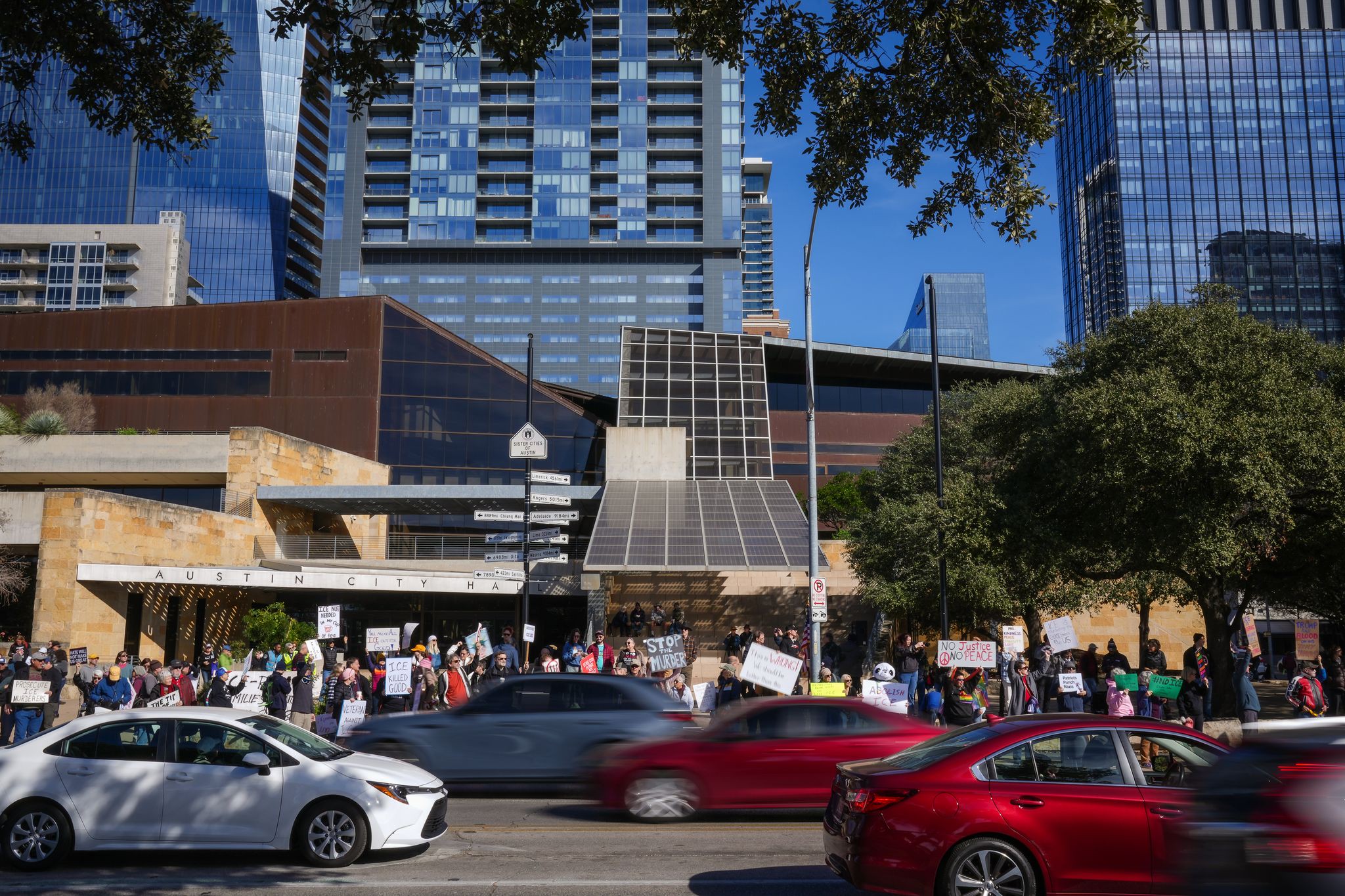
A crowd begins to build as a rally at Austin City Hall to protest against Immigration and Customs Enforcement (ICE) kicks off, Jan. 10, 2026 in solidarity with nation-wide protests after the killing of Renee Good, a Minneapolis woman, by ICE agents on January 7.
Sara Diggins/Austin American-Statesman
Austin City Council approved changes to the city's lobbying rules, shifting the reporting of lobbyists' interactions with city officials away from departments to the lobbyists themselves — a move some council members warn could make it harder for the public to track influence at City Hall.
The updated rules now require lobbyists to report all interactions with city officials rather than only scheduled meetings. The changes also eliminate a requirement that city departments provide a reporting method, shifting that responsibility to the lobbyists. They also cut a requirement for lobbyists to disclose their meetings — and whether they receive or expect to receive compensation — in writing to the department.
Council members Vanessa Fuentes and Ryan Alter voted against the changes, raising concerns about transparency.
“Austin has long held itself to a higher standard of transparency than the State of Texas, but this ordinance would only move us closer to the state's weaker lobbying requirements,” Fuentes said in a statement. “At a time when trust in government is already fragile, scaling back transparency is the wrong choice. Our focus should be on strengthening public trust, not eroding it.”
Alter said in a statement: "The public should know how lobbyists are interacting with their representatives. I'm concerned this change could reduce that transparency."
Council Member Natasha Harper-Madison, however, said that shifting reporting responsibility from council offices to lobbyists would free up time and cut down on inefficiency.
“I'm happy to see any item that comes forward that helps us be more efficient with the use of the time and spend more of it working on constituent issues,” she said during the council meeting.
The changes come after the Austin city auditor noted issues with transparency and accessibility in lobbyist compliance and recommended changes to the city's lobbying rules in September. The office noted that "current city code lobbying provisions limit reporting and make transparency hard to achieve."
The auditor’s office noted in September that Austin’s peer cities such as Dallas, El Paso, San Antonio and Houston define who in city government is subject to lobbying more narrowly than Austin does. The updated Austin lobbyist rules now include a narrower definition of “city official” that focuses on decision-makers.