

Texas leaders are studying whether border counties could join the state, but annexation would require local votes and congressional approval.
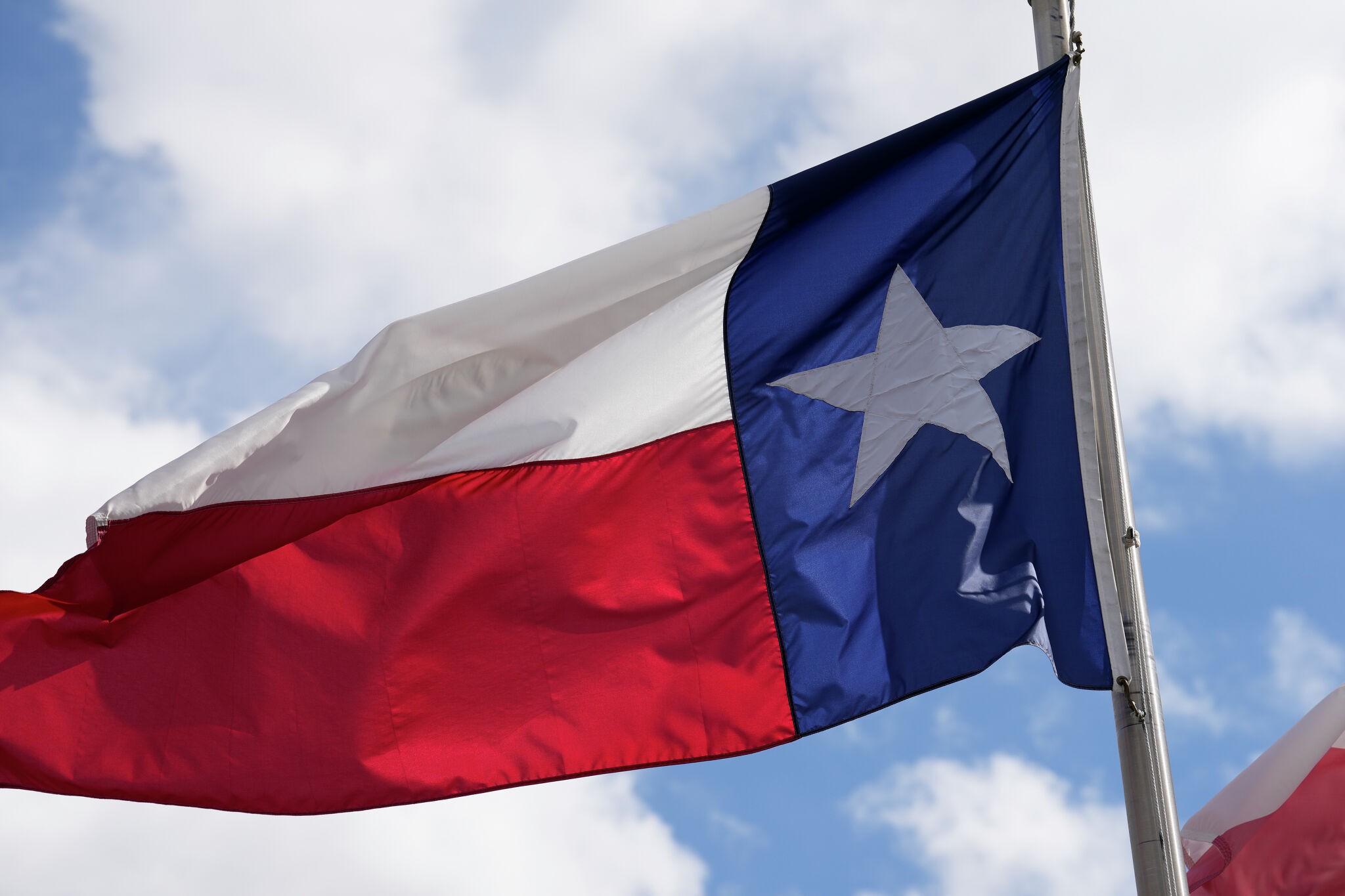
A Texas flag, photographed by Yi-Chin Lee.
Yi-Chin Lee/Staff photographer
The study ordered last week by House Speaker Dustin Burrows to examine whether Texas could actually gobble up some of the counties on the eastern rim of New Mexico has some political figures seeing red.
Republican red.
Burrows, R-Lubbock, is following up on a proposal being floated in the New Mexico Legislature that would allow counties in the state that share a border with Texas to, in effect, switch sides. And it just so happens that every one of those counties voted overwhelmingly for Donald Trump in 2024, while New Mexico as a whole gave its five electoral votes to Democrat Kamala Harris by a comfortable 52%-46% margin.
Let's make clear from the outset that the annexation by Texas of one or more of the five counties looks iffy at best. It would require a vote of the people in the counties affected — and an act of Congress.
As might be expected, the Democratic leaders in charge of New Mexico are not about to willingly hand over giants swaths of land in their part of the oil-rich Permian Basin, even if it would mean ridding themselves of some or all of the 36,000 voters in those counties who cast their ballots for Trump.
“Let me put this into terms Speaker Burrows might be able to understand: Come and try to take it,” New Mexico House Speaker Javier Martínez said in a Friday report by the Santa Fe New Mexican, invoking one of Texas' many unofficial slogans. “New Mexico isn’t afraid of a fight."
Burrows' direction to the committee he charged with exploring the matter stopped well short of fighting words. Actually, they were more on the lawyerly side. The panel, he said, should examine the “constitutional, statutory, fiscal and economic implications” of such an annexation.
Admittedly, 36,000 votes — plus the 10,000 that went for Harris — is just a fraction of the 11 million Texans who went to the polls in the last presidential election. But the numbers could make a difference on the margins in state legislative districts, especially around El Paso, where Democrats dominate.
More significant would be the added oil revenue that would come Texas' way. The Permian Basin, which straddles the Texas-New Mexico border, pumps out about about 6.5 million barrels of crude a day, accounting for almost 40% of all oil production in the United States, according to the Texas Railroad Commission, which regulates the industry.
And the Republican lawmakers who represent New Mexico's side of the basin are aware of those statistics, and they want to make sure their Democratic counterparts in their state Capitol understand them as well.
State Rep. Randy Pettigrew, a Republican who represents Lea County on the Texas border, has said in news accounts that the region provides as much as 50% of his state's general revenue and gets little in return. If his proposal were to come to fruition, he told the Albuquerque Journal in February, "we can get the hell out of New Mexico and quit being their problem."
Pettigrew has also found an ally in the oil patch. The Oil & Gas Workers Association, which is based in Odessa on the Texas side of the Permian Basin, touted his proposal on its Facebook page with the message, "We salute you, Representative Randall Pettigrew."
The coveting of land along the 103rd meridian that divides Texas and New Mexico has a bit of a history. Just over 22 years ago, then-Texas Land Commissioner Jerry Patterson and his New Mexico counterpart, Pat Lyons, revived a dispute from 1859 about the actual boundary. Lyons said the frontier-era surveyors drew the line a little too far to the west, and he wanted an adjustment that would bring the tiny towns of Farwell, Texline, Bledsoe and Bronco — plus a 600,000-acre strip of empty land — over to his side.
Patterson disagreed. And in mock seriousness, he suggested that he and Lyons settle the dispute with dueling pistols. And that's what they did. Well, sort of.
According to a Jan. 6, 2004, story in the Midland Reporter-Telegram, the two Republicans, armed with antique sidearms, met in an agreed-upon location, stood back-to-back and counted off their paces. But neither turned to fire on the other. Instead, they agreed to leave the border as it had been.
And unless the political acrobatics needed to advance the Burrows-Pettigrew idea gain traction, the border established in the 19th century is likely to endure as the 21st century marches on.