

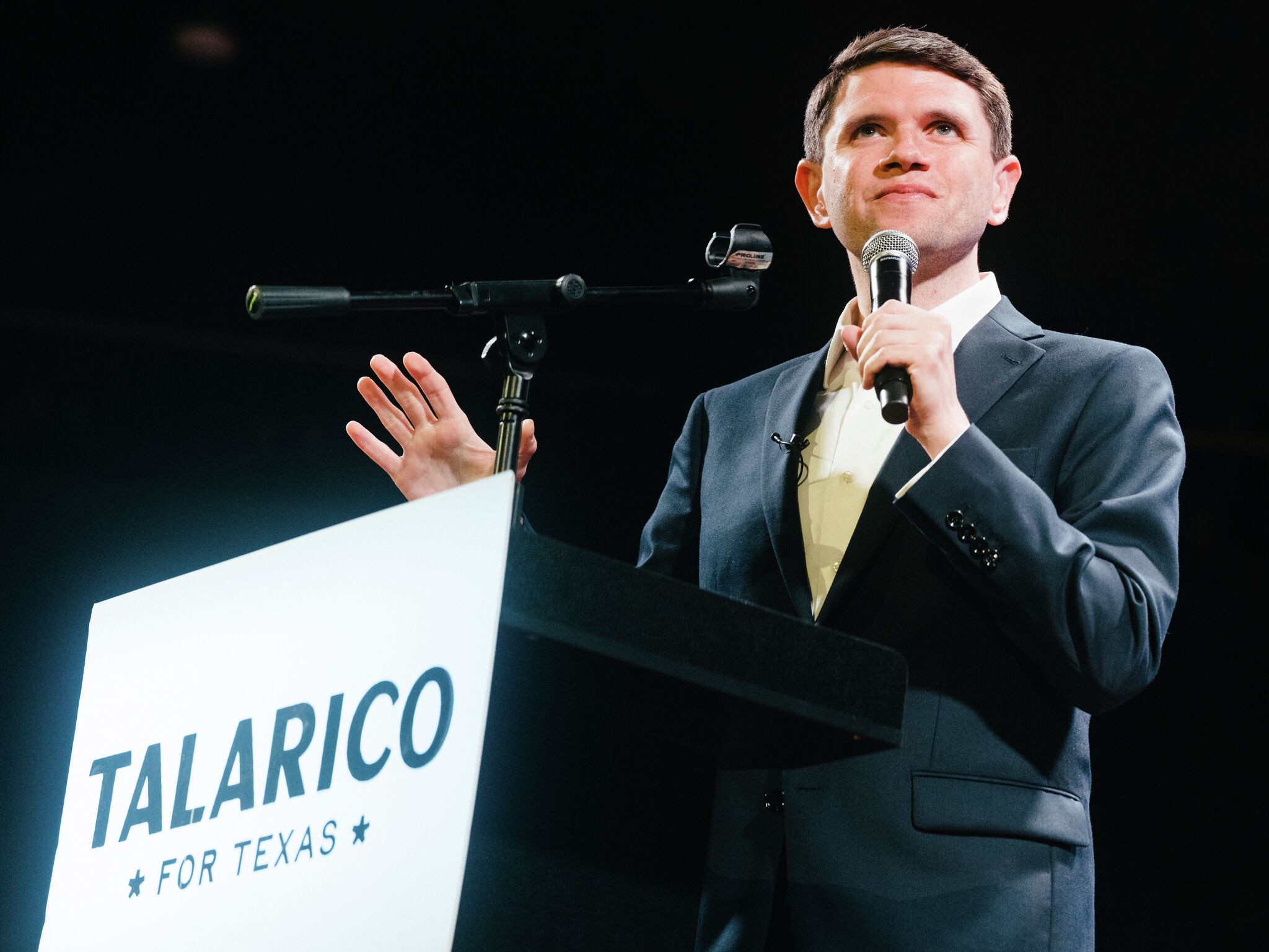
Democratic U.S. Senate nominee James Talarico’s eye-popping $27 million fundraising haul may dominate early headlines, but it masks a deeper reality: Republicans still hold powerful financial advantages that could reshape the race once the general election begins.
The report Talarico filed with the Federal Election Commission, made public Wednesday, shows he raised $27 million during the first three months of the year. Incumbent Sen. John Cornyn, seeking his fifth term in Washington, collected about $9 million, and his GOP primary rival Texas Attorney General Ken Paxton’s haul was $2.2 million.
The numbers suggest Talarico has seized early momentum. But candidate fundraising totals alone offer an incomplete picture. Political action committees, or PACs, and super PACs often play a decisive role in modern Senate campaigns.
Talarico's total was the highest among all Senate candidates nationwide and marked the most ever raised by a Senate candidate in the first quarter of an election year. He is not alone: Democrats in several competitive states are outraising Republicans. Incumbent Sen. John Ossoff of Georgia raised $13 million — more than all three Republicans hoping to challenge him in the fall combined — and similar patterns are emerging in North Carolina, New Hampshire, Alaska and elsewhere.
Yet the broader financial battlefield still tilts toward Republicans. The GOP’s Senate Leadership Fund, which can distribute money to candidates nationwide, is sitting on a massive war chest. From Jan. 1 through March 31, the super PAC took in $72 million and reported $166 million in cash on hand.
By comparison, the Democratic Senate Majority PAC raised $56 million during the same period and reported less than $75 million in the bank, or about half that of its Republican counterpart.
That imbalance could prove decisive, particularly in a state as expensive as Texas.
But earlier this month, the Republican organization, which is backing Cornyn, raised eyebrows by announcing a planned $342 million investment in several Senate races, notably excluding Texas.
Still, that omission is unlikely to signal abandonment. The group and other Republican-aligned super PACs already poured tens of millions of dollars into Texas during the primary, backing Cornyn, who finished first but fell short of an outright win, as he fended off challenges from Paxton and U.S. Rep. Wesley Hunt of Houston.
The May 26 GOP runoff is expected to be tight. But regardless of whether Cornyn or Paxton advances, it is difficult to envision a scenario in which national Republican groups do not heavily invest in Texas — especially with control of the Senate at stake.
Democrats need a net gain of just four seats to win the majority, raising the likelihood that both parties will ultimately flood competitive races with outside spending.
For Democrats, however, Texas presents a familiar dilemma. The state has long been viewed as a financial hub for the national party, with donor money often redirected to more competitive battlegrounds. That strategy reflects political reality: Texas voters have not elected a Democrat to statewide office since 1994.
Talarico, a state representative from Austin, was 5 years old when that last Democratic victory occurred.
Those dynamics complicate his path forward. Despite his fundraising success, Talarico remains a self-described underdog in the nation’s largest reliably Republican state.
And with the Senate Democratic super PAC less well-funded compared with its GOP counterpart, there is little indication that outside groups will prioritize Texas — at least for now.
In other words, Talarico’s fundraising strength is real, but the financial fight that will ultimately define the race has only just begun.