

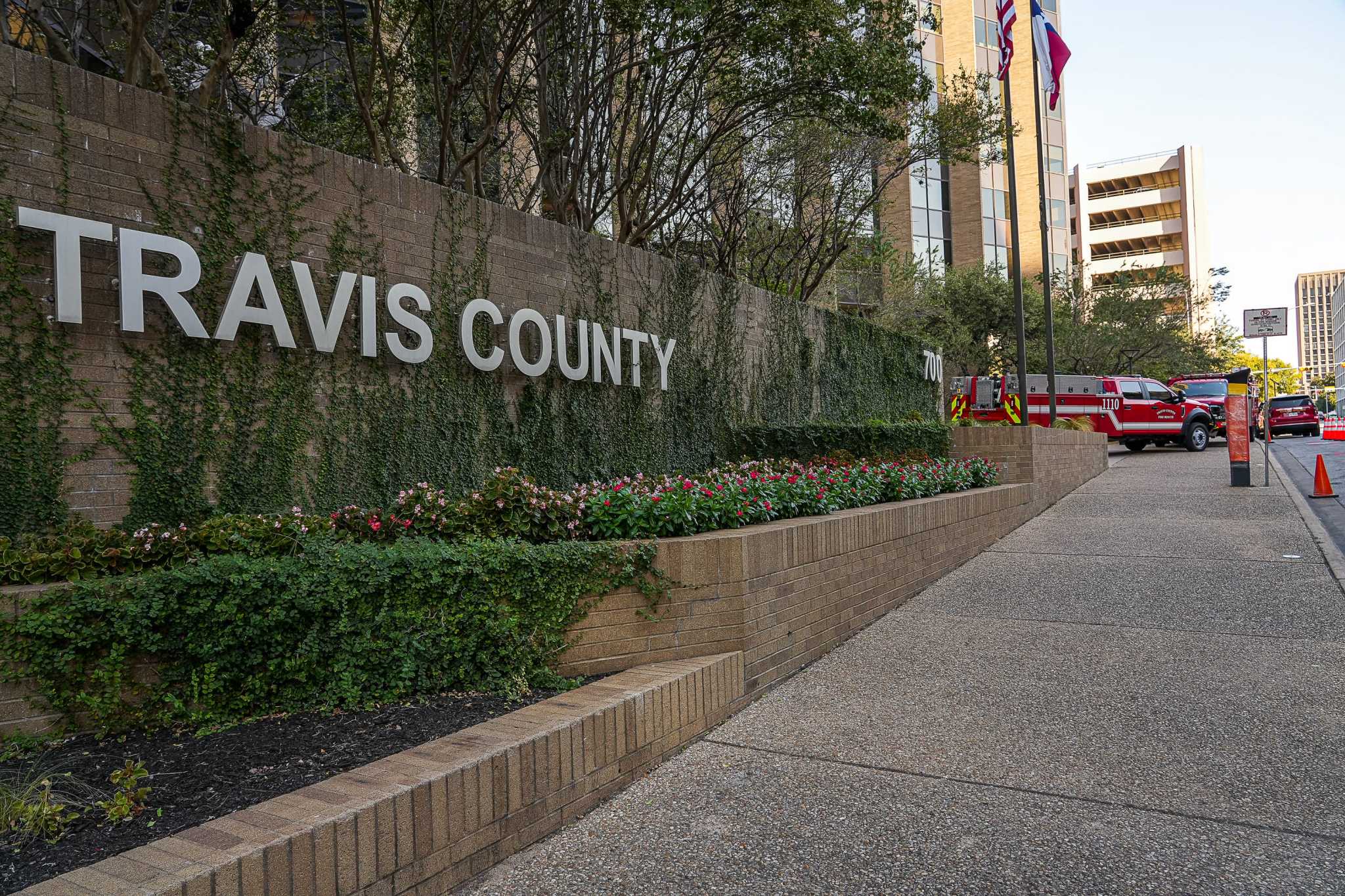
Early voting began Monday for the May 26 Democratic and Republican primary runoff elections, with a number of high-profile races across Texas for U.S. Senate, attorney general, railroad commissioner and more. One local seat is also on the ballot: Travis County Commissioners Court Precinct 4.
Susanna Ledesma-Woody and George Morales III, both longtime elected officials in southeast Travis County, are facing off for the Democratic nomination to the county’s governing body. No candidates ran in the Republican primary March 3, so the Democratic nominee is all but guaranteed the seat come November.
The winner will succeed Commissioner Margaret Gómez, who is planning to retire at the end of her term after 52 years in public service and more than 30 years on the Commissioners Court. The court is responsible for running the county, setting its budget and tax rate, overseeing elections and maintaining county roads and infrastructure.
In March’s four-person contest, Morales received 36.9% of the 39,326 votes, and Ledesma-Woody received 35.7% — a difference of fewer than 500 votes. The other candidates, Ofelia Maldonado Zapata and Gavino Fernandez Jr. did not advance to the runoff.
Ledesma-Woody, a project manager by trade, has served for 14 years on the Del Valle school district’s Board of Trustees. She was raised in Del Valle and has said southeastern Travis County lags behind other parts of the county in infrastructure, food access and health care. This is her third consecutive time running for the seat; she came within 219 votes of unseating Gómez in 2022.
Morales served for nine years as the Precinct 4 constable before resigning to run for commissioner. He has said he’ll push for expanding access to health care and mental health services, preventing displacement, promoting infrastructure and transit equity, and improving budget accountability.
At a candidate forum hosted by Riverside Democrats and moderated by Pct. 413 Democratic Party Chair Alania Cater earlier this month, the two runoff candidates answered questions about numerous topics affecting southeast Travis County. Here are a few of those questions and the candidates’ answers. Responses have been edited for length and clarity.
On displacement and housing
Cater: Precinct 4 has seen rapid change, with many longtime residents at risk of being pushed out by gentrification. What concrete steps will you take to prevent displacement, provide affordable housing and preserve cultural and economic diversity?
Morales: The same steps I took in the last six years. When I was the elected constable, I brought in legal aid to fight displacement. I worked with Travis County legal resources for rental assistance. And how we’re going to continue to do that is we need to press more.
When you talk about affordable housing, is it truly affordable, or do you have to qualify with 630 credit score? Is it truly affordable when it’s $2,800 a month for a two-bedroom home? Where I’m from in Dove Springs, the median family income is about $58,000 a year. If you have two parents in the household, it’s maybe $100,000. According to the Statesman, $100,000 a year is not affordable. You can’t afford to buy a home. You can barely afford to live in Austin.
We need to make sure to educate our community. I run on three words: educate, motivate and inspire. Those are the steps we take. We have to be looking forward to helping families stay rooted in their communities.
Ledesma-Woody: Families are feeling it right now. Affordability is not just housing; it’s utilities, it’s the cost of groceries, it’s everyday things that we’re spending our money on that impact us every day. So as a county, we have to be fiscally responsible with our taxpayer dollars, and that means putting those dollars into things that they don’t have to put their money into — whether it’s infrastructure needs, whether it’s affordable daycare — helping families subsidize some of those incomes so they can afford to stay where they live.
As the president of the Del Valle Community Coalition, we have a program that is centered around keeping families in their homes and creating generational wealth. That means helping them pay their mortgage. That means helping them with their utilities. We are doing the work right now so that families of East Travis County along Project Connect have the opportunity to stay there in their homes by providing that funding, and the county should do the same thing. They should provide programs that help families instead of hurt them, and use our tax dollars properly so that families don’t have to spend money on other things that are not beneficial to them.
On property taxes
Cater: How will you address rising property taxes and housing costs that are contributing to displacement of long time homeowners and renters, especially in light of existing tax subsidies to large corporations such as Tesla. What is your position on corporate property tax subsidies?
Ledesma-Woody: I was the only elected official to vote against the Tesla tax abatement, and I will continue to vote against any organization or company that comes in here and isn’t held accountable to the community they serve in. That being said, if an H-E-B comes in and wants a tax abatement, I’ll do it, because that improves the quality of life in our community.
We need to be able to provide services to our community, and if that’s giving them some opportunity zones that we have to create, then that’s what we’ll do. But I will not be allowing the Teslas, the data mining, the data factories — any of those companies that come in are just going to eat up our resources — to continue to monopolize our community, our resources, and impact our communities in a negative way.
Morales: Prop Q didn’t pass. Nobody can afford it. A one-year tax, maybe, but a long-term tax is not going to happen. People are struggling to stay in Austin. They can’t even live in Kyle anymore because of the taxes. When we talk about bringing infrastructure in, is it the city or the county? The county is about a need, not a want. The most important thing is how do we keep people rooted here in Precinct 4?
We’re the last area that’s coming in. They’re coming in building left and right. I understand that density is a big thing here — how we house more families — but is it truly affordable? What are your taxes going to look like in the next 10 years? In 15 years?
Yeah, we should have had an H-E-B. And yes, there’s going to be taxes left and right in the next 10 years from now, but can we make it for the next two years? We have a president and a governor that doesn’t really care about people like us, and that’s the main thing we have got to worry about is our taxes. The companies we bring in, they want more breaks; they create more taxes. In Travis County, we need to educate ourselves a lot more.
On immigration
Cater: Many residents in Precinct 4 are concerned about immigration enforcement and ICE activity. What role should the county, particularly the county sheriff and constables, play in protecting immigrant communities, and what specific policies would you support? How would you cooperate with the Austin Police Department, given the recent city of Austin policy changes?
Morales: In 2016 when Donald Trump became president, Sheriff Sally Hernandez, and myself were attacked. in 2025, I was the only elected official that got a non-compliance by DHS. As a representative of a Latino community, I knew how hurtful it could be. We had a 287(g) agreement, and by law as a law enforcement agency, we had to sign it. But it’s a play on words.
APD got in trouble because they said they “may.” The sheriff said she “should.” But I’m the only candidate that has been fighting for our immigrant community since 2016. I’m the only candidate who put myself on the forefront to have my commission taken away when I was the elected constable. I’m the only candidate that provided Know Your Rights trainings since 2016, not because I’m running for Travis County Commissioner.
Ledesma-Woody: We have to be very clear about roles and responsibilities. As a commissioner, we don’t sign 287(g) agreements. That is the sheriff, but we do have a responsibility, and that’s oversight, and that’s budgeting. We do have the responsibility of making sure that we create a safe community for everyone.
We have a administration that is targeting us for our skin color. We have community members that are afraid to take their kids to school because of their skin color or because of what kind of truck they drive. Every time I see those red and blue lights behind me, I get nervous and anxious — and I’m a citizen, and I don’t have any warrants. Imagine if you’re not, how unsafe you feel when you see those those lights behind you, because you feel because of this 287(g) agreement that you are going to be separated from your family.
I do not support the 287(g) agreement. I never have and I never will. I support abolishing ICE, and I know that that’s not something that we can do on a county level, but that’s something that we can advocate for for our community, and show them that we care about them, we care about their safety, we care about what happens to them, and we don’t want to see them separated from their families. So I’ll do everything in my power to make sure that our families feel safe and secure.